General articles are free for 24 hours after publish.
Moramo Bay Conservation Area, Vital Napoleon Wrasse Habitat, Threatened by Mining
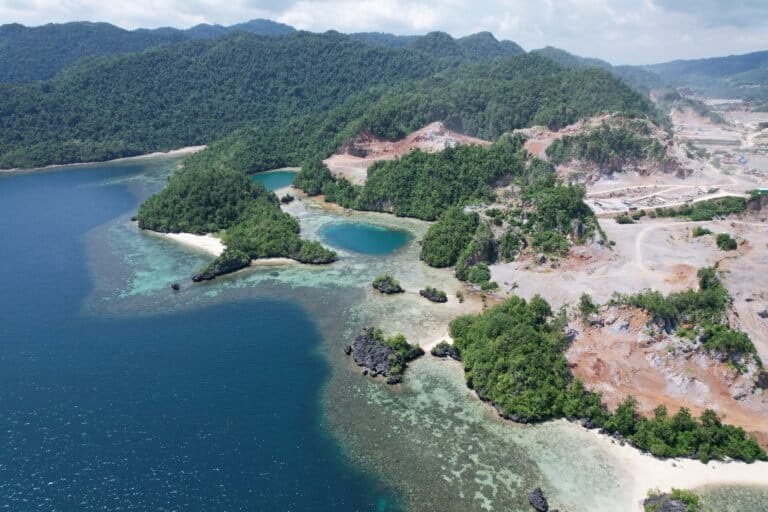
The Moramo Bay conservation area in South Konawe, Indonesia, home to the Napoleon wrasse, faces threats from limestone mining pollution. This area is crucial for the Napoleon wrasse, which plays a vital role in maintaining the balance of coral reef ecosystems.
Remnants of former limestone mining operations are visible on the hills surrounding the Wawatu village in Moramo Utara district, South Konawe Regency, Southeast Sulawesi. Near the village jetty, the seawater is murky, a reddish-brown color. Moramo Bay, a marine conservation area that is home to the Napoleon wrasse (Cheilinus undulatus), a protected species, is now polluted. "In polluted areas... these fish will surely disappear. They will go far into the depths. These fish have a feeling," said Sasanti Retno Suharti, a researcher in coral reef fish ecology, on Saturday (8/1/26). The disappearance of the Napoleon wrasse will impact the balance of the coral reef ecosystem. This is because the Napoleon wrasse is at the top of the food chain and is the main predator of the Crown-of-thorns starfish (Acanthaster planci), which feeds on coral reefs. "Their role is to maintain the stability of the coral reef ecosystem to keep it healthy. If they are not there, eventually the Crown-of-thorns starfish will dominate or eat the corals. The ecosystem will be destroyed," said Sasanti, who has been researching the Napoleon wrasse since 2006. The Ministry of Maritime Affairs and Fisheries (KKP) notes that the Napoleon wrasse belongs to the Labridae family, with a maximum size of more than two meters and a weight of 190 kilograms. Females can live up to 32 years and have a longer lifespan than males. Their growth is very slow, around three inches in five months. Reproduction is also low, with sexual maturity (gonads) reached at 5–7 years of age. "They are not like other fish. It takes seven years for their gonads to mature, whereas other coral reef fish mature in one year," added Sasanti. Young Napoleon wrasse (juveniles) are white with dark black scale lines near their eyes, but turn bluish-green or purplish when adult. The Napoleon wrasse is becoming increasingly rare in the coral reef habitats of Wakatobi National Park (TN Wakatobi).
Original source
Mongabay Indonesia