General articles are free for 24 hours after publish.
Vietnamese Exporters Shift Strategy Amid US Tariff Pressure
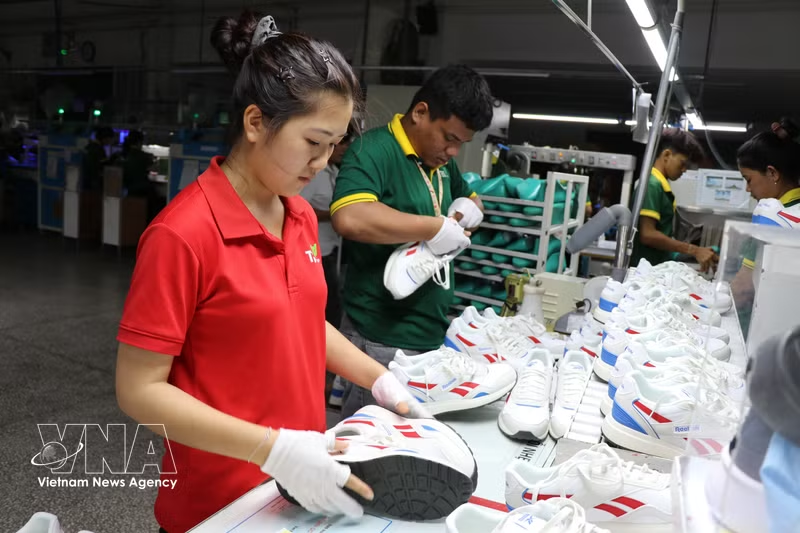
Responding to new US tariff policies, Vietnamese exporters are shifting strategies from volume-driven growth to higher-value orders, tighter cost control, increased productivity, and balanced market allocation to reduce reliance on single destinations.
Pressure from the new US tariff policy is prompting Vietnamese exporters to reassess their strategies. Rather than pursuing volume-driven growth, many are shifting towards higher-value orders, tighter cost control, greater productivity, and a more balanced allocation of markets to reduce reliance on a single destination. This shift indicates an adaptation to changing external economic conditions. Over-reliance on the US market, in particular, carried risks associated with policy changes. The current strategic pivot aims to mitigate these risks and build a more sustainable and resilient export base. The Vietnamese government is closely monitoring the situation, with its mission in Geneva discussing new developments in US tariff policy. Industries such as textiles are also seeking to capitalize on tariff windows amid geopolitical headwinds. Under Vietnam's one-party system, government economic policies are closely aligned with national growth strategies. This pivot in export strategy can be seen as a move in line with state objectives to maintain economic growth and enhance resilience against external shocks. With complex economic relations with China, developments in the US market remain a crucial factor for the Vietnamese economy, requiring flexible responses from exporters.
Original source
VietnamPlus English