Laos Participates in Global Digital Governance Program Led by China
Lao officials participated in a Global Digital Governance Program in Beijing, China, aimed at fostering international cooperation and talent development in the digital economy. The initiative highlights Laos's push for digitalization and its deepening ties with China.
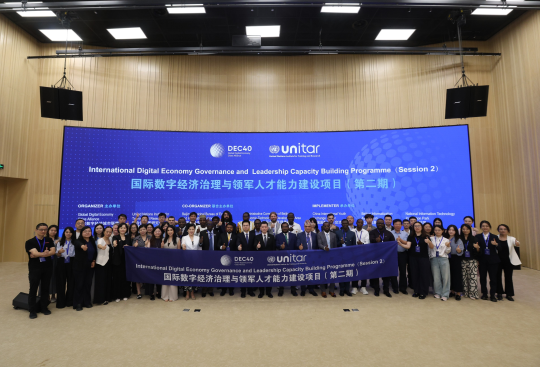
The Global Digital Economy Cities Alliance (DEC40) and the United Nations Institute for Training and Research (UNITAR), in collaboration with the Beijing Municipal Bureau of Economy and Information Technology and the Administrative Committee of Beijing Economic-Technological Development Area, jointly launched a Global Digital Governance Program. Co-organizers included the China International Youth Exchange Center, Beijing Informatization Association, and the National Information Technology Innovation Park. The Programme brought together more than 20 government officials, policymakers, and digital industry leaders from 13 countries across Asia, Africa, Europe, and Latin America. You Jing, Secretary-General of DEC40 and Director of the International Exchange and Cooperation Division of the Beijing Municipal Bureau of Economy and Information Technology, reviewed and summarized the program, outlining the next phase to align participants' needs with Beijing's resources and strengthen long-term engagement. Five participant representatives shared their experiences. Liu Weiliang, Deputy Director of the Beijing Municipal Bureau of Economy and Information Technology, emphasized Beijing's commitment to leveraging its digital economy strengths to enhance its international digital leadership development system, build a stronger talent cultivation network, and improve a full-cycle service mechanism. He stressed Beijing's dedication to working with global cities, institutions, and enterprises to promote digital development concepts, advance practical cooperation, and contribute to global digital governance. Session 2 of the Programme is a key initiative responding to the need for reforms in the global digital governance system while supporting the development of "Digital China" and the Global Development Initiative. It aims to build an integrated international cooperation platform combining "training + forums + enterprises + projects." Leveraging the DEC40 and UNITAR platforms, the program incorporated the Global Digital Economy Conference and highlighted Beijing's digital economy achievements. The program yielded tangible cooperation outcomes, with twelve government departments, institutions, and enterprises applying to join DEC40. The Alliance signed a memorandum of cooperation with IMPACT FOR AFRICA from Chad. Participants expressed interest in partnering with Beijing-based enterprises in areas including technology adoption, project implementation, and talent development, with a focus on digital government, intelligent industry, and digital workforce development. To date, two sessions of the Programme have been held, accelerating the development of a cross-regional, cross-institutional, and cross-cultural digital governance cooperation network spanning 46 cities in 30 countries.
多角的分析
ラオスが参加したこのデジタルガバナンスプログラムは、中国が推進する「デジタルチャイナ」構想とグローバル開発イニシアチブの一環であり、ラオスにとってはデジタル経済分野における中国からの技術移転や投資機会の拡大につながる可能性がある。しかし、ラオスの経済は依然として一次産品輸出とインフラ開発への依存度が高く、デジタル経済への本格的な移行には、国内のデジタルインフラ整備、人材育成、そして法制度の整備が不可欠である。対中債務の増加が懸念される中、デジタル分野での協力が経済構造の多角化に寄与するかは、今後の投資と政策実行にかかっている。
このプログラムへのラオス政府関係者の参加は、同国がデジタル化を国家発展の重要な柱と位置づけていることを示唆する。投資家にとっては、ラオス国内のデジタルインフラ、フィンテック、eコマース分野における潜在的な成長機会を示唆する可能性がある。特に中国企業との連携が強化されることで、中国市場へのアクセスや、中国のデジタル技術をラオス経由でASEAN諸国に展開する際のハブとしての役割が期待できるかもしれない。ただし、ラオスの法制度の不確実性、資本移動の制限、そして電力供給などのインフラの課題は、依然として投資リスクとして考慮する必要がある。
ラオスの一般市民、特に地方住民にとって、デジタルガバナンスの国際プログラムへの参加が直接的な生活向上に結びつくかは不透明である。プログラムの恩恵は、主に政府関係者や都市部のデジタル産業従事者に限定される可能性が高い。ラオス国内では、デジタルデバイドが依然として大きな課題であり、地方部ではインターネットへのアクセスやデジタルリテラシーが低い層も少なくない。今回のプログラムが、こうした格差是正や、市民生活に密着したデジタルサービスの普及にどう貢献するかが、社会的なインパクトの鍵となるだろう。
ラオス市民、特に地方に住む人々にとって、このデジタルガバナンスプログラムへの参加が直接的な恩恵をもたらすかは現時点では不明瞭です。プログラムの恩恵は、主に政府関係者や都市部のデジタル産業従事者に集中する可能性があります。ラオス国内には依然としてデジタルデバイドが存在し、地方ではインターネットへのアクセスやデジタルリテラシーが低い層も少なくありません。このプログラムが、こうした格差を是正し、市民生活に密着したデジタルサービスの普及にどう貢献するかが、社会的なインパクトの鍵となるでしょう。
背景・歴史的文脈
ラオスは社会主義一党体制を維持し、経済発展のために外国からの投資を積極的に誘致している。特に中国は、一帯一路構想の下、インフラ開発や経済支援を通じてラオスへの影響力を強めてきた。ラオス政府は、デジタル経済の発展を国家戦略の一つとして位置づけ、国際社会との連携を模索している。今回のプログラムは、中国が主導するグローバル開発イニシアチブの一環であり、ラオスのデジタル化推進と、中国との関係深化という文脈で捉えることができる。ラオス経済は、依然として一次産品輸出や水力発電に依存しており、経済構造の多角化が喫緊の課題である。
原文ソース
KPL Laos News