General articles are free for 24 hours after publish.
Cao Bang Province Expands Sericulture to Boost Farmer Income
Northern Vietnam's Cao Bang Province is focusing on developing its sericulture industry. The government is strengthening investment and technical support to improve farmer incomes and build sustainable production chains. This is expected to boost the regional economy and contribute to poverty reduction.
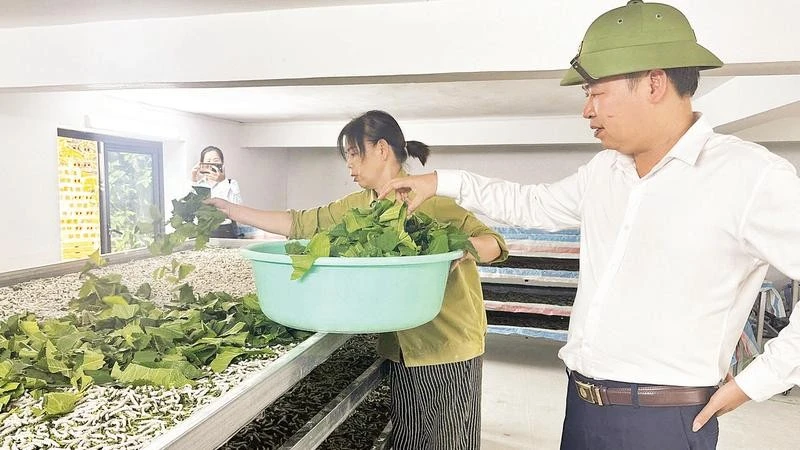
In Cao Bang Province, northern Vietnam, sericulture, encompassing mulberry cultivation and silkworm farming, is rapidly developing as an industry that significantly contributes to improving farmer incomes. The province is strengthening its policy to encourage investment in this sector and enhance support for building sustainable production chains. Specifically, it aims to boost the regional economy by attracting investment in factories for processing mulberries and cocoons. Hợp tác xã Nông nghiệp 118 (Agriculture Cooperative 118), established in 2019, is one of the pioneers in this initiative. The cooperative collaborates with approximately 600 farming households, providing guidance on mulberry cultivation, silkworm farming techniques, and purchasing the produced cocoons. Currently, the mulberry cultivation area has reached 560 hectares, with the cooperative's total annual revenue exceeding 40 billion VND (approximately 1.6 million USD), and the average annual income per household reaching 70-80 million VND (approximately 2,800-3,200 USD). Across Cao Bang Province, sericulture is developed in 31 communes and wards, with about 2,787 households participating. The mulberry cultivation area covers 1,227 hectares, and the cocoon production volume is approximately 829 tons per year. This brings an economic efficiency 2-2.5 times higher than that of corn and rice cultivation. Concentrated production areas are primarily in communes such as Co Ba, Khanh Xuan, Hung Dao, and Bao Lac. Ms. Lanh Thi Mai, Secretary of the Party Committee of Co Ba Commune, stated, "Sericulture brings considerable income to the locality, and many families have escaped poverty and become prosperous. In the future, stable market access for cocoons and support for sustainable development are needed." Mr. Le Hai Hoa, Chairman of the Cao Bang Provincial People's Committee, has directed the Department of Agriculture and Rural Development to develop a project plan for the development of sericulture starting in 2024. This includes support for farmers with seedlings and equipment, utilizing provincial budget and funds from national target programs. Furthermore, Yen Bai Sericulture and Silk Joint Stock Company has expressed interest in investing in silk reeling and spinning factories and developing mulberry raw material areas in Cao Bang Province, having already conducted on-site surveys. The company exports its silk products to India, Japan, and European countries. Cao Bang Province aims to expand its mulberry cultivation area to over 1,800 hectares by 2030, with cocoon production reaching 1,200-1,500 tons per year. This aims to develop sericulture into a crucial economic sector for the province's agricultural development.
Original source
Nhan Dan