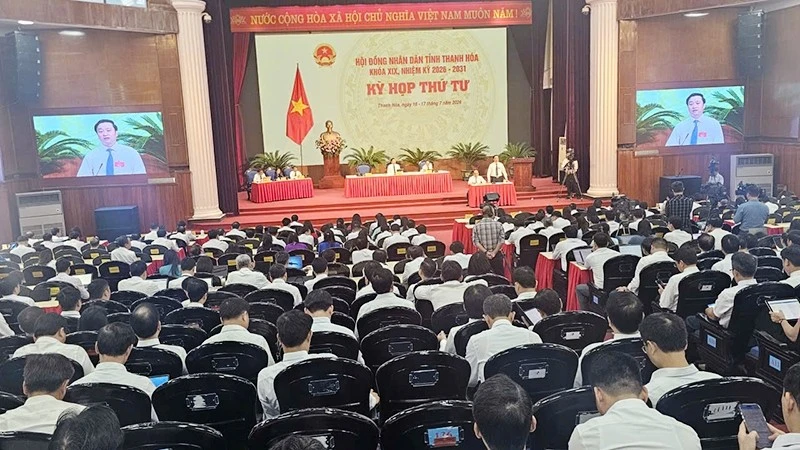
Thanh Hoa Province Faces Educational Infrastructure Challenges and Future Plans
Thanh Hoa Province in Vietnam faces educational infrastructure challenges, including numerous remote schools, especially in mountainous and remote areas, and aging facilities struggling to cope with rapid urbanization. The Provincial Department of Education and Training plans to reorganize and develop the school network in line with socio-economic development and demographic changes, ensuring equitable access to education.
This article requires PRO
This article is outside the free access window or is a special report. PRO unlocks it and the full archive.
Related articles
- Former Health Minister's Sentence Reduced to 3 Years in Prison in Hospital Corruption Case
A former Vietnamese Health Minister has had her sentence reduced to three years in prison in connection with corruption in hospital construction projects. The appellate court halved her original sentence, reflecting a stricter approach to graft in the country.
- Vietnam Enhances Diabetes Care: Focus on Early Detection and Effective Treatment
A scientific conference on diabetes and Basedow's disease was held in Hanoi, discussing advanced treatments and AI applications. Vietnam is urgently addressing diabetes as a non-communicable disease (NCD), strengthening efforts to improve public health and maintain national well-being.
- Ho Chi Minh City Merges Research Institute and School into Cadre Academy to Enhance Training
Ho Chi Minh City has announced the merger of the Ho Chi Minh City Development Research Institute and the Ly Tu Trong School for Youth Leaders into the Ho Chi Minh City Cadre Academy. This move aims to streamline administrative structures and enhance the training capacity for officials.
- Hanoi Aims for 100% Student Health Insurance Coverage in Online Dialogue
Hanoi's Social Insurance Agency will host an online dialogue on October 8th to address health insurance for students. With a current coverage rate of 99.46%, the event aims to further promote enrollment and answer questions. The annual insurance premium for students is VND 683,100, with the state budget supporting half.