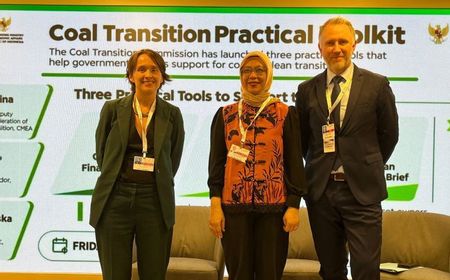
Indonesia Launches Energy Transition Toolkit for Coal-Reliant Nations at COP31
The Indonesian government, through the Coordinating Ministry for Economic Affairs and the Coal Transition Commission, has launched an energy transition toolkit for coal-reliant nations at COP31. This kit serves as a practical guide to accelerate the shift to cleaner energy while maintaining economic growth.
Read up to 3 eligible full articles per Japan day (JST) for free
Create a free account to open up to 3 eligible full articles per Japan calendar day (JST). Headlines and summaries remain available across ASEAN 7.
Related articles
- North Sulawesi Strengthens Chili Production Amid Price Surge
Amidst a surge in rawit chili prices in North Sulawesi, Indonesia, the Regional Inflation Control Team (TPID) is intensifying production efforts. Strategies include enhancing farmer capacity, mitigating weather impacts, and optimizing planting schedules.
- Regional Transfer Fund Increases to Rp726.2 Trillion in 2026, Budget Boosted for Sumatra Disasters
The Indonesian government has increased the ceiling for Regional Transfer Funds (TKD) in 2026 to Rp726.2 trillion from an initial Rp693 trillion. This additional budget will be allocated for disaster management in Sumatra, maintenance of essential public services, and regional development needs.
- Indonesia's Sharia Financing Growth Slows, Impact Unclear
Sharia financing in Indonesia is experiencing a slowdown. Factors such as the overall economic downturn, increased competition, and regulatory complexities are cited as contributing reasons, with tangible impacts on households and SMEs still limited.
- El Niño Impacts Yogyakarta Aquaculture, Mass Fish Deaths Halt Production
Extreme weather attributed to El Niño has severely impacted aquaculture in Sleman, Yogyakarta. A mass fish die-off, suspected to be caused by drastic water temperature fluctuations, has led to production halts and an estimated Rp10 million loss for a local group. Authorities cite potential water quality degradation and increased pathogens.