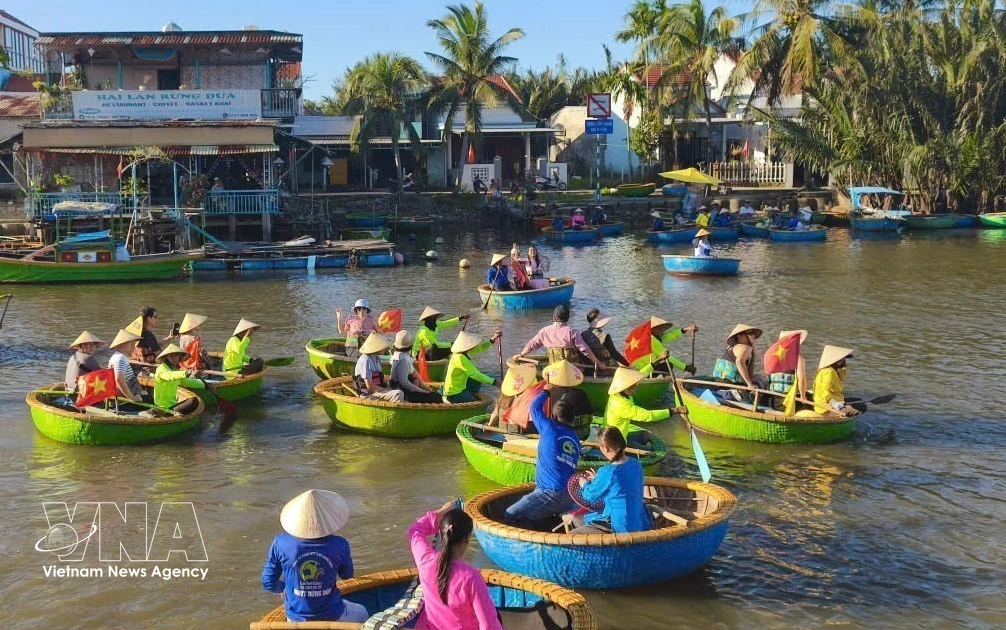
Vietnam's Rural Charm and Cultural Depth Drive Tourism Growth
Vietnam is witnessing a surge in tourism driven by its rich natural landscapes and diverse indigenous cultures. Unique offerings like agricultural experiences, ethnic traditions, and local festivals are attracting both domestic and international visitors, revitalizing local economies and positioning tourism as a key growth sector.
As lychee orchards turn bright red in early summer, the Dong Man Ecotourism Area in Thanh Ha commune, Hai Phong city is bustling with visitors eager to experience rural life and fruit harvesting. The model is emerging as a promising example of how agricultural resources can be transformed into tourism products, helping create a new growth driver for the local economy. Summer marks the busiest season for tourism in Nha Trang in the south-central coastal province of Khanh Hoa. Beyond its crystal-clear waters, white sandy beaches and world-famous bays, a growing number of cultural tourism products are offering visitors fresh and memorable experiences. Playing with ducks may seem like a simple rural activity, but this rustic experience is proving to be a major draw for international tourists in the central province of Quang Tri. The tourism sector will implement a series of key tasks and solutions in the last six months of 2026 to realise the goal of making tourism a leading economic industry in the new development era. With its cool climate, rich natural resources and diverse tourism offerings, Lam Dong aims to welcome 25.8 million visitors in 2026, further strengthening its position as one of Vietnam's leading tourism destinations Ta Xua is rolling out a campaign titled “Bringing Ta Xua to the world” and aims to establish the image of “Ta Xua - a sea of clouds, majestic nature and Mong cultural identity” during the 2028-2030 period. The Hai Phong–Ho Chi Minh City and Hai Phong–Phu Quoc routes, operated by Sun PhuQuoc Airways, will enhance connectivity between the sides, encourage two-way visitor flows, and create fresh momentum for regional tourism development. Just a two hour drive from Ho Chi Minh City, Ba Den Mountain has long been a favourite destination for weekend getaways. What keeps visitors returning is not only its convenient location, but also the fact that every visit offers something new to discover. On July 11, the day of the DIFF 2026 finale, accommodation establishments in the city served about 131,000 visitors, an increase of 16% from a year earlier. International visitors totalled 52,400, up 27% year-on-year, while domestic visitors reached 78,600, an increase of nearly 10%. The central province of Quang Tri is working with the Vietnam Railways Corporation (VRC) to complete the project, which is expected to create a distinctive railway tourism product linking major heritage sites and scenic destinations across Vietnam's north-central region while strengthening regional tourism connectivity. Quang Ninh is looking to build partnerships to steer more Russian visitors to Ha Long Bay and other local attractions. Beyond the UNESCO World Heritage Site of Ha Long Bay, the province holds diverse advantages in marine tourism, cultural attractions, luxury resorts and wellness services. The Vietnam Maritime and Waterway Administration, Vietnam Register, and provincial construction department were instructed to coordinate with the Border Guard, Coast Guard, public security and local authorities to determine the cause of the accident, deal with its aftermath, identify and fix any state management lapses, offer support to victims and their families, and report regularly on the investigation’s progress. Home to one of Vietnam's richest biodiversity reserves, the Bach Ma National Park is stepping up efforts to transform its unique natural assets into sustainable tourism products while maintaining long-term conservation goals. Across Vietnam and around the world, travel inspired by music and film has become an increasingly influential trend. Cultural blockbusters can provide destinations with extraordinary visibility and a level of publicity that money alone often cannot buy. But attracting visitors is only the beginning. Both sides considered tourism as one of the most promising areas of bilateral cooperation, noting its role not only in promoting economic growth but also in enhancing people-to-people exchanges, mutual understanding and broader collaboration in trade, investment, education and culture. The Association of Tour Operators of Russia (ATOR) reported that Vietnam ranked fourth among the best-selling package tour destinations in the Russian market in July, capturing a 7.8% market share, up 3.2 percentage points year-on-year. The country overtook Thailand (4.7%) and China (4.3%). The model not only creates distinctive visitor experiences but also enables local people to benefit directly from tourism, while contributing to cultural preservation and environmental protection. The winners were recognised for breakthrough and innovative tourism policies in 2025, best tourism villages, leading destinations, top attractions and parks, standout new tourism products, top travel companies, and best-in-class lodging and dining, among others. Indonesian visitors currently account for only about 0.4% of the province's total international arrivals, indicating substantial room for growth and broader cooperation. The provincial Department of Culture, Sports and Tourism recognised Kon Ka Kinh National Park and Yuragi Chaya Quy Nhon as official tourist destinations, raising the province’s total number of recognised tourist sites to four. Vietnam's appeal lies not in a single attraction but in the seamless combination of authentic experiences rooted in local culture. From colourful highland markets and traditional festivals to centuries-old craft villages, all remain an integral part of everyday life. Vietnam will continue to improve institutional frameworks and standards, develop human resources, expand Halal-certified services, strengthen international cooperation, promote business partnerships, and build the country's brand as a new destination for Halal tourism. Unlike conventional sustainable tourism, circular tourism goes beyond reducing environmental impacts. It embraces a regenerative approach in which every journey contributes to restoring ecosystems, preserving cultural heritage and strengthening the resilience of local communities. Copyright, VietnamPlus, Vietnam News Agency (VNA) Editor-in-chief, Mr. Tran Tien Duan.
多角的分析
ベトナムの観光産業は、農産物、文化、自然といった地域固有の資源を効果的に活用することで、経済成長の新たな柱として急速に台頭している。これは、単なるサービス業に留まらず、地方の農業や工芸品産業との連携を深め、サプライチェーン全体に波及効果をもたらす可能性がある。特に、農村部における観光開発は、所得向上と雇用創出に直接的に貢献し、地域経済の活性化に不可欠な要素となっている。ベトナム政府が観光を『主要な経済産業』とする目標を掲げていることは、この分野への戦略的な投資と政策支援が今後も継続されることを示唆している。
ベトナムの観光セクターへの投資は、その成長ポテンシャルから魅力的な機会を提供している。特に、地方のユニークな文化や自然資源を活用したエコツーリズムや文化ツーリズムは、差別化された体験を求める旅行者層に響くため、高い収益性が見込める。インフラ整備(航空路線、道路網)の進展や、ハラール認証サービスの拡充といった政府の支援策は、国際的な投資家にとって参入障壁を低減させる要因となる。ただし、投資対象としては、地域ごとの特性や市場の変動リスクを慎重に評価する必要がある。
ベトナムの観光開発は、地域社会の生活様式や文化保全に直接的な影響を与える。農村部での観光客増加は、地域住民に新たな収入源をもたらす一方で、伝統文化や生活習慣の変容を招く可能性もある。例えば、ドンマン・エコツーリズムエリアでのライチ狩り体験は、地域住民が観光客をもてなすことで生計を立てる機会を提供するが、受け入れ体制の整備や、過度な商業化による文化の希薄化といった課題も生じうる。また、タイ・スー地域におけるモン族文化のプロモーションは、文化遺産の継承と発展に貢献する可能性があるが、その過程で外部からの影響とのバランスを取ることが重要となる。
ベトナム市民にとって、地域文化や自然を活かした観光は、故郷への誇りを高め、経済的な恩恵をもたらす機会となっている。農村部では、観光客を迎え入れることで、伝統的な生活様式や工芸品が再評価され、新たな収入源となる。都市部では、週末の小旅行や、音楽・映画に触発された旅行が、生活の質の向上に繋がっている。ただし、観光客の増加に伴うインフラへの負荷や、地域によっては生活環境の変化への適応が求められる場合もある。
背景・歴史的文脈
ベトナムの観光産業は、ドイモイ(刷新)政策以降の経済自由化に伴い、徐々に発展してきた。特に近年、政府は観光を経済成長の主要な柱と位置づけ、インフラ整備、プロモーション強化、多様な観光商品の開発に注力している。農村部や地方の文化遺産を活用した観光は、2010年代以降、持続可能な観光開発の観点から注目を集め、地域経済の活性化策として推進されてきた。これは、ベトナムが単なるビーチリゾートだけでなく、文化や自然体験を求める旅行者層を取り込もうとする戦略の表れである。
原文ソース
VietnamPlus English