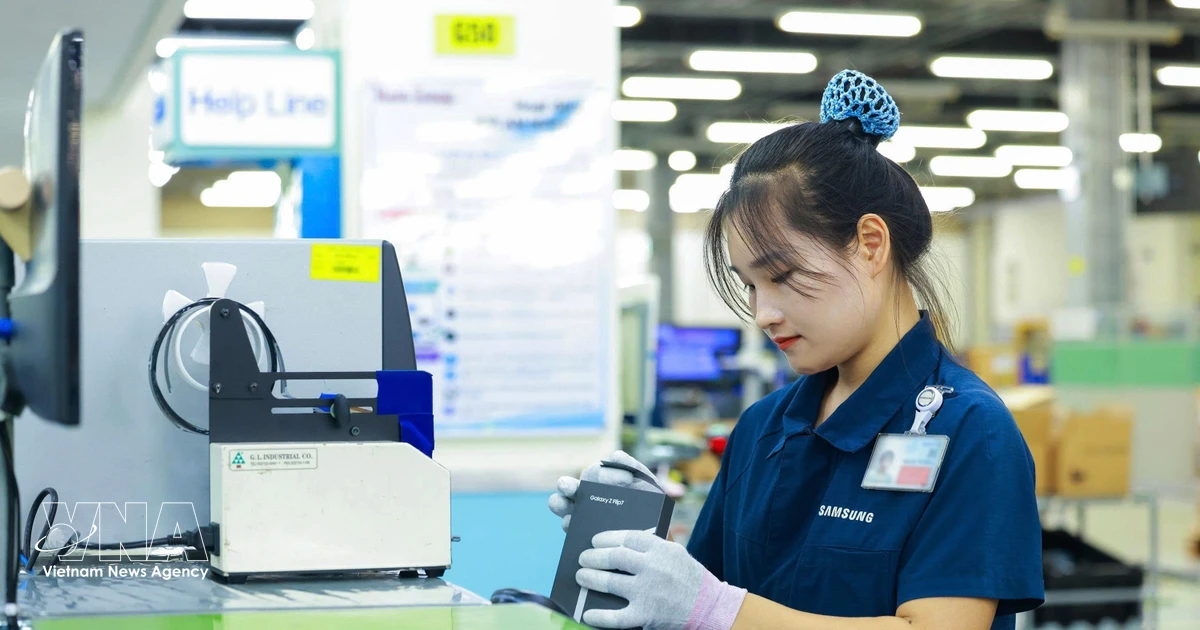
Samsung Boosts Vietnam Investment for AI, Semiconductor Workforce Development
Technology
2026年7月10日
4
VietnamPlus English

Samsung Boosts Vietnam Investment for AI, Semiconductor Workforce Development

AI サマリー

Samsung announced an additional $1 billion investment in Vietnam, focusing on strengthening its workforce in AI and semiconductor fields. As Vietnam's largest foreign investor, the move aims to contribute to the national economy and enhance technological capabilities.

Samsung is set to invest an additional $1 billion in Vietnam this year as part of its medium- and long-term expansion plans across electronics, display manufacturing, and electro-mechanics. This investment specifically aims to strengthen the development of talent within the country, particularly in the fields of Artificial Intelligence (AI) and semiconductors. A Party official highlighted Samsung's significant role in Vietnam's economy as the nation's largest foreign direct investment (FDI) enterprise. The Samsung R&D Centre in Hanoi stands as the firm's largest facility in Southeast Asia. To further deepen this relationship, Associate Professor Dr. Doan Minh Huan proposed orienting Samsung as a model FDI enterprise, offering opportunities for Vietnamese senior management officials to undertake study visits and gain practical experience. This initiative aligns with Vietnam's strategy to cultivate its domestic talent pool and achieve self-reliance in advanced technology sectors. Vietnam is currently home to approximately 4,000 start-ups and enterprises in the science, technology, and innovation sectors, supported by a workforce of over 30,000 highly skilled professionals. The government prioritizes investment in strategic technology areas such as AI, big data, and cybersecurity to drive national economic development. The 2026-2030 Digital Economy and Digital Society Development Programme, in particular, emphasizes the cultivation of these advanced technology fields. Vietnam's challenge is not merely to train more engineers or scientists, but to cultivate a generation capable of mastering, improving, and eventually creating core technologies. The Prime Minister has stressed that ministers must take direct responsibility for the implementation of assigned tasks and ensure the quality and progress of database development. Prime Minister Le Minh Hung stressed that the national digital architecture framework should provide a unified, shared, and interoperable architecture for the entire political system, from the central to grassroots levels, while connecting government systems with citizens and businesses. Inforadar noted that Vietnam has progressively streamlined its regulatory framework to clear institutional bottlenecks while putting in place mechanisms designed to spur innovation and technology adoption. The process has also pivoted from a resource-heavy approach to one focused on practical results, with stricter monitoring of projects’ progress. The Dien Bien provincial People's Committee on June 23 authorized a controlled pilot program for digital technology-based products and services using unmanned aerial vehicles (UAVs), targeting a flight safety rate of over 99% during the trial period. Vietnam called for enhanced cooperation and the establishment of common regional frameworks for emerging strategic technologies such as artificial intelligence (AI), big data, space technology, and cybersecurity to create a secure digital business environment and improve ASEAN's overall competitiveness. Vietnam's semiconductor ecosystem now comprises around 60 chip design companies, some 7,000 chip design engineers, and 166 universities offering semiconductor-related training programs. Initial registrations from 12 organizations indicate demand for the prototyping of approximately 30,000 chips. Samsung's latest investment is expected to contribute to Vietnam's long-term national goal of fostering a generation capable of mastering, improving, and ultimately creating core technologies. The Vietnamese government continues to streamline regulations and improve the investment environment to promote innovation.

多角的分析

経済的影響

サムスンの10億ドル追加投資は、ベトナムにとって単なる資本流入以上の意味を持つ。これは、同社がベトナムを単なる生産拠点から、研究開発(R&D)と高度人材育成の中心地へと位置づけ直している兆候である。特にAIと半導体分野への注力は、ベトナムがサプライチェーンの川上へと移行しようとする国家戦略と軌を一にする。ベトナム政府は、技術革新を国家開発の突破口と位置づけ、関連法規の整備や投資環境の改善に力を入れている。サムスンのような巨大企業の技術移転と人材育成へのコミットメントは、国内のスタートアップや関連産業の成長を触発し、ベトナム経済の構造転換を加速させる潜在力を持つ。

投資家心理

サムスンのベトナムへの追加投資は、同社がベトナムの長期的な成長ポテンシャルを高く評価していることを示唆している。特にAIや半導体といった先端技術分野への注力は、高付加価値産業へのシフトというベトナムの国家戦略と一致しており、投資家にとって魅力的な要素となる。ベトナム政府が規制緩和やインセンティブを通じて技術革新を後押しする姿勢は、将来的な収益性向上への期待を高める。ただし、地政学的リスクやグローバルサプライチェーンの変動といった外部要因には引き続き注意が必要であり、投資判断においてはこれらのリスク要因も考慮されるべきである。

社会的影響

サムスンのAI・半導体分野における人材育成強化は、ベトナムの若年層にとって新たなキャリアパスを開く可能性がある。特に、ハノイの研究開発センターでの実務経験は、国内の大学卒業生が高度な専門知識とスキルを習得する機会を提供する。これにより、優秀な人材の国外流出を防ぎ、国内での技術革新と産業発展に貢献することが期待される。一方で、AIや半導体分野の専門職に就ける人材は限られるため、教育格差の拡大や、より広範な分野での雇用創ちが課題となる可能性も指摘される。また、デジタル化の進展は、市民の生活利便性を向上させる一方で、データプライバシーやサイバーセキュリティに関する懸念も生じさせている。

市民の声

サムスンの追加投資は、ベトナムの都市部、特にハノイやホーチミン市周辺の若者にとって、より高度で専門的な職に就く機会が増えることを意味する。AIや半導体といった最先端技術分野でのキャリアは、高い給与と専門性の向上を期待させ、多くの若者が目指すであろう。しかし、こうした機会は主に大都市圏に集中する傾向があり、地方の若者との間で機会の格差が生じる可能性もある。また、デジタル化の進展は、行政サービスの効率化やオンラインショッピングの普及など、市民生活の利便性を高める一方で、デジタルデバイド(情報格差)や、個人情報保護に関する不安も同時に存在している。

背景・歴史的文脈

ベトナムは、一党体制下で経済成長を最優先課題とし、特に外国直接投資(FDI)を積極的に誘致してきた。その中でもサムスンは、ベトナム最大の外国投資家として、同国の製造業と輸出経済を牽引する存在となっている。近年、ベトナム政府は、単なる労働集約型産業から、AIや半導体といった先端技術分野へのシフトを国家戦略として掲げている。今回のサムスンの追加投資と人材育成への注力は、この国家戦略と、サムスン自身のグローバルサプライチェーン再編の動きが合致した結果と言える。ベトナムは、米中対立の激化を背景に、サプライチェーンの「チャイナ・プラスワン」戦略における重要な選択肢として注目されている。

原文ソース

VietnamPlus English

原文を読む