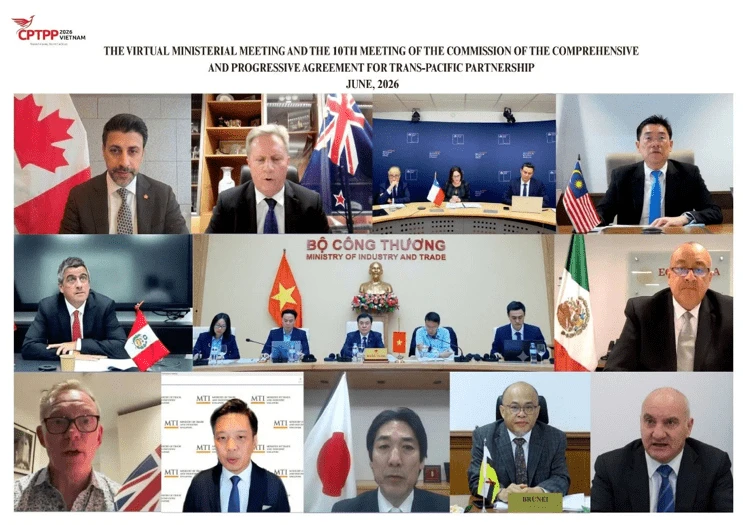
Vietnam Advances CPTPP Agenda as 2026 Chair
Vietnam, as the 2026 Chair of the CPTPP, is leading discussions on accession processes for Indonesia, the Philippines, and the UAE. Domestically, the economy shows a robust recovery with significant growth in both exports and imports.
Vietnam is advancing its agenda as the Chair of the Comprehensive and Progressive Agreement for Trans-Pacific Partnership (CPTPP) for 2026, signaling a commitment to international cooperation. During the 10th Commission Meeting held virtually on June 26, CPTPP member states agreed to commence the discussion process for the accession of Indonesia, the Philippines, and the United Arab Emirates (UAE). The CPTPP entered into force in 2018, with the US having withdrawn during President Donald Trump’s first term. The pact currently includes 12 members: Australia, Brunei, Canada, Chile, Japan, Malaysia, Mexico, New Zealand, Peru, Singapore, the UK, and Vietnam. Vietnam's chairmanship theme for 2026, "Shared Visions – Shared Actions," reflects the members' commitment to working together towards long-term development goals and translating shared visions into concrete outcomes. Domestically, total retail sales and consumer service revenue for the first six months of the year are estimated at VND 3,889.5 trillion, a year-on-year increase of 12.9%. Excluding price factors, real growth stood at 7.3%, indicating a solid recovery in domestic purchasing power and consumer demand. Total capital flowing into the market, including additional registered capital, reached nearly VND 3.1 quadrillion, an 11.3% year-on-year increase. In terms of trade, total trade turnover in the first half of 2026 reached USD 549.69 billion, up 27.1% compared to the same period last year, with exports rising 21% and imports increasing 33.4%. Foreign direct investment (FDI) also saw significant growth, with total registered capital, including new and additional investments, reaching USD 34.65 billion as of June 30, a 61% year-on-year increase. Ho Chi Minh City, in particular, remained Vietnam's leading FDI destination, attracting over USD 6.8 billion in the first half of 2026. Services remained the key growth driver for the economy, expanding 8.89% in the first six months and accounting for 54% of the gross regional domestic product (GRDP). Transport recorded the strongest performance with growth of 13.68%, followed by trade and finance. However, the real estate sector continued to face difficulties. There is also a growing interest in electric vehicles, with approximately 369,849 battery electric passenger cars in operation. Vietnam is focusing on strengthening its supporting industries to enhance industrial self-reliance and deepen integration into global supply chains. Samsung Electronics plans to invest an additional USD 1 billion in Vietnam this year, underscoring the country's growing importance as a global manufacturing hub. Source: VietnamPlus English
多角的分析
ベトナム経済は、CPTPP加盟国との貿易拡大やFDIの増加に支えられ、堅調な回復基調を維持しています。特にサービス業と運輸業の成長が顕著であり、これは国内消費の回復とサプライチェーンの活発化を示唆しています。しかし、不動産セクターの低迷は、経済全体の持続的な成長に対する潜在的なリスク要因として注視が必要です。インフレ率が前年比4.69%上昇している点は、金融政策の引き締め圧力となり得るでしょう。
ベトナムへのFDIは前年比61%増と大幅に増加しており、投資家にとって魅力的な市場であり続けています。CPTPP議長国としての国際協調姿勢は、貿易協定を通じた市場アクセス拡大の期待を高めます。サムスン電子の追加投資計画は、製造業分野への信頼感を示すものであり、今後もハイテク産業やインフラ関連への投資が期待されます。ただし、為替レートの変動バンド(+/- 5%)は、為替リスク管理の重要性を示唆しています。
国内消費の回復は、国民生活の向上に寄与する一方、インフレ率の上昇は家計を圧迫する可能性があります。サービス業の成長は雇用機会の創出に繋がりますが、不動産セクターの停滞は関連産業への波及効果を限定する恐れがあります。また、電気自動車の普及は、環境意識の高まりと技術革新の兆しですが、インフラ整備や価格面での課題が残ると考えられます。
CPTPP加盟国との連携強化や経済成長は、国民にとって雇用機会の増加や生活水準の向上に繋がる可能性があります。しかし、インフレによる物価上昇は、特に低所得者層の生活を圧迫する懸念があります。ホーチミン市のような主要都市へのFDI集中は、地域間の経済格差を拡大させる可能性も指摘されます。また、新しい技術(例:電気自動車)の普及は、一部の層には恩恵をもたらしますが、全ての国民がその恩恵を受けられるわけではないという課題も浮き彫りになります。
背景・歴史的文脈
ベトナムは1986年のドイモイ(刷新)政策以降、市場経済化を進め、国際社会との関係を正常化してきました。CPTPPの前身であるTPP(環太平洋経済連携協定)には当初から参加し、米国離脱後も、協定の維持・発展に貢献する姿勢を示してきました。2026年の議長国就任は、ベトナムが地域経済における主導的な役割を担う意思の表れであり、一党体制下での経済成長と国際協調のバランスを取る外交戦略の一環と言えます。中国との経済的結びつきが強い中で、CPTPPのような多国間協定を通じて、経済的・政治的な多様性を確保しようとする動きは、ベトナムの外交政策の重要な特徴です。
原文ソース
VietnamPlus English