General articles are free for 24 hours after publish.
AI Tools Dramatically Cut Reporting Time for Philippine Firms, Boosting Productivity
Philippine companies are reporting significant reductions in reporting and analysis tasks, cutting hours down to minutes through the use of AI tools. The proponent of the "4A Blueprint" AI adoption framework highlights employee training and clear policies as key to productivity gains.
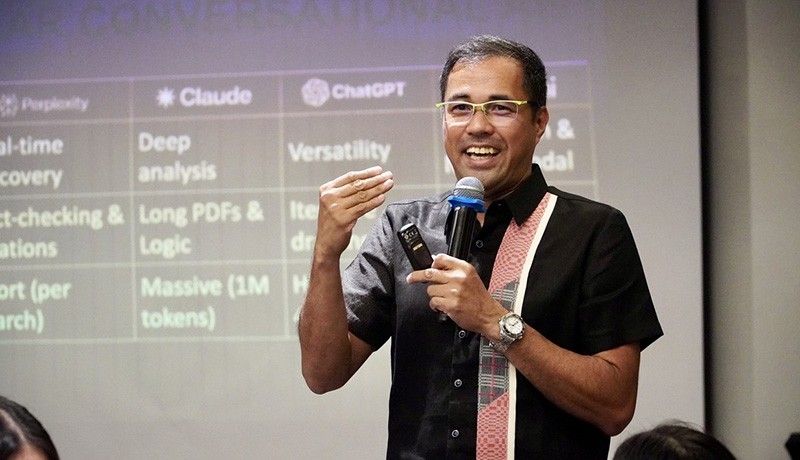
Companies in the Philippines are experiencing dramatic reductions in reporting and analysis tasks, with hours-long processes being cut down to mere minutes through the effective use of artificial intelligence (AI) tools. Jerry Ilao, creator of The 4A Blueprint™, a practical AI adoption framework for Philippine businesses, shared that participants in his AI workshops have reported significant time savings. Examples provided include an inventory aging analysis completed in 3 minutes instead of the previous 4 hours, a sales and collection report in 5 minutes down from 5 hours, and a network sales report in 10 minutes instead of 6 hours. These participant-reported times, which include review and corrections, demonstrate the tangible benefits of AI assistance, with results varying by task complexity. Ilao clarified that these achievements did not involve participants building complex AI agents or automating processes from scratch. Instead, they leveraged readily available AI tools such as ChatGPT, Claude, Gemini, or Copilot, feeding them familiar data and comparing the AI-generated output with their manually created versions. This benchmarking process underscored the meaningful impact of AI. The 4A Blueprint categorizes AI adoption into four levels: Assistants, Automation, Agents, and AI-First. Ilao's core principle is to meet businesses where they are and start from their current stage. While AI agents are often promoted for their advanced capabilities, he advises companies to begin with Level 1, the "Assistants" stage, as it is the most cost-effective and easiest to implement. This involves training employees on effective AI use, providing access to approved tools, and establishing clear AI policies. In one workshop session, an impressive 87% of participants reported using AI multiple times a week, the highest rate Ilao has observed. Despite this high frequency of use, many still discovered substantial room for improvement in how they maximized their AI assistants. This indicates that frequent AI use does not automatically equate to optimal utilization. As companies progress from assistants to automation and agents, the complexity of implementation, governance requirements, and operational risks generally increase. Ilao cautions against a hasty rush into AI agents, emphasizing the importance of a phased approach. Participant self-reported confidence in using AI at work rose from an average of 3.22 to 4.26 out of 5. Furthermore, 89% rated their AI-assisted output as better than their usual work, and 94% stated they would use the approach again. While these are self-reports, they strongly suggest a positive impact on productivity and employee satisfaction. Ilao recommends a four-step process for effective AI integration: 1) Select an analysis task already completed manually. 2) Provide the AI with the same data and query. 3) Include review time when measuring the AI-assisted output. 4) Compare the AI-assisted result with the original manual output. He also stresses that effective prompts are valuable intellectual property and should be shared and treated as standard operating procedures within the company. Information source: Philstar Business
Original source
Philstar Business