General articles are free for 24 hours after publish.
Suvarnabhumi Airport Ranks 8th for Connectivity in Asia-Pacific and Middle East
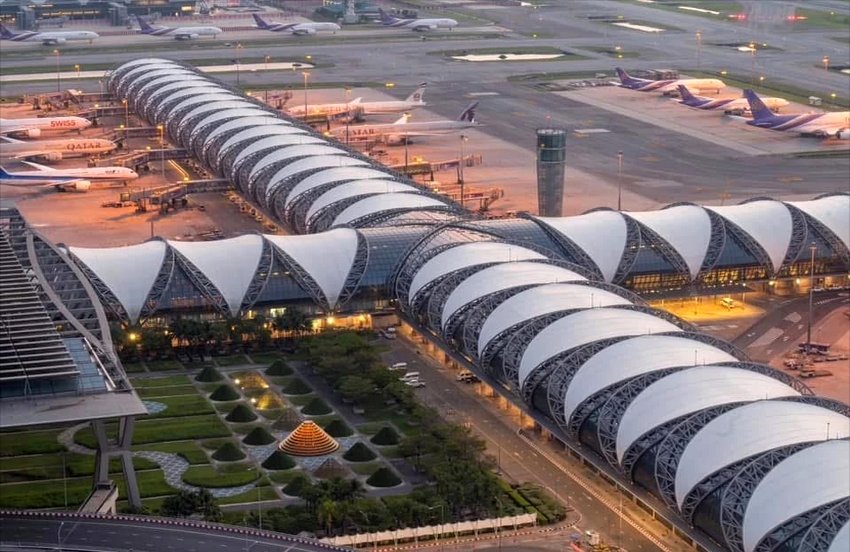
Bangkok's Suvarnabhumi Airport has been ranked eighth among the top 10 most connected airports in the Asia-Pacific and Middle East regions for 2025. The ranking, released by Airports Council International Asia-Pacific & Middle East (ACI APAC & MID), evaluates factors such as airline network scale, frequency, and the economic importance of destinations.
Suvarnabhumi Airport has been ranked eighth among the 10 most connected airports across the Asia-Pacific and Middle East regions for 2025, according to the Airports Council International Asia-Pacific & Middle East (ACI APAC & MID). The ranking was included in the 2026 ACI Asia-Pacific & Middle East Air Connectivity Index, which evaluates airport connectivity from the perspective of passengers and their travel experience. Paweena Jariyathitipong, President and Chief Executive Officer of Airports of Thailand Plc (AOT), said the ranking reflected Suvarnabhumi’s role in connecting Thailand with cities and countries around the world. The index measures connectivity through several factors, including the scale and frequency of airline networks, the economic importance of destinations, and the quality and efficiency of flight connections. It also considers aircraft types, domestic and international travel patterns, the number of stops required for journeys and airline alliance memberships. Dubai International Airport topped the 2025 ranking, followed by Shanghai Pudong International Airport and Incheon International Airport. Guangzhou Baiyun International Airport ranked fourth, followed by Hamad International Airport, Singapore Changi Airport, Beijing Capital International Airport, Suvarnabhumi Airport, Tokyo Haneda International Airport and Hong Kong International Airport. ACI APAC & MID said air connectivity across Asia-Pacific and the Middle East increased by an average of 11% in 2025 from the previous year. Connectivity in the Middle East grew 21%, while Asia-Pacific recorded 10% growth. The increase reflected continued expansion of airline networks, stronger hub connectivity and the recovery of air travel and international city-pair connections across the regions. The index covered 315 airports, including 277 in Asia-Pacific and 38 in the Middle East. It combines direct, indirect and hub connectivity, taking into account both the number of available seats and the economic importance of destinations served. AOT, which operates six airports in Thailand, said it is continuing to focus on airport development and management to strengthen air connectivity and accommodate long-term growth in passenger travel. Paweena said AOT’s priorities include making the most effective use of existing infrastructure, improving operational reliability, enhancing the passenger experience and expanding the use of technology to improve service efficiency. The company aims to strengthen Thailand’s air connectivity while creating longer-term benefits for passengers and the wider economy.
Original source
Pattaya Mail