General articles are free for 24 hours after publish.
Vietnam Boosts Oversight of Crypto Market
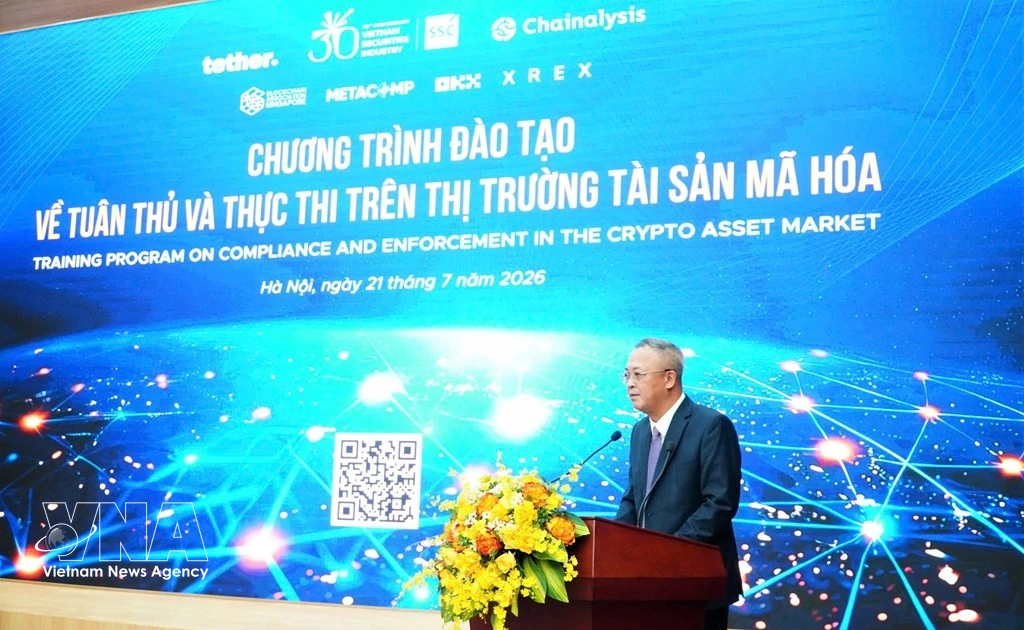
Vietnam is strengthening oversight of its crypto market with a new decree imposing penalties on domestic investors trading outside licensed providers. The government also plans to pilot crypto and digital asset exchanges from Q2 2026, aiming to formalize the emerging sector.
Vietnam is set to enhance its oversight capabilities for the cryptocurrency market, marking a significant step towards formalizing the burgeoning sector. Decree 284/2026, effective from September 1, 2026, introduces penalties for domestic investors trading crypto assets outside service providers licensed by the Ministry of Finance, the first of its kind in the country. This move signals Vietnam's intention to bring the emerging digital asset market under a structured regulatory framework, aiming to protect investors and ensure market stability. Furthermore, the Vietnamese government plans to pilot exchanges for crypto and digital assets starting from the second quarter of 2026. This initiative is part of a broader effort to operationalize the market and establish Vietnam as a regional hub for real-world asset (RWA) tokenization, with events organized by the Vietnam Blockchain Association and other partners aiming to foster policy dialogue and attract investment. The broader economic context shows Vietnam's commitment to sustained growth amidst global uncertainties. A recent report highlighted Vietnam's economy building a favorable position in the first six months of the year, with GDP expanding significantly, the highest first-half growth rate in recent years, as key growth drivers have operated in tandem. To further bolster export growth during the remainder of the year, the government is implementing a broad range of measures. These include expanding overseas markets through economic diplomacy, maximizing the benefits of free trade agreements (FTAs), streamlining administrative procedures, reducing logistics costs, and improving access to credit. Authorities are also encouraging deeper processing, official cross-border exports, and greater market diversification to enhance the competitiveness of Vietnamese products. The continued choice of Vietnam by global buyers as a sourcing destination reflects the country’s growing position in international supply chains. The CPTPP, for example, has significantly expanded Vietnam's access to major markets and encouraged greater investment by promoting regional production networks and clearer rules of origin. In the new energy economy, value is increasingly derived from technology, data, infrastructure, operational capabilities, and supply chain connectivity, areas where Vietnam is actively seeking to develop. In its foreign relations, Vietnam navigates a complex geopolitical landscape, particularly in its relationship with China. The country continues to strengthen its semiconductor ecosystem, fostering deeper integration into the global value chain. Collaborations with entities like the Singapore Semiconductor Industry Association (SSIA) aim to connect Vietnam's semiconductor ecosystem with regional business networks. Hanoi is creating a new growth driver for the capital and the country by enhancing technological capabilities and paving the way for deeper integration into the global semiconductor value chain. Dezhou Municipal People’s Government in China also sees Vietnam as a key partner in tightening links with ASEAN. Overall, these developments reflect Vietnam's strategic approach to managing new economic frontiers while leveraging its strengths in manufacturing and trade to drive national development. The government's focus on enhancing productivity, higher value addition, stronger domestic sourcing, and faster digital and green transformation is crucial for meeting export targets and ensuring future growth beyond simply expanding production capacity.
Original source
VietnamPlus English