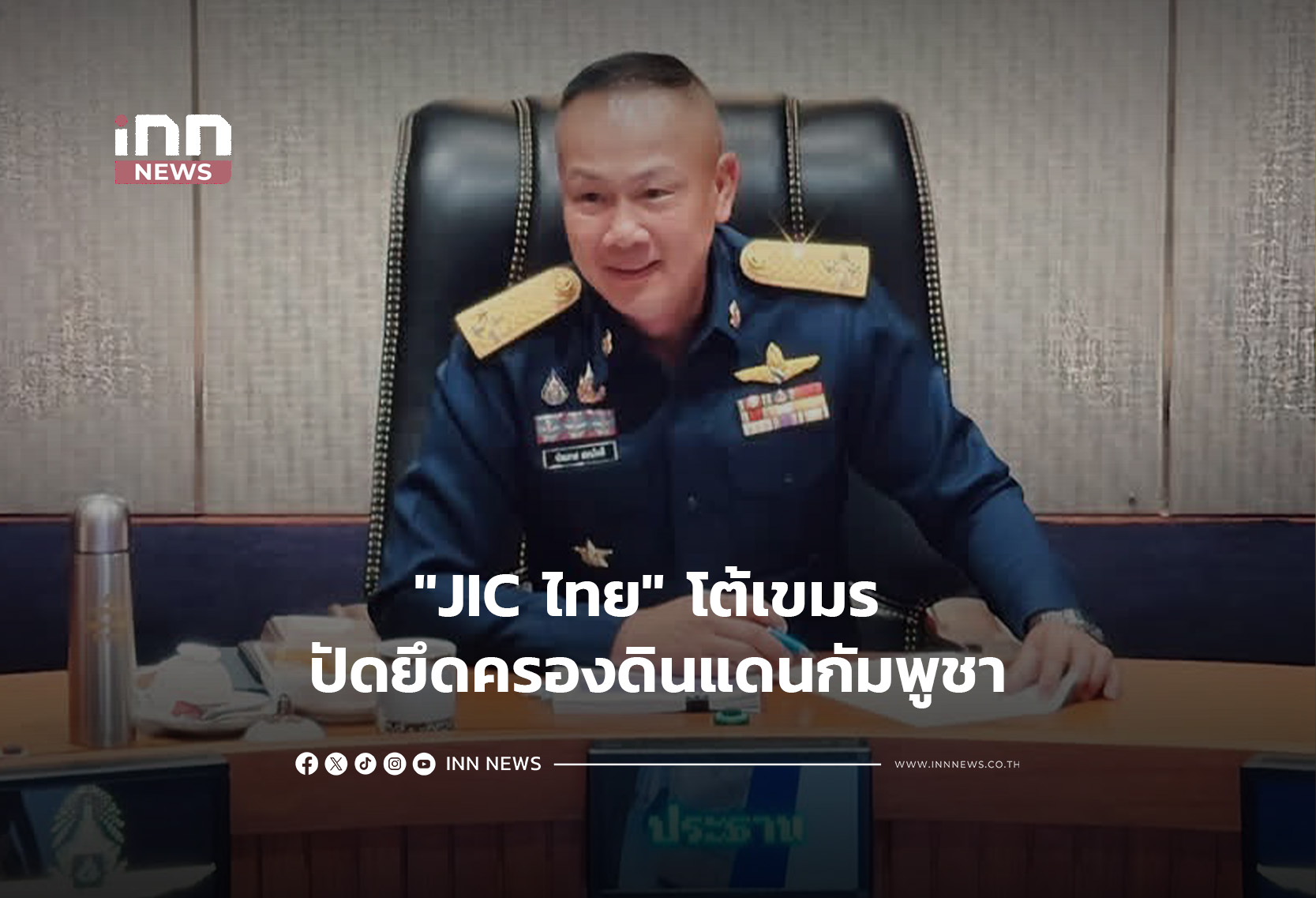
Thailand Rejects Cambodian Claims Over Preah Vihear Area, Denies Territorial Occupation
Thailand's Joint Information Centre (JIC) has refuted Cambodian claims of territorial occupation and destruction of ancient structures around Preah Vihear temple. Thailand insists on resolving border disputes through international law and bilateral mechanisms.
The Joint Information Centre (JIC) of Thailand has strongly refuted claims made by Cambodian officials asserting that "Preah Vihear" (Prasat Kna in Thai) belongs to Cambodia and accusing Thailand of territorial occupation and destruction of the ancient site. Air Chief Marshal Prapas Sonside, Director of the JIC, stated that the Cambodian assertion of "100% Cambodian ownership" of Preah Vihear and the accusations of Thai forces occupying the area, altering the condition of the ancient monument, and destroying its stairs are unilateral statements that cannot be considered conclusive under international law. Thailand does not accept claims of sovereignty over disputed areas by any single party. He emphasized that border issues with differing opinions must be considered through bilateral mechanisms agreed upon by both countries, relying on legally sound evidence such as treaties, historical documents, and past boundary demarcation records, rather than solely on the statements or interpretations of maps by one side. Regarding Cambodia's reference to maps, even at scales of 1:200,000 or 1:50,000, indicating Preah Vihear is within Cambodian territory, Air Chief Marshal Prapas described this as a unilateral claim. Under international law, both Thailand and Cambodia must jointly survey and establish border markers through bilateral mechanisms, making it impossible to determine sovereignty based on one-sided map interpretations. Addressing the accusation of territorial occupation, Air Chief Marshal Prapas clarified that Thailand's security measures, area control, and management of the ancient monument are conducted within areas Thailand considers under its control and are in line with joint statements made by both countries. He explicitly denied claims of Thailand occupying Cambodian territory. Concerning the allegation that Thailand burned or destroyed the stairs leading to the temple, the JIC Director stated that such accusations require verifiable evidence. Thailand is prepared to allow factual investigations based on objective evidence and cannot accept conclusions drawn from unilateral claims. Air Chief Marshal Prapas reiterated Thailand's commitment to resolving the Thai-Cambodian border issue through bilateral mechanisms, adhering to international law and joint statements. He reaffirmed the importance of de-escalation, avoiding provocation and the use of force, and refraining from any actions that could worsen the situation. "JIC Thailand urges all parties to exercise caution in public communication, prioritizing facts and avoiding the dissemination of information that could lead to misunderstandings or increased tensions. We affirm Thailand's readiness to engage constructively based on international law, good faith, and good neighborly relations to sustainably preserve peace and stability along the Thai-Cambodian border," he concluded. Source: INN News
多角的分析
このニュース自体に直接的な経済的影響は少ないが、タイ・カンボジア間の国境紛争は、両国間の貿易や投資環境に間接的な不確実性をもたらす可能性がある。特に、国境地域でのインフラ開発や観光プロジェクトは、紛争の長期化や激化により影響を受けるリスクがある。過去の国境紛争(例:2008年のプレア・ヴィヒアール寺院周辺での小規模衝突)では、一時的に国境貿易が停滞した事例もある。
投資家にとっては、この種の領土紛争は直接的な投資リスクとはなりにくいが、地政学的な不安定要因として注視する必要がある。特に、国境地域に事業拠点を置く企業や、両国間でのサプライチェーンを持つ企業は、紛争のエスカレーションによる物流の混乱や、当局の規制強化のリスクを考慮する必要がある。現状では、タイ経済全体への影響は限定的と見られる。
タイとカンボジアの国民感情に影響を与える可能性がある。特に、国境付近に居住する住民は、紛争の直接的な影響を受けやすく、生活や生計への不安が増大する可能性がある。また、ナショナリズムの高まりは、両国間での社会的な摩擦を生むリスクも孕む。SNS上での情報拡散は、両国国民の感情を煽る可能性があり、冷静な対応が求められる。
タイ国民、特に国境地域に住む人々にとっては、領土問題は自国の主権に関わる重大な問題として受け止められる。カンボジア側の主張が事実無根であるというタイ政府の立場は、国民の愛国心を刺激する一方で、紛争がエスカレートすることへの懸念も抱かせうる。プラサット・クナ(プレア・ヴィヒアール)周辺の土地利用や、文化遺産へのアクセスに関する住民の生活への影響は、現時点では不明瞭だが、過去の紛争時には住民の避難や生活様式の変化が生じた事例もある。
背景・歴史的文脈
プレア・ヴィヒアール寺院とその周辺地域を巡るタイとカンボジアの国境紛争は、長年にわたる歴史的・地政学的な問題を抱えている。1907年の仏領インドシナとシャム王国の境界画定条約により、この地域はカンボジア(当時フランス領)に属することになったが、タイ側はこの境界画定に異議を唱えてきた。特に1962年の国際司法裁判所(ICJ)の判決で、寺院本体はカンボジア領とされたものの、周辺地域における国境線は確定していなかった。2008年には、ユネスコ世界遺産登録を機に両国間の緊張が高まり、小規模な武力衝突も発生した。今回のタイ・カンボジア合同情報センター(JIC)の声明は、こうした歴史的背景を踏まえ、カンボジア側の unilateral な主張に対し、タイが国際法と二国間交渉による解決を改めて強調するものである。
原文ソース
INN News