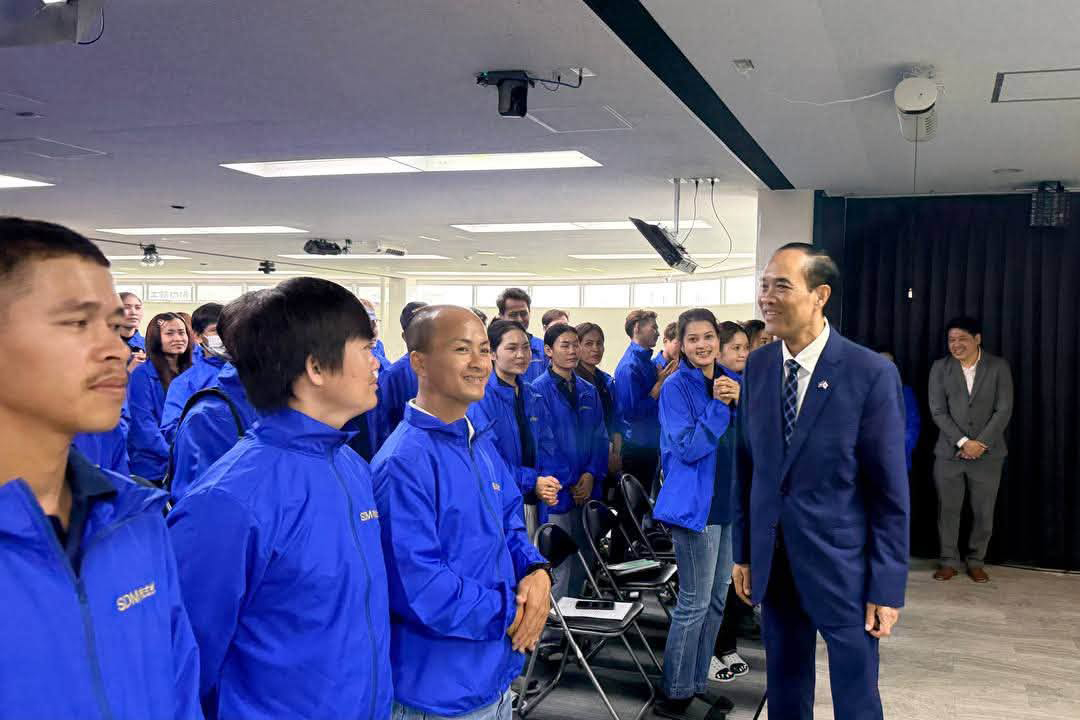
Cambodian Ambassador Urges Skills Development for Nation's Growth Among Citizens in Japan
Diplomacy
2026年7月13日
4
Phnom Penh Post
Relations
🇰🇭Cambodia🇯🇵Japan

Cambodian Ambassador Urges Skills Development for Nation's Growth Among Citizens in Japan

AI サマリー

The Cambodian Ambassador to Japan has urged Cambodian trainees and workers in Japan to develop their skills and knowledge to contribute to the Kingdom's future development upon their return, highlighting their role as "bridges of friendship."

Cambodian ambassador to Japan Chum Sounry has encouraged all Cambodian interns and workers in Japan to make the most of their time abroad by developing their knowledge and professional skills so they can contribute to the Kingdom’s future development upon their return. Speaking to more than 100 trainees and workers in Japan’s Shizuoka prefecture on July 12, Sounry described them as “bridges of friendship between Cambodia and Japan”, praising their role in strengthening ties between the two countries. The gathering was also attended by Japanese members of parliament, local government officials and representatives of several Japanese companies. Sounry highlighted the continued growth of Cambodia-Japan relations since the two countries elevated their ties to a Comprehensive Strategic Partnership in 2023. He noted that Japan remains one of Cambodia’s most important partners, particularly in skills transfer, employment creation and socio-economic development. The ambassador commended the migrant Cambodians for serving as ambassadors of goodwill while living and working in Japan, urging them to continue studying, improving their professional expertise and gaining practical experience that they can later apply to Cambodia’s development. At the same time, Sounry called on them to respect Japanese laws and regulations, maintain good conduct, avoid illegal activities and remain vigilant against natural disasters or health-related risks. He reiterated that the Cambodian embassy in Japan would provide consular services, labour protection and other necessary assistance to Cambodian citizens throughout the country. The ambassador also encouraged the Cambodian community in Japan to remain united, support one another and actively participate in community and cultural activities to help strengthen friendship and mutual understanding between the peoples of Cambodia and Japan. Sounry expressed his appreciation to the Japanese government and people, local authorities, partner companies and other stakeholders for their continued support in promoting the welfare of Cambodian nationals in Japan. He reaffirmed the embassy’s commitment to working closely with all partners to further strengthen the longstanding friendship and Comprehensive Strategic Partnership between Cambodia and Japan.

多角的分析

経済的影響

カンボジアは現在、経済成長の持続と多様化を目指しており、特に高度な技術や専門知識を持つ人材の育成が喫緊の課題となっている。日本で培われる技能は、カンボジア国内の産業高度化、特に製造業やサービス業における生産性向上に直結する可能性がある。しかし、帰国者の受け入れ体制や、習得したスキルを活かせる国内産業の現状が、その効果を左右する要因となる。技能移転の促進は、カンボジアの国際競争力強化に不可欠な要素である。

投資家心理

日本で技術や経験を積んだカンボジア人労働者の帰国は、カンボジア国内での新たなビジネス機会創出や、既存産業の生産性向上に繋がる可能性があり、投資家にとって魅力的な兆候となり得る。特に、日本企業との連携や、日本で培われた品質管理・効率化のノウハウを持つ人材の活用は、カンボジアに進出する日本企業や、現地での事業拡大を目指す企業にとって、リスク低減と収益性向上に寄与すると考えられる。ただし、帰国者のスキルが国内市場のニーズと合致するか、また、彼らを活用できるインフラや制度が整備されているかが、投資判断の鍵となる。

社会的影響

日本で働くカンボジア人労働者や技能実習生は、母国を離れて異文化の中で生活し、働く経験を通じて、多様な価値観や専門知識を吸収している。彼らが帰国後、その経験を活かしてコミュニティのリーダーとなったり、新しいビジネスを立ち上げたりすることは、カンボジア社会全体の活性化に繋がる。一方で、異文化適応の難しさや、帰国後のキャリアパスに関する不安も存在する。大使の呼びかけは、彼らが単なる労働力としてだけでなく、社会変革の担い手としての自覚を持つことを促すものであり、彼らの社会的な包摂と活躍を支援する体制の重要性を示唆している。

市民の声

日本で働くカンボジア市民にとって、大使のメッセージは、自身の努力が単なる個人の生活向上だけでなく、国家の発展に貢献するという、より大きな目的意識を与えている。彼らは、日本で得た技術や知識を母国に持ち帰ることで、家族や故郷に恩返しをしたいという思いを強くするだろう。しかし、帰国後の仕事や生活が保証されるわけではないという現実的な課題も存在する。彼らが安心して帰国し、その能力を発揮できるような社会的な支援体制の整備が、市民の生活実感にとって重要となる。

背景・歴史的文脈

カンボジアと日本は、長年にわたり良好な関係を築いてきた。特に2013年の国交樹立60周年を機に、両国関係は戦略的パートナーシップへと格上げされ、2023年には「包括的戦略的パートナーシップ」へとさらに深化させた。これは、政治、経済、安全保障、文化など、幅広い分野での協力を強化する枠組みである。カンボジアは、経済発展のために日本の投資や技術支援を重視しており、日本は、カンボジアを東南アジアにおける重要なパートナーと位置づけている。特に、カンボジアの労働力不足や、高度人材育成の必要性から、日本への技能実習生や労働者の派遣は、両国間の人的交流の重要な側面となっている。

原文ソース

Phnom Penh Post

原文を読む