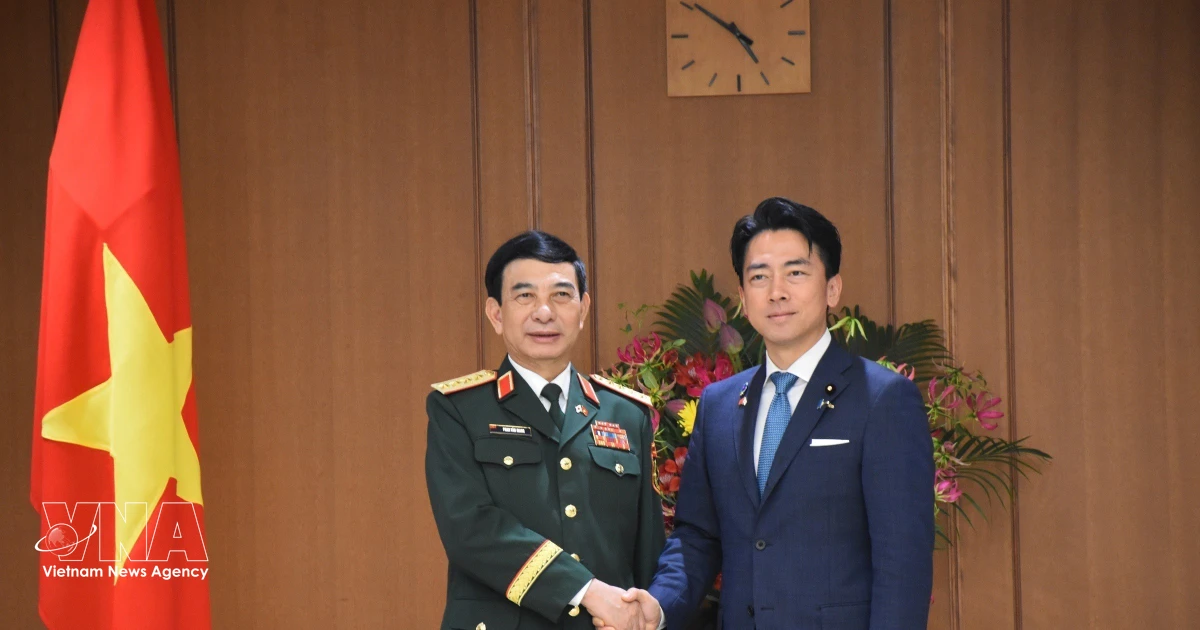
Vietnam, Japan Enhance Defence Cooperation, Expand Exchanges in Culture and Education
Vietnam and Japan agreed to strengthen defense cooperation and expand exchanges in education and culture. The collaboration between Japanese educational institutions and Vietnam, along with the promotion of cultural exchanges, is a particular focus. This is seen as part of Vietnam's efforts to enhance its international role and deepen its strategic partnership with Japan.
Vietnam and Japan have agreed to further strengthen defense cooperation between the two countries. Deputy Prime Minister and Minister of National Defence General Phan Van Giang called on the Japanese Ambassador to continue supporting the implementation of bilateral defense cooperation, helping to secure tangible outcomes. Beyond defense, exchanges in education and culture are also set to expand. The Aoyama School of Japan has authorized the Vietnam-Japan Cultural Exchange Center (VJCE) to serve as its representative in Vietnam, tasked with coordinating educational cooperation activities, connecting partners, developing training programs, and promoting educational exchange projects between the two nations. The Vietnam-Japan University (VJU) project was also highly valued as a flagship initiative, standing out for its contributions to people-to-people exchanges, local-level cooperation, education, and human resource development over decades. Vietnam attaches importance to consolidating and developing its friendly neighborliness and Comprehensive Strategic Cooperative Partnership with China. General Nguyen Tan Cuong, Chief of the General Staff of the Vietnam People's Army and Deputy Minister of National Defence, emphasized the significance of strengthening ties between the Vietnamese People's Army and the Chinese People's Liberation Army. In terms of diplomacy, Vietnam has expressed its readiness to work with the ASEAN Chair for 2026 and other member states to support Myanmar's economic recovery, address social issues, and combat transnational crimes. This demonstrates Vietnam's commitment to contributing to peace, stability, and sustainable development in the region. Furthermore, Vietnam reaffirmed its role as a proactive, responsible, and reliable member of the international community through humanitarian assistance, economic diplomacy, and regional cooperation. Specifically on maritime disputes, Vietnam stressed its consistent stance of resolving them peacefully through diplomatic and legal processes, in accordance with international law, particularly the 1982 UN Convention on the Law of the Sea (UNCLOS). Vietnam is also seeking stronger relations with the EU, including the effective implementation of the EU-Vietnam Free Trade Agreement (EVFTA), the ratification of the EU-Vietnam Investment Protection Agreement (EVIPA), and the early removal of the European Commission's "yellow card" warning against Vietnamese seafood exports. This is in recognition of Vietnam's efforts to improve its legal framework and promote sustainable fisheries management. Domestically, a new focus is being placed on cultural development. Party General Secretary and State President To Lam pushed for cultivating culture in both physical and digital spaces, moving beyond traditional spheres, and striking a balance between preservation and innovation. The People's Security Force is also urged to unify its perception, proactively apply scientific and technological advances, and adjust plans and strategies to ensure proactive security in all situations, playing a crucial role in implementing the National Security Strategy. Source: VietnamPlus English
多角的分析
ベトナムは、防衛協力の強化と並行して、日本との教育・文化交流の拡大を目指している。これは、単なる安全保障上の連携に留まらず、ソフトパワーを通じた関係深化を図る戦略の一環と考えられる。特に、ベトナム日本大学(VJU)のようなプロジェクトは、高度人材育成を通じて将来的な経済成長への貢献が期待される。また、EUとのEVFTAやEVIPAの推進は、貿易・投資の拡大を目指すベトナム経済のグローバル化戦略と連動しており、国際的なサプライチェーンにおけるベトナムの地位向上を狙っている。
日越間の防衛協力強化は、地域の安定に寄与する可能性があり、これは投資家にとってプラス要因となり得る。同時に、教育・文化分野での交流拡大は、長期的に見て人的資本の向上に繋がり、ベトナムの経済競争力を高める可能性がある。EVFTAやEVIPAの推進は、EU市場へのアクセス改善を通じて、ベトナムに進出する日本企業やその他の外国投資家にとって、さらなるビジネス機会をもたらすと期待される。ただし、中国との関係維持も図るベトナムの外交政策は、地政学的なリスク管理の観点から注視が必要である。
ベトナムは、文化の振興に物理的空間とデジタル空間の両方で力を入れ、保存と革新のバランスを取ることを目指している。これは、急速な社会変化の中で、伝統文化を維持しつつ、現代社会に適合した新しい文化を創造しようとする試みである。また、国家安全保障戦略の実施における人民治安部隊の役割強化は、国内の治安維持と社会秩序の安定化を目的としている。さらに、ミャンマーへの支援表明は、地域社会におけるベトナムの責任ある役割を強調するものであり、近隣諸国との連帯を示す。
市民生活への直接的な影響としては、日越間の教育交流拡大が、若者の学習機会の増加や国際的な視野の獲得に繋がる可能性がある。ベトナム日本大学(VJU)のような取り組みは、質の高い教育へのアクセスを向上させるだろう。文化交流の活発化は、多様な文化に触れる機会を増やし、市民の生活を豊かにすることが期待される。一方で、国家安全保障戦略の強化は、治安の向上に繋がる可能性があるが、その実施方法によっては、市民の自由やプライバシーへの配慮が求められる場合もある。
背景・歴史的文脈
ベトナムと日本は、1973年の国交樹立以来、着実に関係を深化させてきた。特に2016年の「包括的戦略的パートナーシップ」への格上げ以降、政治・安全保障、経済、文化など多岐にわたる分野で協力が進展している。今回の防衛協力強化は、東南アジアにおける安全保障環境の変化、特に中国の海洋進出への懸念を背景としている。教育・文化分野での交流拡大は、両国の国民感情の醸成と、将来的な協力基盤の強化を目的としている。ベトナムが中国との関係も重視していることは、一貫して多角的な外交政策を追求するベトナムの伝統的なアプローチを示している。
原文ソース
VietnamPlus English