General articles are free for 24 hours after publish.
Vietnam warns against social media's 'lynching' culture
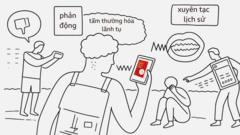
Vietnamese media outlets are expressing concern over the escalating culture of online condemnation and 'lynching' targeting individuals and organizations on social media. The controversy surrounding the book 'Chuyện với Thanh' has highlighted the dangers of one-sided judgments based on unverified information, posing risks to the rule of law and personal reputation.
Vietnamese media outlets are sounding the alarm over the rampant spread of online condemnation and 'lynching' culture on social media. These reports highlight concerns about the rapid proliferation of one-sided judgments against individuals and organizations, often based on unverified information or fragmented context. VOV online reported on July 14 that "from a few dozen seconds of video, a photo lacking context, an unverified post, or a few emotional status lines, thousands of comments hastily conclude who is right and who is wrong; who should be dismissed, boycotted, or 'erased' from social life." On July 15, Senior Colonel, Dr. Dao Trung Hieu, a criminology expert, was quoted in Dân Việt as saying, "What is concerning is not only the fate of an individual, but also the risk of distorted critical culture and the challenge to the rule of law by public opinion's 'trials'." The media's commentary comes amid a heated controversy surrounding the book "Chuyện với Thanh - Lời kể mới về ánh sáng" (Chuyện với Thanh - A New Account of Light). The uproar has escalated on social media, involving not only those directly connected to the book but also high-ranking officials within the Communist Party of Vietnam. Some prominent bloggers have openly attacked individuals perceived to have defended or positively reviewed the book, including Le Quoc Minh, the editor-in-chief of Vietnam News Agency (Nhân Dân) and a member of the Party Central Committee. An article in VOV points out that social media "trials" often operate with an inverse logic: "Conclusions first, evidence later; emotions first, truth later; the will of the majority is considered 'law.' In that 'trial,' the defendant has no lawyer, cannot confront, and has no right to appeal. The 'verdict' is 'pronounced' and incited by shares, comments, and emojis." It adds, "Freedom of speech does not include the right to fabricate, defame, invade privacy, or incite punishment. Criticism is not insult or opposition, patriotism is not labeling, and public opinion cannot replace investigative agencies, prosecutors, or courts." Ironically, media outlets like "Công an Nhân dân" (People's Police), which have a history of publishing articles condemning individuals and organizations as "reactionary," themselves published multiple articles criticizing author Nguyen Thanh Nam in the early stages of this controversy. These articles accused his work of "revisiting history" and "trivializing leaders," amplifying similar criticisms from readers. Following the news of Nguyen Thanh Nam's arrest and indictment, the social media 'lynching' intensified. Under Vietnam's one-party system, public criticism and dissent are tightly controlled. While social media can serve as a form of "pressure valve," its uncontrolled information dissemination and emotional reactions often lead to attacks on specific individuals or groups, either unintentionally or intentionally by authorities. The current controversy highlights the complex and delicate balance in Vietnamese society between freedom of expression and the public's execution of "justice." Source: BBC Vietnamese
Original source
BBC Vietnamese