General articles are free for 24 hours after publish.
Northern Vietnam Enhances Grid Flexibility with Battery Energy Storage Systems
Northern Vietnam is progressively deploying Battery Energy Storage Systems (BESS) to store electricity during low-demand periods and release it during peak hours. This initiative by EVNNPC aims to enhance power load regulation and grid flexibility amidst rising electricity demand driven by economic growth.
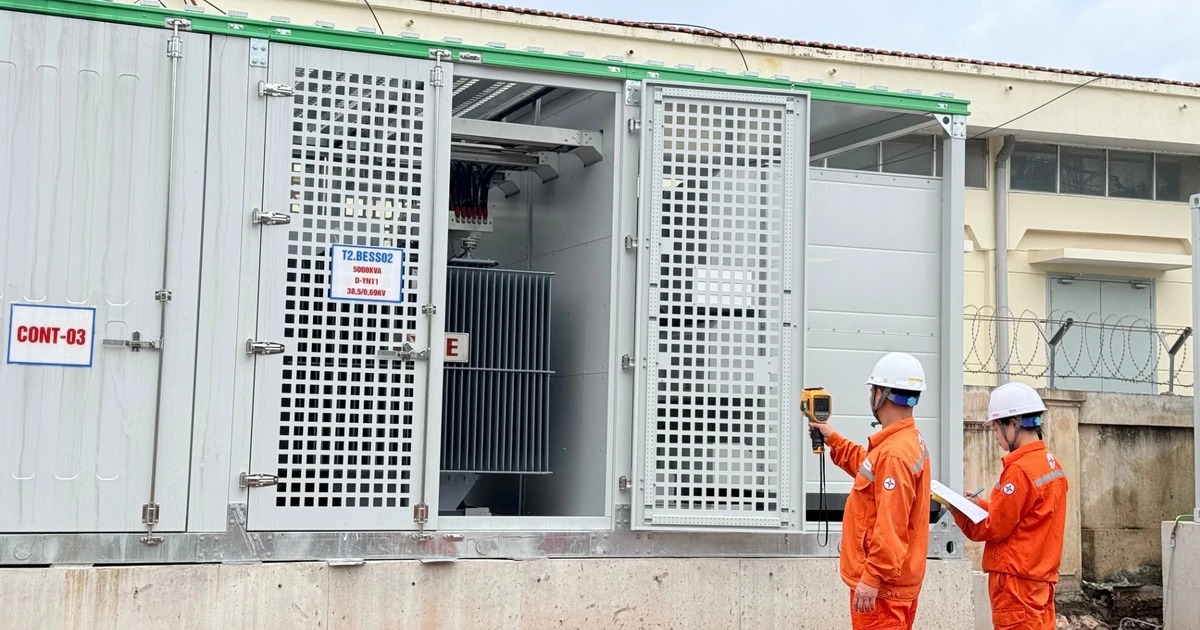
Northern Vietnam is progressively deploying Battery Energy Storage Systems (BESS) to enhance power supply capacity during peak hours and improve grid flexibility. This initiative addresses the pressing need to manage the significant increase in electricity demand, particularly during hot summer periods, as a result of economic and social development. BESS functions by storing electricity during low-demand periods and releasing it when demand is high, thereby leveling out peak power loads. This is expected to reduce strain on the power grid and improve the operational efficiency of the electricity system. Its effectiveness was demonstrated in August 2026 in Bac Ninh province. During a period when electricity consumption reached approximately 3,229 MW, the Northern Power Corporation (EVNNPC), through its subsidiary Bac Ninh Power Company (PC Bac Ninh), deployed about 30 MW from BESS to support the power grid. Mr. Lai Viet Anh, Head of PC Bac Ninh's Grid Operation Department, emphasized that while 30 MW is a small fraction of the total consumption, its value lies in being deployed precisely when the system faced its highest pressure. EVNNPC is gradually introducing this technology at facilities such as the Song Khe 110kV substation in Bac Ninh province. At the Yen Phong 4 110kV substation, BESS has been operational since August 16, supplying power during periods of increased demand or when additional generation is required. Conversely, it charges when loads are low, preparing for future needs. EVNNPC forecasts that the maximum power demand in 2026 will reach 21,142 MW, an increase of approximately 11.4% compared to 2025, and is projected to rise by another 12-12.5% to 23,500-23,800 MW in 2027. Against this backdrop, EVNNPC identifies energy storage as a critical solution for enhancing grid flexibility. EVNNPC is implementing a three-phase BESS project with a total capacity of 530 MW/1,060 MWh. Phase 1 (305 MW/610 MWh) has seen partial installation completion. Site selection considers not only physical space but also local power load, peak demand, and the need for peak reduction. BESS creates more room for flexible grid operation amidst the growing proportion of renewable energy sources. The ability to store electricity when generation is abundant and dispatch it when the system needs it contributes to more efficient utilization of renewables, improved supply-demand balance, and safer, more stable grid operation. This BESS deployment is a concrete step in realizing the vision for smart grid development and integrating advanced energy storage technologies into the power system. It enhances the grid's adaptability, promotes efficient energy use, and supports the national energy security goals through 2030. Source: Nhan Dan
Original source
Nhan Dan