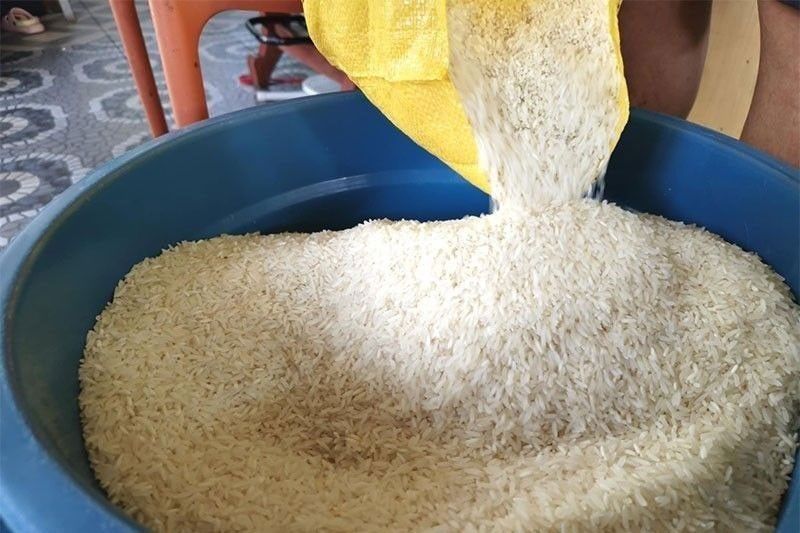
DA shelves rice cap plan, rules out ban on imports
Economy
2026年8月5日
4
Philstar Business

General articles are free for 24 hours after publish.

DA shelves rice cap plan, rules out ban on imports

Share
AI Summary

The Philippines' Department of Agriculture has shelved plans for a new price ceiling on imported rice, citing current market prices below the proposed cap. The agency also ruled out an import ban to ensure supply ahead of the El Niño phenomenon.

MANILA, Philippines — The Department of Agriculture (DA) has reversed its plan to impose another price cap on imported five percent broken rice, noting that current market prices have remained below the price ceiling. The agency also signaled it would not implement a ban on rice imports to strengthen the country’s supply ahead of the anticipated effects of the El Niño weather event. Agriculture Secretary Francisco Tiu Laurel Jr. said there is no need to impose extraordinary measures on rice as prevailing prices remain stable. “It doesn’t seem necessary to impose a price cap because the price cap was set at P50 per kilo, but we are seeing prices at P47 to P50 per kilo. There is no need for extraordinary measures as of the moment,” he told reporters during a market visit in Las Piñas City. The agency earlier proposed another two-month extension to Executive Order 118, which imposed a P50-per-kilo cap on five percent broken imported rice. The proposal was also endorsed by the National Price Coordinating Council to President Marcos last month. The DA chief earlier said the price ceiling on imported rice has contributed to easing food inflation. The order was meant to curb rising rice prices, prevent abusive market practices and ensure the availability of affordable grain while maintaining overall market stability. Tiu Laurel added that he would also meet with local rice millers to discuss a potential fair pricing structure for grain, noting that locally produced rice should retail at around P47 to P50 per kilo. “We want a market where farmers receive fair compensation, millers and traders operate sustainably and consumers continue to enjoy reasonably priced rice,” he said. The prevailing price for imported well-milled rice was at P50 per kilo in Metro Manila markets, while premium rice was seen at P48 per kilo, according to the DA’s price monitoring as of Aug 3. Meanwhile, Tiu Laurel noted that the government will not impose a ban on imported rice to ensure adequate supply of rice ahead of the El Niño, which is expected to last until early next year. “There will be no import ban because there is a big El Niño coming and we have to have buffer stocks in preparation for December to April next year,” he added. The mandate comes as farmer groups are seeking a 30 percent safeguard duty on imported rice, warning that the continued surge in rice imports have negatively affected the domestic rice industry. Tiu Laurel said the National Food Authority (NFA) is prepared to purchase more palay (unhusked rice) from farmers during the upcoming harvest season in September. He added that the NFA is ready to purchase about 500,000 metric tons (MT) of rice from farmers, at a minimum of P21 per kilo for wet palay and between P25 to P27 per kilo for dry palay. “Unlike last year, our warehouse was full. The NFA’s instruction is that by September, their warehouses should be almost empty,” Tiu Laurel said. He added that the DA has requested rice importers to stop the importation of five percent broken rice to support the local rice industry. The Philippines has imported 3.3 million MT of rice as of Aug. 3, according to Tiu Laurel, putting the country on track to surpass the 3.39 million MT imports recorded in 2025.

0

Original source

Philstar Business

原文を読む