General articles are free for 24 hours after publish.
Vietnam Bolsters National Capabilities Through 'Tech Diplomacy' with Russia and France
General Secretary and President To Lam's visits to Russia and France centered on 'tech diplomacy,' identifying science and technology as a new breakthrough area for cooperation. Vietnam aims to leverage international partnerships for technology transfer and industrial upgrading in sectors like semiconductors and new energy.
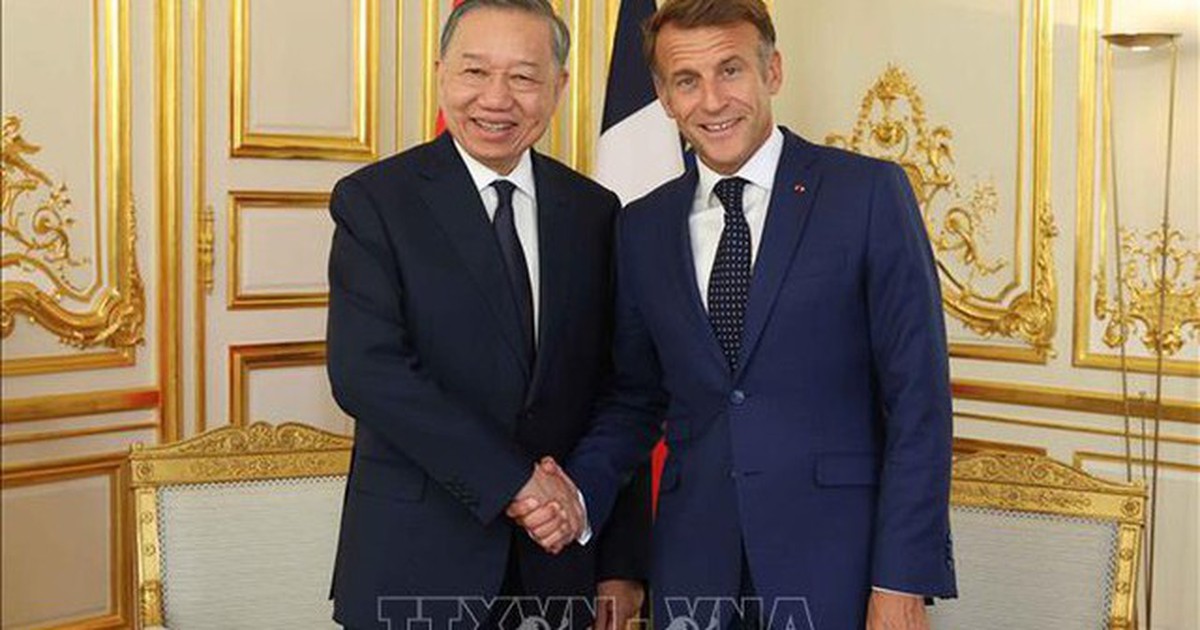
General Secretary and President To Lam paid state and official visits to Russia and France, respectively, from September 7 to 12, 2026. These visits underscored Vietnam's pursuit of 'strategic technology diplomacy' aimed at bolstering national capabilities. In Russia, To Lam attended the Vietnam-Russia Science and Technology Forum, advocating for deepened cooperation in advanced technology areas including nuclear power, new energy, satellites, space, semiconductors, quantum technology, and artificial intelligence (AI). The call was for a shift from mere exchanges and training to joint technology mastery, co-development of products, technology transfer, and market access. In France, the focus was on gaining access to advanced European technologies, developing human resources, and building industrial ecosystems, highlighted by his attendance at the International Space Summit in Paris. Agreements were reached in areas such as Earth observation satellites, critical minerals, railway technology, and aviation. Memoranda of cooperation were signed between Hanoi University of Science and Technology and France's Alternative Energies and Atomic Energy Commission (CEA) for training, research, and technology transfer in nuclear science and technology, new energy, hydrogen energy, and semiconductors. Experts interpret these moves as a pivot in Vietnam's diplomacy from a focus on trade, investment, and political balancing towards enhancing national capabilities. Science and technology, innovation, and digital transformation are identified as drivers for productivity and new growth models, with international partnerships seen as crucial for Vietnam's ascent in global value chains. Vietnam is pursuing a technology diplomacy policy tailored to different partners. Russia offers strengths in nuclear energy, space, defense science, mathematics, engineering, and advanced technologies, underpinned by strong political trust and long-standing educational ties. Meanwhile, France provides opportunities to access European research institutes, expertise in civilian nuclear energy, aerospace, railways, satellites, necessary mineral networks, and high-level technical education. By assigning distinct roles to different partners, Vietnam aims to reduce over-reliance on any single major power and enhance its strategic autonomy amidst escalating great-power competition and geopolitical fragmentation. This strategy is considered realistic and necessary for building a 'buffer' against external shocks like supply chain disruptions and energy crises, according to analysts.
Original source
Bao Chinh Phu