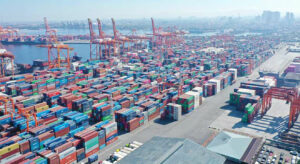
Joint Administrative Order to Ease Port Congestion Expected by August
The Bureau of Customs (BoC) announced that a Joint Administrative Order (JAO) aimed at easing port congestion and regulating cargo handling charges is expected to be signed by August. This order will empower the BoC to lead inter-agency coordination in addressing port congestion issues.
A JOINT administrative order (JAO) aimed at easing port congestion and regulating cargo handling charges is expected to be signed by August, ahead of the seasonal buildup of cargo volumes, the Bureau of Customs (BoC) said. Customs Commissioner Ariel F. Nepomuceno said the JAO, once signed by the departments of Finance, Trade and Industry, and Transportation, will give the agency the power to coordinate government efforts in addressing port congestion. “There was a draft (during) President Rodrigo R. Duterte’s time, which he did not sign, I don’t know why. That has been revived, and I am confident that with Secretary Frederick D. Go’s commitment, this will be signed very soon, August at the latest,” he told reporters late Tuesday. Mr. Nepomuceno said the order is expected to be in place before the usual October surge in shipments. He said port congestion has been driven by both infrastructure constraints and operational issues, including limited container yards, narrow access roads, and the lack of discipline among some shipping lines and importers. Mr. Nepomuceno said one proposal is to increase container storage fees inside ports, noting that these remain lower than rates charged by private container yards. “That’s a solution, but that is not within my power … that is under the Philippine Ports Authority. So, we are waiting for the joint administrative order (which will give the BoC the power) to manage the entire congestion issue,” he added. The proposed JAO gives the BoC the legal authority to manage congestion and, to a limited extent, review charges imposed on truckers and importers. “With that JAO, one agency will be empowered to direct the other concerned agencies in solving the problem,” he said. Mr. Nepomuceno added that while the JAO would lay down an immediate framework, legislation would offer a more permanent solution since administrative orders can be reversed. He said that the BoC is also moving forward with its new Customs Processing System, with a contract award expected following a review of revised proposals. Mr. Nepomuceno said he rejected a recent proposal because it still did not sufficiently cut out human intervention. “I am not yet satisfied because in the last presentation, there was still human intervention and that defeats the purpose,” he said. He said the BoC is aiming to pilot the new system by June 2027, with the Port of Subic among those being considered for initial testing. Separately, the BoC said it signed a memorandum of understanding (MoU) with the Armed Forces of the Philippines (AFP) to strengthen border security and customs enforcement. “Under the agreement, the BoC and AFP will establish a Joint Coordination Committee (JCC) to serve as the primary policy and oversight body for the implementation of the MoU,” the BoC said in a statement. — Justine Irish D. Tabile
多角的分析
共同行政命令(JAO)による港湾混雑緩和は、物流コストの削減とサプライチェーンの効率化に寄与し、フィリピン経済の競争力向上に繋がる可能性がある。特に、輸出入業者や国内物流業者にとって、予測不能な遅延や追加コストの削減は、事業計画の安定化に不可欠である。過去の混雑事例では、経済成長の足かせとなることが指摘されており、今回の措置は経済活動の円滑化を後押しするものと考えられる。
港湾混雑の緩和は、フィリピンへの投資環境改善に繋がる。物流のボトルネック解消は、製造業や小売業など、サプライチェーンに依存する産業への投資リスクを低減させる。特に、海外からの部品調達や製品出荷の遅延リスクが軽減されれば、製造業の誘致や国内生産能力の向上に寄与する。JAOによる料金透明化も、投資家にとってプラス要因となりうる。
港湾混雑は、物流コストの増加を通じて、最終的に一般消費者の商品価格に影響を与える。JAOによる混雑緩和は、物価上昇の抑制に貢献する可能性がある。また、港湾周辺の交通渋滞や環境負荷の軽減も期待される。トラック運転手や港湾労働者の労働環境改善にも繋がりうるが、料金の見直しにおいては、関係者の利害調整が重要となる。
港湾混雑の緩和は、消費財の価格安定に繋がる。輸入される食品や日用品の価格が、物流コストの低減によって抑制されることが期待される。また、年末商戦や季節的な需要期における品不足のリスクも軽減されるだろう。物流の円滑化は、地方への物資供給の安定化にも寄与し、地域間の経済格差是正にも間接的に貢献する可能性がある。
背景・歴史的文脈
フィリピンでは、マニラ首都圏の港湾を中心に、慢性的な港湾混雑が経済活動のボトルネックとなってきた。これは、インフラ整備の遅れ、港湾運営の非効率性、関係機関間の連携不足などが複合的に絡み合った問題である。特に、年末の繁忙期には混雑が顕著になり、物流コストの増加や納期遅延を引き起こしてきた。過去の政権下でも、この問題の解決に向けた取り組みは行われてきたが、根本的な解決には至っていない。今回のJAOは、これらの長年の課題に対し、税関を中心とした官民連携を強化し、より強力な権限をもって問題解決を図ろうとする試みである。
原文ソース
BusinessWorld Economy