General articles are free for 24 hours after publish.
Indonesia Reopens Airports After Volcanic Eruption Disrupts Flights
An eruption of Anak Krakatau volcano forced the closure of eight airports, including those serving Jakarta, stranding approximately 340,000 people. While some airports have reopened, ensuring aircraft airworthiness remains a challenge.
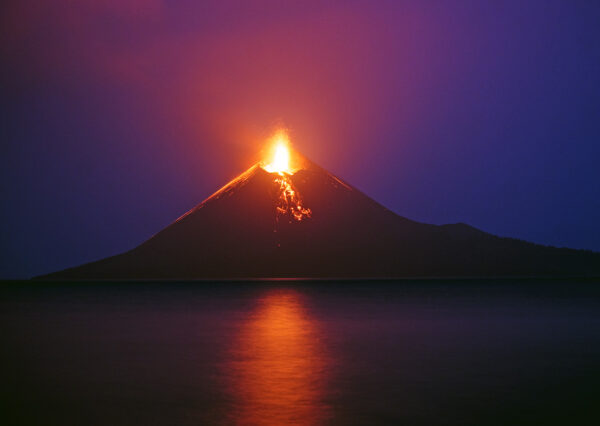
Indonesia has reopened some of its airports this morning after a volcanic eruption forced their temporary closure over the weekend. The eruption of Anak Krakatau, located on a small island in the Sunda Strait between Java and Sumatra, began late on Friday and remained active for approximately 25 hours. The eruption threw up black plumes of volcanic ash that were carried by the wind over the skies of the capital, Jakarta, and across Lampung province in the southern part of Sumatra. This forced the closure of eight airports, including two serving Jakarta. As the BBC reported, "snaking queues had formed at the departure halls in Jakarta’s Soekarno-Hatta International Airport on Monday as stranded passengers sought refunds and tried to get updates on when they would be able to fly." Indonesian officials said yesterday that 2,961 flights were disrupted, leaving around 341,000 people stranded. In a statement today, Transport Minister Dudy Purwagandhi said that Jakarta’s Soekarno-Hatta International Airport, the capital’s primary airport, resumed operations this morning after wind blew the ash away from the vicinity, Reuters reported. Four other airports, including a smaller one in Jakarta and another in the neighboring city of Bandung, also reopened today. Two airports remain closed, while one resumed operations yesterday. Dudy told reporters that authorities would now need to confirm the airworthiness of the 178 aircraft that were at Soekarno-Hatta during the closure. “Perhaps it’ll take some little extra time to prepare the planes,” he said. Anak Krakatau, which means “child of Krakatoa,” emerged from the sea in the 1920s in the caldera formed after the 1883 eruption of Mount Krakatoa, which destroyed the island of Krakatau and unleashed a tsunami that killed more than 36,000 people. It has been sporadically active for much of the last decade, and an eruption in 2018 caused a devastating tsunami that killed hundreds of people and displaced tens of thousands. On Sunday, the Center for Volcanology and Geological Hazard Mitigation said that although the volcanic eruption has come to an apparent end, Anak Krakatau remained on alert, and further eruptions were possible. Also yesterday, Malaysian authorities lifted a declaration of emergency in Serian, a district in the southwest of Sarawak state, that was imposed due to toxic haze from wildfires across the border in Indonesia. Sarawak, which runs along the north of the island of Borneo, is one of the areas most affected by the resulting air pollution, which has forced the closure of 647 schools across the state. Malaysia’s king, Sultan Ibrahim, gave his consent to end the state of emergency following reports from government agencies showing that air quality readings in Serian were no longer at a hazardous level, Prime Minister Anwar Ibrahim’s office said in a statement. “The Federal government and the Sarawak state government will continue to closely monitor the situation, and residents in affected areas are advised to limit outdoor activities and to always comply with instructions from the authorities,” it added. Source: The Diplomat Indonesia
Original source
The Diplomat Indonesia