General articles are free for 24 hours after publish.
Thailand's Prajadhipok Institute Aims to Be 'National Think Tank' Linking Public Voice to Policy
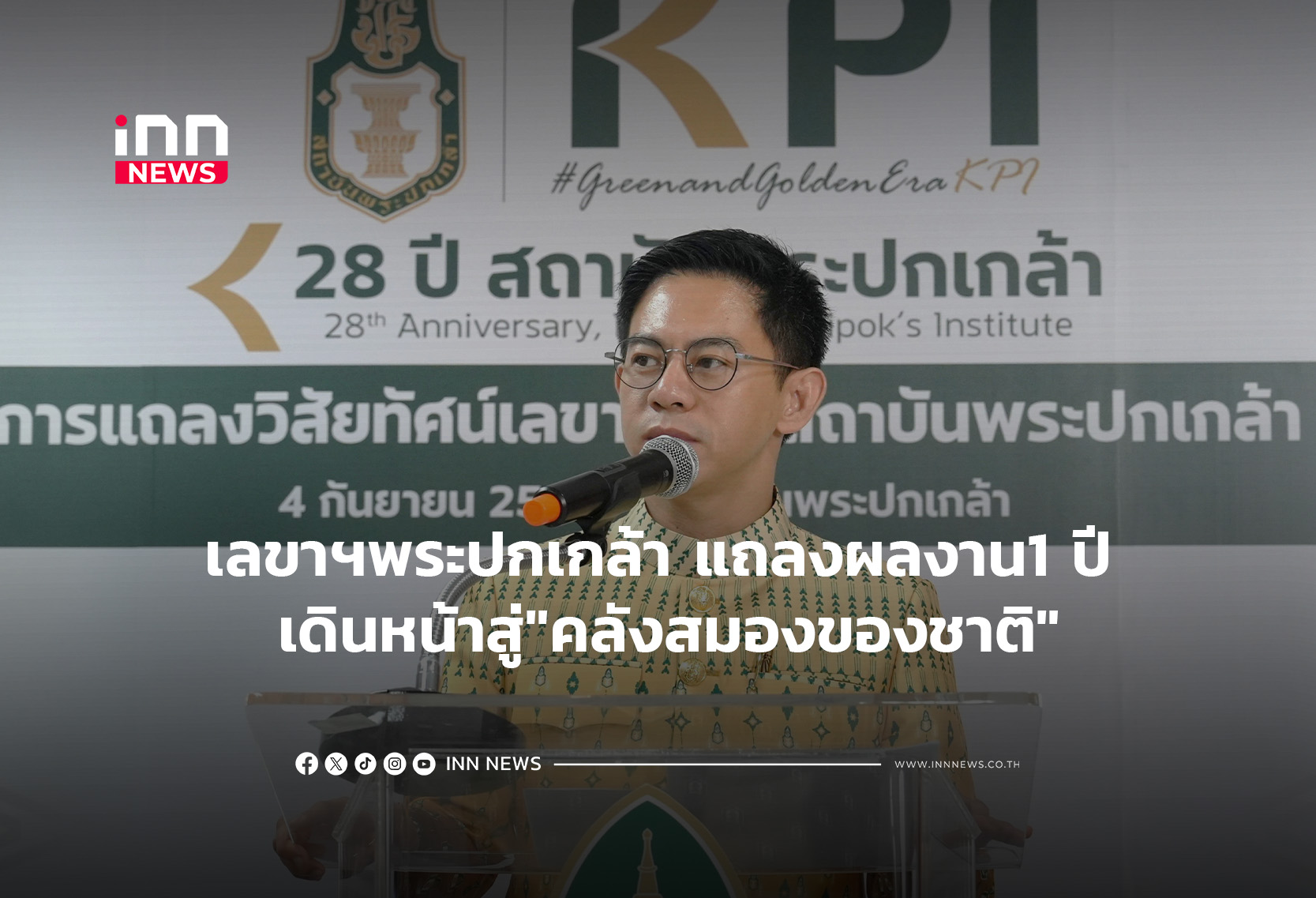
Thailand's Prajadhipok Institute, marking its first anniversary, has announced its direction to become a 'National Think Tank' that connects public opinion to policy-making. Its three core missions include leadership development, policy recommendations, and building a model government agency, incorporating AI in selection processes and promoting research to solve real-world issues.
Dr. Issara Seriwatthanawut, Secretary-General of the Prajadhipok Institute, announced the institute's operational results over the past year and outlined its direction for the 28th year of operation. The institute aims to elevate itself to become a 'National Think Tank in the Legislative Field,' connecting knowledge, information, and public voices for policy utilization and tangible change. The driving force behind its work focuses on three key missions: 'Developing Leaders,' 'Creating Policy Recommendations,' and 'Establishing a Model Government Agency for Good Governance.' The institute will provide opportunities for talented individuals from all sectors and regions to access leadership development, enhancing the selection process for transparency and incorporating AI technology. Regarding research, the focus is on transforming 'knowledge in libraries into solutions for real-world problems of the people.' By using public issues and complaints as research topics, the institute will collaborate with the government and parliament to develop practical policy recommendations. Furthermore, the institute is advancing towards becoming a model government agency for good governance and the environment through Zero Waste and Low Carbon policies, aiming to reduce plastic bottle usage by over 12,000 per year and significantly cut paper consumption with the implementation of E-Saraban and E-Signature systems, saving over 1.74 million sheets of paper annually. Dr. Issara emphasized that the institute must serve as both 'the brain for creating knowledge, cultivating people to implement it, and building systems that adhere to good governance' to collectively enhance Thai politics and democracy for quality, stability, and sustainability.
Original source
INN News