General articles are free for 24 hours after publish.
Yogyakarta Hotels and Restaurants Slash Energy Costs by Switching to CNG
Hotels and restaurants in Yogyakarta are successfully reducing energy costs by switching from LPG to Compressed Natural Gas (CNG), a move aligned with the Indonesian government's aim to lessen LPG import dependency and promote alternative fuels.
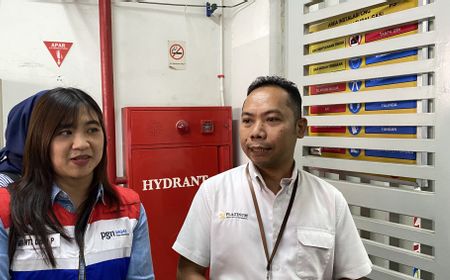
YOGYAKARTA - A number of business actors in Yogyakarta, ranging from hotels to restaurants, have started to switch to using Compressed Natural Gas (CNG). This is a step to support the government's program which is currently in the planning stage to expand the use of CNG as an alternative fuel to LPG. Behind the government's ambitious plan to reduce the use of LPG, which is imported from imports, the use of CNG has been encouraged by PT Pertamina Gas Negara (Tbk) or PGN for the commercial sector. PGN's subsidiary, PT Gagas Energi Indonesia, has been serving new customers since 2026 who have started using CNG. Chief Engineering of Hotel Platinum Yogyakarta, Maryudi said that his party started switching to using CNG since January 2026 with an average consumption of 1,200 to 1,500 cubic meters (M3) per month, or equivalent to around 1,500 kg of LPG. Apart from cost efficiency, hotel management also feels other advantages such as price stability, security, and ease of supply management. Maryudi also admitted that the coordination of recharging was carried out in real-time through a special communication group with the Gagas team in the Yogyakarta region. Similar benefits are also felt by the Marugame Udon Kaliurang restaurant. Marugame Udon Kaliurang Supervisor, Dedi Sugianto, said that in a month his restaurant consumes around 1,000 M3 of CNG with a regular refill schedule every two days without waiting for the gas to run out. "Without waiting for the gas to run out, I refill it every two days," said Dedi. In terms of technical combustion, Dedi assessed that CNG provides a more perfect cooking quality thanks to the higher output pressure and a cleaner blue flame color compared to LPG. Head of the Gagas Area, Yogyakarta, Miranti Dyah Pramesti, explained that the distribution of CNG targets commercial customers in areas that have not been reached by PGN's transmission gas pipeline network. To ensure the convenience of retail customers, Gagas implements a competitive and flat pricing scheme through the GasKu service during the one-year contract period. This scheme protects business actors from short-term price fluctuations influenced by world oil movements. "So there is a 1-year contract, later the payment will be agreed upon. If it is post-paid, it is due every 5th, due date is 20th. If this GasKu is flat, it is not affected by world oil," explained Miranti. For prospective customers who are interested, he continued, Gagas imposes an initial procedure in the form of a location survey and assessment of gas volume needs. The company sets a minimum consumption of 500 cubic meters per month and reviews the readiness of stove installations and injection distribution systems at customer locations. Furthermore, Miranti said that until now, the volume of distribution of Gagas CNG in the southern part of Central Java, including Yogyakarta and Solo, has reached 80,000 cubic meters per month. Especially for the Yogyakarta City area itself, distribution is in the range of 50,000 to 60,000 cubic meters per month with four main customers from the commercial sector. "In the future, Gagas will continue to expand the reach of the CNG market not only for commercial sectors such as hotels and restaurants in Yogyakarta, Solo, and Magelang, but also to penetrate other supporting facilities for government strategic programs," said Miranti.
Original source
VOI English