General articles are free for 24 hours after publish.
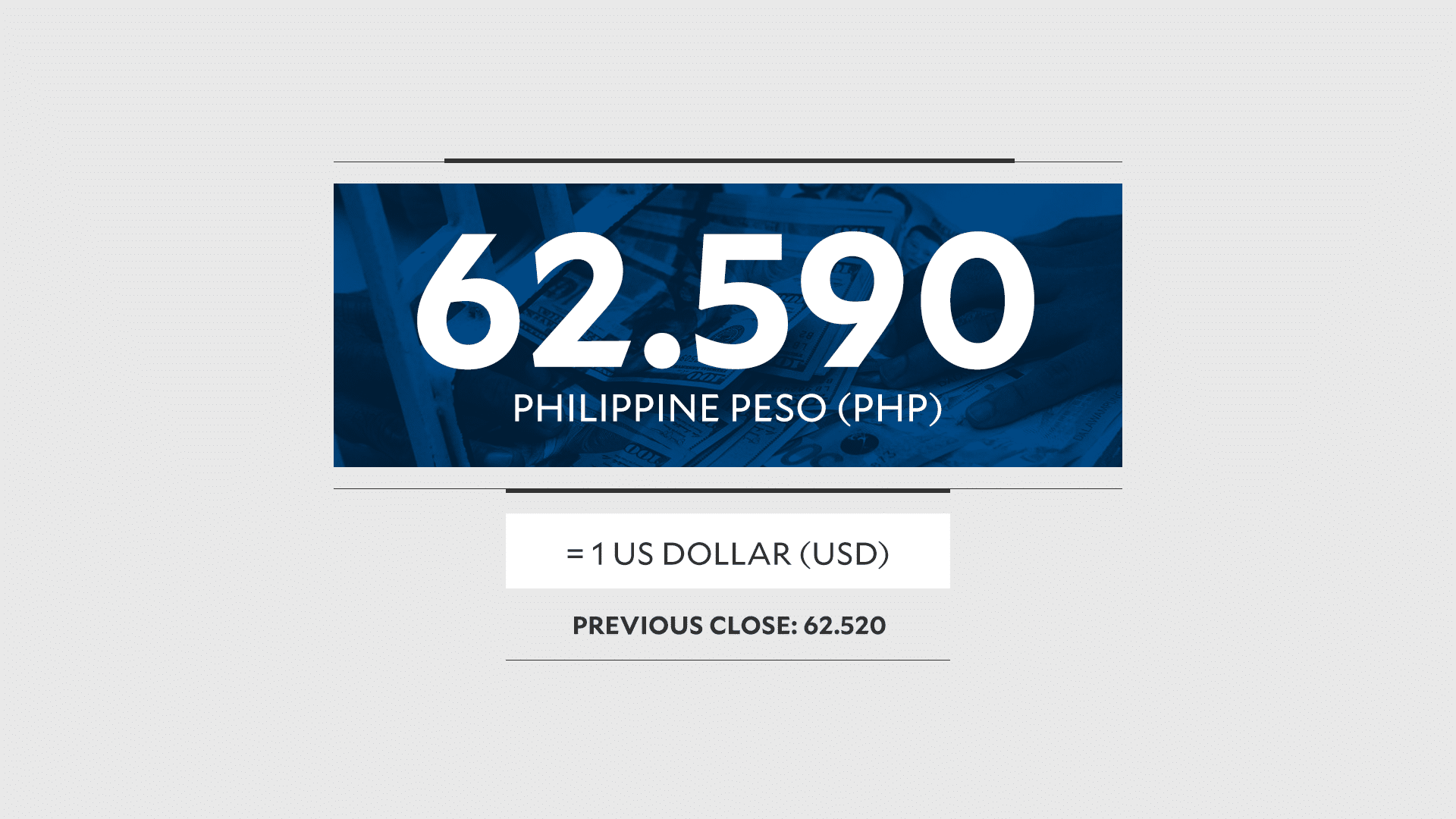
Philippine Peso Hits New Record Low of 62.59 vs. US Dollar
The Philippine peso slumped to a new record low against the US dollar, closing at 62.59 on Friday. Despite easing inflation, a strong dollar, elevated US Treasury yields, and domestic political uncertainties weighed on the currency. The central bank signaled a continued bias toward higher interest rates to combat inflation.
MANILA, Philippines — The Philippine peso fell to a new record low on Friday, as a strong US dollar, elevated Treasury yields and political uncertainty at home overshadowed the good signs of easing inflation. The peso lost 7 centavos from its prior close to cap a volatile trading week at 62.59 versus the greenback, a new record-low finish for the local unit. The currency touched an intraday low of 62.65 before cutting some losses. “The peso’s slide to a fresh record low was driven mainly by external factors, including a firm US dollar, elevated US yields, and market caution ahead of the US nonfarm payrolls report,” Ruben Carlo Asuncion, chief economist at UnionBank of the Philippines, said. “Recent domestic political developments, including reports regarding the arrest warrant for Vice President Duterte, may have added to short-term volatility, but the broader move remains largely driven by global factors,” he added. Meanwhile, the Bangko Sentral ng Pilipinas (BSP) is likely to maintain its bias toward higher interest rates despite a slight softening of inflation in August, as price pressures are expected to remain stubborn in the coming months amid risks from El Niño and possible wage increases. Deepali Bhargava, Asia-Pacific head of research at ING Bank, said that while headline inflation eased marginally last month, core inflation—which excludes volatile food and energy prices—remained elevated. Risks to food prices also persist, she said. The outlook points to one more quarter-point rate increase in the fourth quarter, Bhargava said, as inflation is unlikely to return sustainably to the central bank’s target range before 2028. “Together with persistent core inflation and elevated inflation expectations, these factors should keep the BSP focused on ensuring that inflation returns to target on a sustained basis,” she added. In a statement on Friday, the central bank said it would continue to closely monitor the impact of recent developments in the Middle East and weather-related disturbances. “Going forward, the BSP will remain guided by incoming data and its assessment of risks to the inflation outlook,” it added. Data showed consumer prices rose 6.1 percent in August, easing only slightly from 6.2 percent in July. The reading matched the median forecast of economists surveyed by the Inquirer but remained well above the BSP’s 3 percent target. Core inflation also eased, to 4.1 percent from 4.2 percent in July. Last month, the BSP delivered its third quarter-point rate increase of the current tightening cycle, bringing its benchmark rate to 5 percent. The central bank said the move was intended to “preempt” emerging risks from a severe El Niño episode and a possible wage increase, as petitions challenging lower-court orders to suspend a planned P60 increase in the Metro Manila minimum wage have reached the Supreme Court. That leaves policymakers facing a difficult balancing act: containing inflation without further weakening an economy that grew just 2.6 percent in the first half of the year. Miguel Chanco, chief emerging Asia economist at Pantheon Macroeconomics, offered a more dovish view. “The headline rate should return to the BSP’s 2 percent to 4 percent target range in March next year, at the earliest, and we continue to believe that the Monetary Board’s tightening cycle is over,” Chanco said. INQ
Original source
Inquirer Business