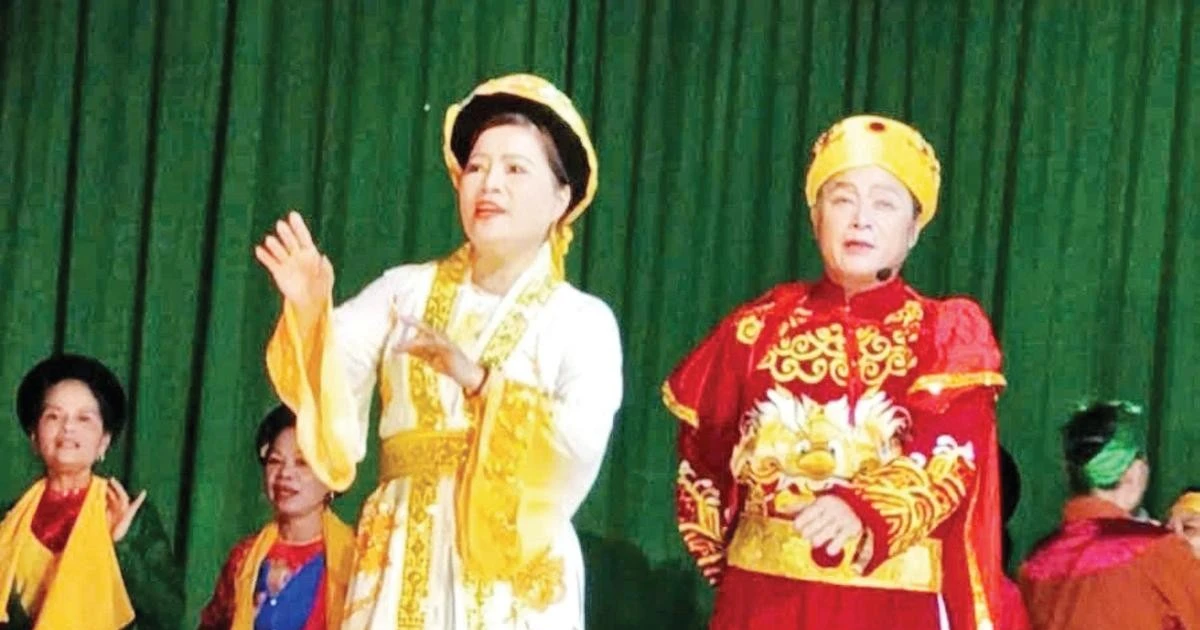
Hung Yen Province's Khuoc Village: Passionately Preserving Traditional 'Cheo' Opera
In Khuoc village, Hung Yen province, Vietnam, passionate efforts are underway to preserve and pass down 'Cheo Khuoc,' a unique form of traditional opera originating in the 10th century. Featuring 12 distinct melodic styles, this art form continues to thrive as a core element of local culture.
In Khuoc village, Dong Tien Hung commune, Dong Hung district, Hung Yen province, Vietnam, the unique traditional art form 'Cheo Khuoc,' with origins dating back to the 10th century, is gaining renown. This opera, once performed in the royal court, is distinguished by its 12 unique melodic styles, including 'Van Co Tien,' 'Duong Truong Thu Khong,' and 'He Dom.' The village currently boasts four master artisans. The oldest, People's Artisan Bui Van Ro, is over 70 years old. The most dynamic and enthusiastic is Outstanding Artisan Pham Thi Cay, 64, who chairs the Khuoc Village Cheo Club. This club unites nearly 40 members, primarily middle-aged individuals deeply devoted to preserving this ancient opera. When asked about the distinctiveness of Cheo Khuoc compared to other Cheo villages, Ms. Cay shared, "It is precisely the 12 ancient melodic styles exclusive to Khuoc village, self-composed and passed down by our elders to this day. Alongside this is the characteristic vocal embellishment, unlike anywhere else." Cheo Khuoc embodies unique folk essence, reflecting the simple lives and labor of farmers with remarkable subtlety and technical skill. People's Artisan Bui Van Ro noted, "Previously, Khuoc Cheo troupes traveled extensively year-round, but they would always gather in the village annually for the Ancestor Worship Festival on the 18th of the 8th lunar month and the Lunar New Year's 6th day festival. During these times, the entire village would be alive with the sounds of drums and castanets. The troupes would compete, drawing thousands of attendees, with banners and flowers filling the sky. Spectators had the opportunity to enjoy the finest melodies and voices of Cheo, while the village's performers showcased their talents and encouraged each other for a new year of prosperous work." He further elaborated, "Cheo Khuoc's uniqueness truly lies in the 'Mua Trai' and 'Tam Tien' melodies within the play 'Tu Thuc Du Tien,' considered unparalleled. Even if some melodies appear similar, the rhythmic phrasing and the 'De' drum beats by Khuoc Cheo artisans are entirely different. Learning to sing is difficult, but mastering the 'De' drum is even more so. After each line of song, a 'De' drum beat must elevate the vocalization. Without the 'De' drum beat, the singer's performance is rendered incomplete." Cheo performances typically center around traditional festivals. In the past, Cheo troupes were an indispensable part of the Khuoc village surroundings, with large and small troupes performing everywhere for a month before and after the festival. In ancient Khuoc village, Cheo was considered a measure of prestige for wealthy families and officials; no matter how high one's rank, not having a Cheo troupe for entertainment was seen as lacking status. For many years, the ancient Cheo melodies have been integrated into school curricula, with the dedicated support and meticulous training provided by the artisans of the Khuoc Village Cheo Club. Ms. Cay is recognized by villagers for her unwavering dedication and passion for the art, tirelessly teaching the younger generation to continue and preserve the tradition. Ms. Quach Thi Huong, 50, is considered the most promising successor in the art of ancient Cheo in Khuoc village. With her technically proficient, rhythmic, and genuinely heartfelt singing, she has carved out her own niche within the Cheo community. Various associations and social organizations in the commune regularly maintain Cheo clubs. These clubs serve as nurseries for future talents, ensuring the preservation, conservation, and dissemination of the nation's traditional cultural values, allowing the melodies of Cheo Khuoc to continue to resonate daily in a village undergoing transformation and development. Source: Nhan Dan
多角的分析
チェオ・クオックのような伝統芸能の維持・発展は、直接的な経済効果は限定的であるものの、地域文化の振興を通じて観光客誘致や地域ブランドの向上に寄与する可能性があります。特に、祭事やイベントでの公演は、地域経済の活性化に繋がる潜在力を持っています。しかし、その持続的な発展のためには、芸術家への支援、公演機会の創出、そして現代のエンターテイメントとの差別化戦略が不可欠です。
伝統芸能への投資は、直接的な収益性よりも、文化遺産保護や地域社会への貢献といったCSR(企業の社会的責任)の観点から評価される可能性があります。ただし、投資家が関心を持つとすれば、文化観光資源としてのポテンシャルや、関連イベントでのスポンサーシップ、あるいは伝統芸能をモチーフにした商品開発などに限定されるでしょう。現状では、投資対象としての魅力は低いと考えられます。
チェオ・クオックの継承は、クオック村の住民にとって、地域アイデンティティの維持と世代間の絆を深める重要な活動です。特に、高齢の職人たちが若い世代に技術を伝承するプロセスは、地域社会の活性化に貢献しています。一方で、伝統芸能の担い手不足や、現代社会における関心の低下といった課題に直面しており、地域社会全体でその存続を支える意識の醸成が求められています。祭事の賑わいは、地域住民の生活に活気をもたらす一方で、外部からの観光客との交流の機会も提供します。
クオック村の住民にとって、チェオ・クオックは単なる芸能ではなく、先祖から受け継いだ誇りであり、地域を一つにまとめる絆です。祭りの時期に村が賑わう様子は、日々の農作業の疲れを癒し、地域への愛着を深める機会となります。若い世代が伝統を受け継ぐ姿は、村の未来への希望を与えます。しかし、都市部への人口流出や、より魅力的な娯楽の普及により、伝統芸能への関心が薄れることへの懸念も抱えています。
背景・歴史的文脈
チェオ・クオックは10世紀に起源を持つとされるベトナムの伝統的な歌劇(チェオ)の一種です。かつては宮廷でも上演されるほど栄えましたが、時代と共にその上演機会は減少し、多くの伝統芸能が衰退の危機に瀕しています。ベトナム政府は、ユネスコ無形文化遺産への登録などを通じて、伝統文化の保護・継承に力を入れています。クオック村のチェオ・クオックは、地域コミュニティの努力と、政府の文化政策の支援を受けながら、現代にその姿を留めています。特に、高齢の職人から若手への技術伝承が、その存続の鍵となっています。
原文ソース
Nhan Dan