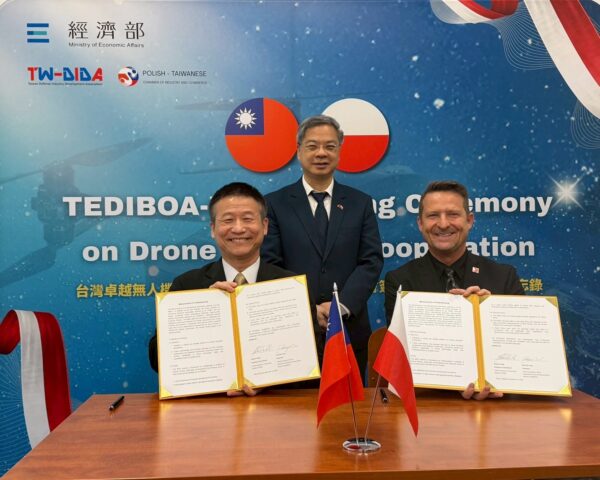
Taiwan and Poland Forge Deeper Drone Industry Ties
Taiwan and Poland have signed an MoU to build a joint drone supply chain, driven by converging national security strategies. Both nations aim to reduce reliance on Chinese components and foster domestic industries, deepening their cooperation.
This article requires PRO
This article is outside the free access window or is a special report. PRO unlocks it and the full archive.
Related articles
- Indonesian State-Owned Enterprises Targeted by Hoaxes, Risking Public Misunderstanding
Hoaxes targeting Indonesian State-Owned Enterprises (BUMN) are circulating on social media and messaging apps. False information concerning Pertamina, BRI, and Antam has been identified, posing a risk of public misunderstanding and distrust. Liputan6.com is actively countering these hoaxes through its fact-checking initiatives.
- Agrinas Partners with KPK to Strengthen Governance and Integrity, Preventing Deviations
PT Agrinas Group in Indonesia is collaborating with the Corruption Eradication Commission (KPK) to enhance its governance and integrity, aiming to prevent corruption. Both entities will share information and conduct training to deter fraudulent practices.
- Tempe Producers Face Dilemma Amidst Soaring Soybean Prices: Hold Prices or Shrink Sizes?
Tempe producers in Indonesia, particularly in East Jakarta, are facing severe operational challenges due to the soaring prices of imported soybeans. Fluctuations in exchange rates and global events are forcing small businesses, unable to pass on costs, to make the difficult choice of reducing product sizes.
- Swedish Fund Buys Indonesian Stocks for First Time Amid 30% IHSG Drop
Amid a 30% decline in Indonesia's benchmark stock index (IHSG) this year, Swedish asset manager Coeli Asset Management has made its first foray into Indonesian equities. The firm sees the sharp correction as creating attractive investment opportunities. However, concerns regarding market transparency and low free float persist.