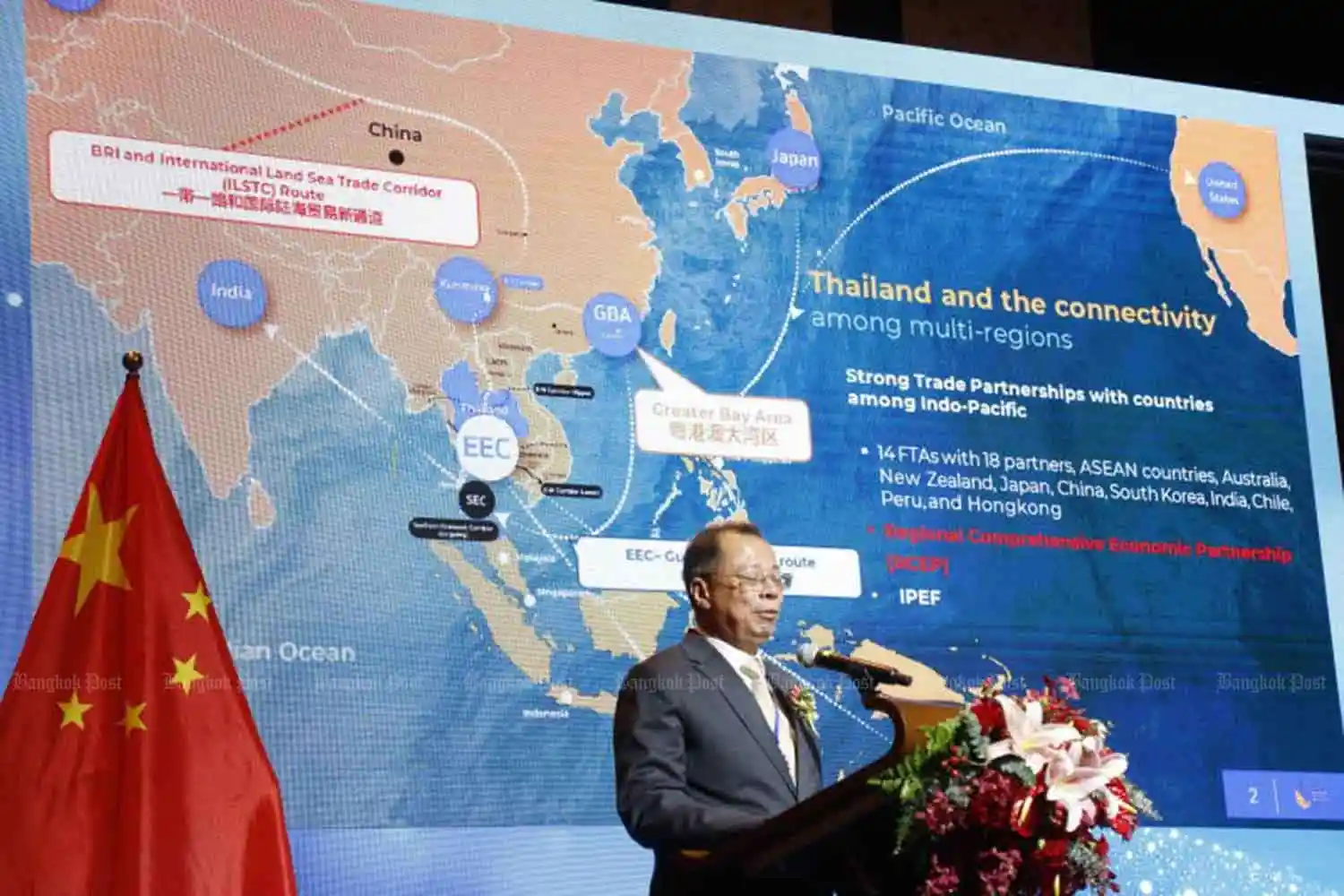
Chinese Investment Reshaping Thailand's Industrial Landscape
A surge in Chinese investment is transforming Thailand's industrial sector. Chinese firms are rapidly acquiring and leasing land, significantly impacting local economies and real estate, particularly in the Eastern Economic Corridor (EEC). Concerns are rising over "zero-dollar" industrial parks that offer no benefit to the Thai economy.
BANGKOK – A major wave of Chinese investment is reshaping Thailand’s industrial landscape. Over the past six years, Chinese manufacturers have rapidly bought and leased land across the country to set up new production bases. This massive influx is changing the face of local economies and real estate markets. Data from the Industrial Estate Authority of Thailand (IEAT) highlights this rapid growth. In 2019, Chinese investors accounted for just 6% of the land in Thai industrial estates. By the first quarter of 2026, that share jumped to 17.06%, making China the second-largest foreign investor behind Japan, which holds 22.75%. This sharp increase in land demand matches global trends reported by news outlets like Nikkei Asia. Chinese companies have been actively acquiring land across Asia to expand their business reach and secure raw materials. In Thailand, this strategy is playing out heavily in the Eastern Economic Corridor (EEC). Industry sources report that large-scale Chinese groups are buying up massive plots of land outside official industrial estates. Acting as real estate agents and brokers, these firms pool thousands of rai of land together. They then develop the areas in phases, selling them almost exclusively to other Chinese investors. While some companies follow local rules, others use business models that heavily harm the Thai economy. The most alarming trend is the rise of “zero-dollar” industrial parks and factories. These setups rely entirely on Chinese capital, Chinese workers, and Chinese supply chains. These factories import everything from heavy machinery and construction materials to daily cleaning supplies from China. As a result, not a single baht circulates back into the local Thai economy. This practice completely cuts out Thai suppliers and deprives local workers of jobs. To bypass legal restrictions on land ownership, many foreign buyers use Thai accounting or law firms to set up local nominee companies. These front companies buy up land both inside and outside official zones. The buying spree has expanded beyond the EEC into Bangkok business districts like Yaowarat and Huai Khwang. This heavy speculation has caused land prices in key areas to skyrocket by 20% to 30%. In some popular commercial districts, building rents have jumped three to ten times higher. Local Thai business owners simply cannot compete with these prices and are being forced to close down. The impact is most visible in districts like Pluak Daeng in Rayong and Bo Win in Chonburi. In these manufacturing hubs, land costs have nearly tripled in certain areas. Local Thai businesses find it impossible to rent space or expand their existing factories. Many Thai landowners still choose to sell because brokers offer high prices that are hard to refuse. Some local communities also welcome the initial development, believing it will bring improvements to the area. However, the long-term economic drain on homegrown businesses remains a critical concern. The Federation of Thai Industries (FTI) warns that these foreign-owned, zero-dollar supply chains are crippling local manufacturing. Out of 46 industrial sectors in Thailand, nearly half are now facing a severe crisis. Local factories are struggling to survive against low-cost imports and self-contained foreign supply networks. The electrical appliances sector has taken the hardest hit, with 70.3% of the industry reporting negative impacts. The construction materials sector follows closely at 46.9%, while the local steel industry faces similar challenges. Without policy changes, more Thai manufacturers may soon disappear from the market.
多角的分析
中国からの「ゼロドル」投資モデルは、タイ国内経済への波及効果を意図的に排除する構造となっている。これは、タイのサプライヤー、建設業者、サービス業、そして労働市場を迂回し、資本と利益が全て中国国内に還流する仕組みである。結果として、タイは製造拠点としての役割を果たすものの、付加価値の創出や国内経済の活性化にはほとんど貢献しない。これは、タイが単なる「生産工場」に留まり、産業構造の高度化や国内経済の自律的成長を阻害するリスクを孕んでいる。
短期的な視点では、中国からの大規模な土地購入は不動産価格を押し上げ、一部のタイ人土地所有者や不動産仲介業者には利益をもたらす可能性がある。しかし、長期的な投資家、特にタイ国内の製造業に投資を検討している投資家にとっては、状況は悪化している。国内事業者が競争力を失い、産業基盤が弱体化する中で、持続可能なビジネス環境の維持が困難になる。また、外国資本による市場の独占は、将来的な市場の流動性や多様性を損なうリスクもある。
中国資本による土地投機は、タイ国内の地方都市や郊外の生活基盤を揺るがしている。特に、ラヨーン県プワックデーンやチョンブリ県ボーウィンのような地域では、地価の高騰により、元々その土地で事業を営んでいたタイの小規模事業者や農家が立ち退きを余儀なくされている。彼らは、長年培ってきたビジネスや生活の場を失い、新たな職や住居を見つけることが困難になる。これは、地域社会の分断や、経済的格差の拡大を招く可能性がある。また、地元労働者の雇用機会が奪われることで、地域経済の衰退にもつながりかねない。
タイ国民、特に地方の小規模事業者や労働者にとって、この状況は生活の基盤を脅かすものとなっている。彼らは、自分たちの土地やビジネスが、外国資本の投機対象となり、競争から排除される現実を目の当たりにしている。賃料の高騰や、国内産業の衰退による雇用機会の減少は、直接的な生活苦につながる。また、名目上の現地法人による土地買収は、法的な透明性を欠き、国民が自国の経済状況を正確に把握することを困難にしている。これは、政府に対する不信感や、経済的不公平感の増大につながる可能性がある。
背景・歴史的文脈
タイへの外国直接投資(FDI)は、長年にわたり経済成長の重要な柱であった。特に製造業は、タイ経済の基幹産業として発展してきた。近年の中国経済の台頭と、米中貿易摩擦を背景としたサプライチェーン再編の動きは、タイへの投資構造にも変化をもたらしている。中国企業は、コスト競争力と巨大な国内市場へのアクセスを求めて、東南アジア諸国への投資を加速させている。タイ政府は、東部経済回廊(EEC)開発計画などを通じて、外国からの投資を積極的に誘致してきたが、その恩恵が国内経済に十分に波及しない「空洞化」の懸念が、中国資本の流入拡大とともに現実味を帯びてきている。
原文ソース
Chiang Rai Times