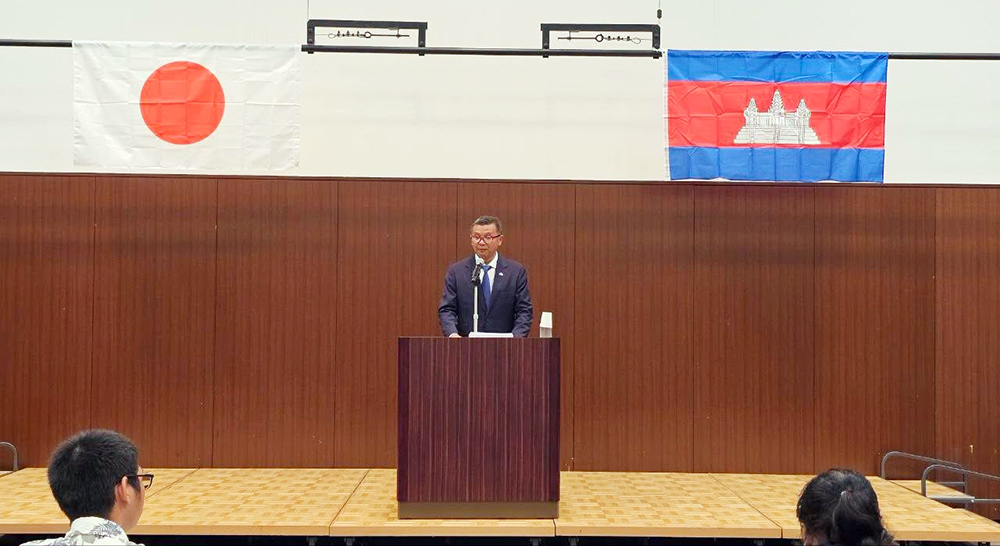
Cambodian Education Minister Delivers Keynote on Cambodia-Japan Partnership to Boost Cooperation and Investment
Economy
2026年7月6日
5
AKP Khmer
Relations
🇰🇭Cambodia🇯🇵Japan

Cambodian Education Minister Delivers Keynote on Cambodia-Japan Partnership to Boost Cooperation and Investment

AI サマリー

Cambodian Minister of Education, Youth and Sport, Hang Chuon Naron, delivered a keynote speech titled "The Future of Cambodia and Cambodia-Japan Partnership" at a public forum in Iwaki City, Fukushima Prefecture, Japan. He highlighted Japan's infrastructure and educational support, urging Japanese investment in technology and innovation sectors, leveraging Cambodia's young population as it transitions to a knowledge-based economy.

During a working visit to Iwaki City, Fukushima Prefecture, Japan, Cambodian Deputy Prime Minister and Minister of Education, Youth and Sport, H.E. Dr. Hang Chuon Naron, participated in a public forum and delivered a keynote speech on "The Future of Cambodia and Cambodia-Japan Partnership" to promote cooperation and investment between the two countries. The event was attended by leaders, investors, businesspeople, academics, the Japanese community, and relevant stakeholders. In his keynote address, H.E. Dr. Hang Chuon Naron highlighted several key messages. He underscored the numerous infrastructure development projects in Cambodia supported by the Japanese government, noting that the Kizuna Bridge stands as a vivid testament to the relationship and friendship between Cambodia and Japan. He also pointed out that roads, ports, and various other aid from Japan, channeled through the Japan International Cooperation Agency (JICA), in areas such as teacher training, school building construction, and educational sector development, have become symbols of the strong partnership between the two nations. The Minister continued by stating that over the past three decades, Cambodia has achieved remarkable progress in maintaining peace, economic growth, poverty reduction, and educational reform. Currently, Cambodia is transitioning from a labor-based economy to one driven by knowledge, technology, and innovation, which necessitates close cooperation with experienced partners like Japan. He noted that approximately 60% of Cambodia's population is under 35 years old, representing a significant human resource potential to support investments in industries, technology, engineering, artificial intelligence (AI), and the digital economy. The government is also continuing to reform educational programs and strengthen the connection between higher education institutions and the private sector to produce human resources that meet the demands of the labor market. On this occasion, H.E. Dr. Hang Chuon Naron invited Japanese investors to further explore opportunities for expanding investments in Cambodia, particularly in high value-added sectors such as agro-processing, modern agriculture, green energy, and infrastructure development. Cambodia has established special economic zones and implemented investment incentive policies, including tax benefits, streamlined procedures, and reduced administrative barriers, to create a competitive, favorable, and easy investment environment for foreign investors. Furthermore, the Cambodian government has been and continues to take firm measures to crack down on online fraud crimes and transnational offenses by strictly enforcing laws, strengthening cooperation with partner countries and international organizations, and enhancing the capacity of law enforcement institutions. These measures aim to protect social security, boost investor confidence, and maintain a safe and transparent business environment. Source: AKP Khmer

多角的分析

経済的影響

カンボジア経済は、労働集約型から知識集約型への転換期にあり、日本からの技術移転や高付加価値産業への投資が不可欠である。特に、若年層の多さを活かしたAIやデジタル経済への投資は、経済成長の新たな牽引役となりうる。日本は、JICAを通じたインフラ整備や教育支援で長年の実績があり、カンボジアの経済構造改革を後押しする強力なパートナーとなりうる。

投資家心理

カンボジア政府は、投資環境の改善に注力しており、特別経済区の設置や税制優遇措置を提示している。オンライン犯罪対策の強化は、投資家の信頼を高める上で重要な要素となる。日本企業にとっては、カンボジアの成長ポテンシャル、特に技術・イノベーション分野への投資は、新たな収益機会をもたらす可能性がある。しかし、法執行の厳格化と併せて、投資家保護のさらなる強化が期待される。

社会的影響

カンボジアの人口構成は、60%が35歳未満という若年層社会であり、これは将来の労働力と消費市場の基盤となる。教育改革と産業界との連携強化は、この若年層の潜在能力を最大限に引き出し、知識経済への移行を成功させる鍵となる。一方で、オンライン詐欺などの社会問題への断固たる対応は、国民の安全と社会全体の安定に不可欠であり、投資家のみならず、国内市民の生活の質向上にも寄与する。

市民の声

カンボジア市民、特に若年層にとっては、教育の質の向上と、それに基づく雇用機会の創出が最も関心事である。日本からの投資が、AIやデジタル経済といった先端分野に及ぶことは、将来のキャリアパスの多様化を意味する。しかし、オンライン詐欺対策の強化は、市民が安心してデジタルサービスを利用できるようになるための重要な一歩であり、社会全体の信頼感向上に繋がる。

背景・歴史的文脈

カンボジアと日本の関係は、第二次世界大戦後、日本がカンボジアの復興と開発に継続的に貢献してきた歴史を持つ。特に、JICAを通じたインフラ整備(例:キズナ橋、道路、港湾)や、教育分野への支援は、両国間の強固な信頼関係の基盤となっている。近年、カンボジアは経済成長を遂げ、労働集約型産業から知識・技術集約型産業への転換を目指しており、日本のような先進国からの技術移転と投資が不可欠となっている。今回のフォーラムは、こうした背景のもと、両国間の経済協力と投資をさらに深化させるための機会として開催された。

原文ソース

AKP Khmer

原文を読む
Cambodian Education Minister Delivers Keynote on Cambodia-Japan Partnership to Boost Cooperation and Investment | NEWS-BRAIN