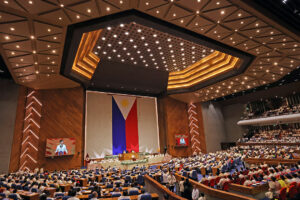
Philippines Congress Debates Constitutionality of Unprogrammed Appropriations
A Philippine House Deputy Minority Leader is urging Congress to halt funding for "unprogrammed appropriations" (UA) until the Supreme Court rules on their constitutionality. Critics cite a lack of transparency and potential for corruption, reigniting debate following the approval of the proposed 2027 National Expenditure Program.
A debate is brewing in the Philippines Congress over the constitutionality of "unprogrammed appropriations" (UA), with a senior House Deputy Minority Leader urging a halt to funding until the Supreme Court (SC) makes a ruling. Representative Leila M. de Lima stated that as long as the SC has not resolved the issue, opportunities for corruption in the budget, similar to past anomalous flood control projects, will persist. "Until the Supreme Court resolves this issue, we will continue to call Congress not to allocate funds for it. Truly necessary items should be included in the National Budget, while others should go through special appropriations that will still undergo scrutiny by Congress," Ms. de Lima said. This call comes after President Ferdinand R. Marcos, Jr.'s Cabinet approved the Department of Budget and Management's (DBM) proposed 2027 National Expenditure Program (NEP). The proposed budget for 2027 stands at P7.200 trillion, a 6% increase from the current year's budget. Over the past three years, petitions have been filed before the SC questioning the legality of unprogrammed appropriations and alleged unconstitutional budget amendments within the General Appropriations Acts for 2024, 2025, and 2026. Ms. de Lima criticized the use of unprogrammed funds as a grave abuse of discretion, amounting to an undue delegation of Congress's power of the purse to the Executive. The DBM maintains that UA is constitutional and can only be released under conditions specified by law. Analysts suggest that greater transparency throughout the budget process is crucial to insulate the proposed 2027 budget from legal challenges. Michael Henry Ll. Yusingco, a senior research fellow at the Ateneo Policy Center, stressed the need for public participation from the budget call stage and greater transparency. Ederson DT. Tapia, a political science professor at the University of Makati, advocated for institutionalizing transparency by publishing all congressional amendments in real time, identifying proponents and justifications, and making bicameral deliberations publicly accessible. He also called for a publicly accessible comparison between the Executive's proposed NEP and the final General Appropriations Act to trace all insertions, deletions, and fund realignments. Joy G. Aceron, convenor-director at transparency advocacy group G-Watch, emphasized the importance of prioritization and accountability given the government's limited fiscal space next year. She recommended that the DBM use Commission on Audit findings to identify programs vulnerable to inefficiency and corruption during budget preparation. Ms. Aceron expressed hope that unprogrammed appropriations would be removed from the proposed 2027 budget.
多角的分析
フィリピンの国家予算における未配分予算(UA)は、執行部が議会の直接的な承認なしに、特定の条件が満たされた場合に資金を支出できる仕組みである。これは、予期せぬ事態や経済状況の変化に対応するための柔軟性を提供する一方で、予算の執行における透明性と説明責任の低下を招くリスクがある。今回の議論は、UAの合憲性という法的な問題に加え、予算配分における民主的な統制と効率性のバランスという、フィリピン経済の財政運営における根深い課題を浮き彫りにしている。UAへの依存度が高い場合、財政規律の緩みや、優先度の低いプロジェクトへの資金流出といった経済的非効率につながる可能性がある。
未配分予算(UA)を巡る論争は、フィリピンの投資環境における不確実性を高める要因となり得る。UAの合憲性に関する最高裁判所の判断が未定であることは、将来的な財政政策の安定性に対する懸念を生じさせる。投資家は、予見可能性の高い財政運営を重視するため、UAのような不透明な予算メカニズムは、投資判断においてリスク要因と見なされる可能性がある。特に、UAが汚職や非効率な資金配分につながるという指摘は、ガバナンスへの懸念を深め、海外からの直接投資(FDI)の意欲を削ぐ可能性も否定できない。
未配分予算(UA)の議論は、フィリピン社会における「国民の税金」への不信感を反映している。下院議員や市民団体が指摘するように、UAは「汚職の温床」や「議会の権限の委譲」と見なされがちだ。これは、公共事業における不透明な契約や、特定の政治的コネクションを持つ団体への資金流出といった過去の事例が、国民の間に根強く残っているためである。特に、洪水対策のような国民生活に直結するインフラ整備で問題が指摘されたことは、一般市民の不安を増幅させる。予算策定プロセスへの国民参加の欠如は、政府への信頼を損ね、社会的な分断を深める要因となり得る。
フィリピン市民にとって、未配分予算(UA)の問題は、自分たちの税金がどのように使われているのかという根本的な疑問に繋がる。特に、過去に洪水対策などの公共事業で不正や非効率が指摘された事例があるため、UAが再びそのような問題を引き起こすのではないかという懸念は大きい。デ・リマ議員が訴えるように、本当に必要なものに税金が使われず、不透明な形で一部の権力者に流れるのであれば、それは市民の生活を直接圧迫する。予算策定のプロセスが、一部の政治家や官僚だけでなく、市民にも開かれて透明性を確保することが、国民の信頼回復には不可欠である。
背景・歴史的文脈
フィリピンにおける未配分予算(UA)は、国家予算の一部として長年存在してきた。しかし、その執行における透明性の欠如や、政治的な影響力による不適切な資金配分への懸念は、過去にも繰り返し指摘されてきた。特に、2013年の「豚箱(pork barrel)」問題のように、議員の裁量に委ねられた予算が不正流用された事件は、国民の不信感を増幅させた。UAは、議員の裁量とは異なるものの、執行部への権限委譲という点で、同様の構造的な問題を抱えていると見られている。最高裁判所にUAの合憲性を問う訴訟が提起されたのは、これらの過去の教訓を踏まえ、予算執行の民主的統制を強化しようとする動きの一環と考えられる。
原文ソース
BusinessWorld Nation