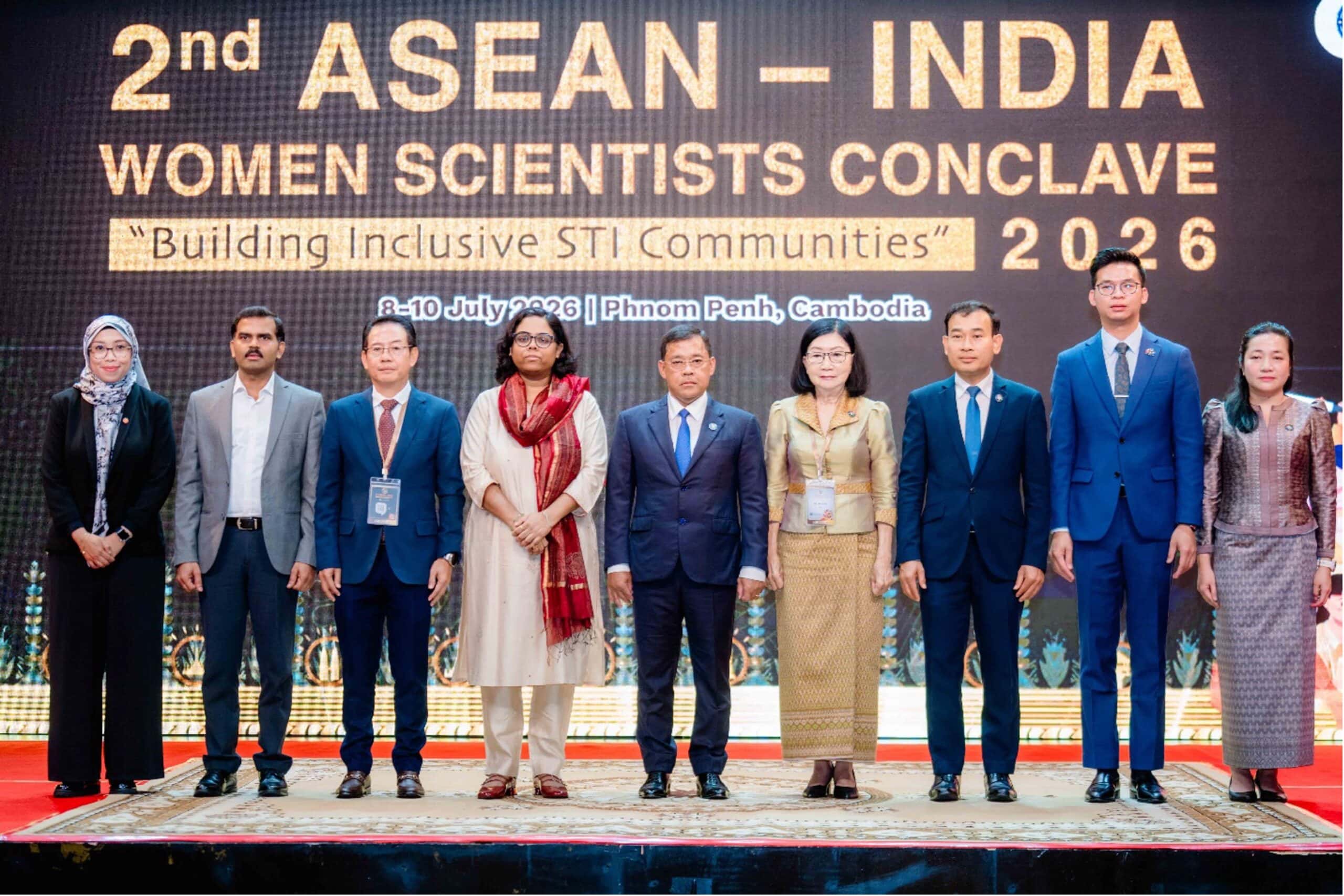
ASEAN-India Women Scientists Conclave in Cambodia Aims to Boost Female Participation in STEM
The ASEAN-India Women Scientists Conclave in Phnom Penh aims to enhance women's leadership and address challenges in the STEM sector. Focusing on food security and sustainable energy, the event seeks to strengthen international collaboration.
Leading women scientists, researchers and innovators from India and ASEAN Member States gathered in Phnom Penh today for the 2nd ASEAN-India Women Scientists Conclave, launching a three-day forum aimed at advancing women’s leadership and addressing persistent barriers in science, technology and innovation (STI). This year’s event, attended by more than 135 people, is themed “Building Inclusive STI Communities”. Discussions focus on four priority areas: food security, sustainable energy, equitable education and emerging technologies. It is co-organised by Cambodia’s Ministry of Industry, Science, Technology & Innovation and the Indian Institute of Technology Gandhinagar, with support from the ASEAN-India Science & Technology Development Fund (AISTDF), according to a press release. Umesh Waghmare, secretary of India’s Department of Science and Technology, highlighted the longstanding science and technology partnership between India and ASEAN and underscored the importance of building inclusive innovation ecosystems. “Women scientists, innovators and entrepreneurs are making extraordinary contributions across every field of science and technology. Yet, they continue to encounter challenges that require greater institutional support, stronger professional networks and more opportunities for collaboration,” he noted. Day one saw ten multinational roundtable discussions and innovation pitching sessions held, with women researchers presenting scalable scientific and technological solutions. The sessions aim to accelerate the commercialisation of research while strengthening collaboration among universities, industry, and small and medium-sized enterprises. Souksavath Sihapanya, chair of the ASEAN Committee on Science and Technology and Innovation (COSTI), noted that the event complements the implementation of the ASEAN Plan of Action on Science, Technology and Innovation (APASTI) 2026–2030, by promoting greater participation of women in the region’s innovation ecosystem. “This conclave provides a unique opportunity to amplify the voices of women scientists and innovators. Their leadership is essential to ensuring that our STI communities are inclusive, diverse and impactful,” he said. Nhim Khemara, science ministry permanent secretary of state, noted that STI is transforming the world at an unprecedented pace and is central to Cambodia’s long-term development strategy. He said the Kingdom is committed to building a knowledge-based economy under phase one of the government’s Pentagonal Strategy, as well as the STI Roadmap 2030, which aims for at least 50 per cent of university STEM graduates to be women. “A nation cannot innovate effectively while leaving its talent behind, particularly the women. We must empower women to be active driving forces in scientific advancement, fully positioning them as leaders, innovators and primary decision-makers,” he noted. According to the release, women scientists bring unique perspectives, creativity and expertise that strengthen research and innovation, but they remain underrepresented in advanced scientific disciplines and leadership roles. The event will see numerous discussions on the best course of action to resolve these challenges.
多角的分析
本会議は、ASEAN地域における科学技術イノベーション(STI)分野での女性の参画促進という経済的側面を持つ。女性の能力開発とリーダーシップ向上は、イノベーションエコシステムの多様化と活性化に繋がり、結果として経済成長の加速に寄与すると考えられる。特に、食料安全保障や持続可能なエネルギーといった分野での女性の貢献は、地域経済の安定と発展に不可欠である。STI分野における女性の過小評価は、潜在的な経済的機会の損失であり、これを是正することは、ASEAN諸国の長期的な経済競争力強化に繋がる。
投資家にとって、本会議はASEAN地域におけるSTI分野の成長ポテンシャル、特に女性主導のイノベーションへの注目度を高めるシグナルとなる。女性科学者や起業家への支援強化は、新たな技術開発や市場開拓の可能性を示唆する。食料安全保障や持続可能なエネルギーといった分野は、SDGs達成への貢献と市場成長の両面から投資家の関心を集めやすい。女性の参画が進むことで、より多様で包括的なイノベーションエコシステムが形成され、長期的な投資リターンに繋がる可能性が期待される。
本会議は、カンボジアを含むASEAN諸国におけるSTEM分野でのジェンダー格差是正に向けた重要な一歩である。女性科学者が直面する制度的支援の不足や、専門家ネットワークの弱さといった課題は、彼女たちのキャリア形成や研究活動に直接的な影響を与える。プノンペン市民、特に若い女性たちにとって、成功した女性科学者のロールモデルの存在や、インクルーシブなSTIコミュニティの構築は、自身の将来のキャリアパスを考える上で大きな希望となる。STEM分野での女性の過小評価は、社会全体の潜在能力を十分に引き出せていないことを意味しており、この状況の改善は、より公平で進歩的な社会の実現に不可欠である。
本会議は、カンボジア国民、特に女性たちにとって、STEM分野でのキャリアパスの可能性を広げる機会を提供する。女性科学者が直面する課題、例えば教育機会の不均等や、研究開発における支援体制の不足は、多くの女性の能力発揮を妨げている。プノンペンに住む若い女性たちは、SNSなどを通じてこのような国際会議の情報を目にすることで、科学技術分野への関心を高め、自身の将来設計に希望を見出す可能性がある。包摂的なSTIコミュニティの構築は、より多くの国民が科学技術の恩恵を受けられる社会を目指す上で重要であり、これは国民生活の質の向上に繋がる。
背景・歴史的文脈
ASEANとインドは、2000年代初頭から科学技術分野での協力を強化してきた。特に、ASEANの科学技術イノベーション行動計画(APASTI)とインドの科学技術政策は、相互の連携を深める枠組みを提供している。近年、STI分野における女性の過小評価が国際的な課題として認識され、各国の開発戦略においてもジェンダー平等の推進が重視されるようになった。カンボジア政府も、知識基盤経済の構築を目指す「五角戦略」の一環として、STI分野の発展に注力しており、特にSTEM分野における女性の卒業率向上を目標に掲げている。本会議は、こうした背景のもと、ASEAN地域におけるSTI分野での女性の参画を促進し、包摂的なイノベーションエコシステムを構築するための具体的な取り組みとして開催された。
原文ソース
Phnom Penh Post