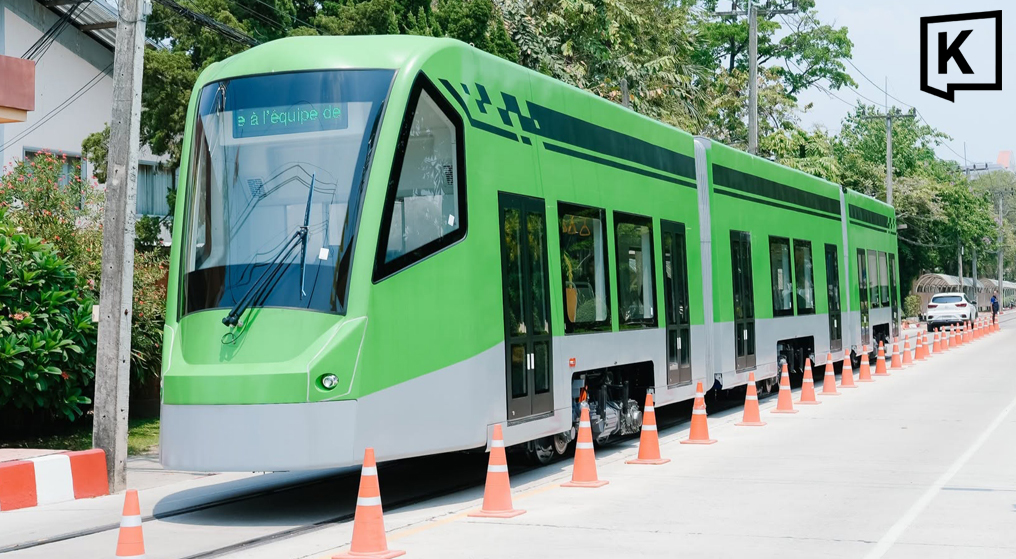
Thai-Developed Light Rail Tram Begins Track Testing
Technology
2026年7月10日
5
Khaosod English
Relations
🇹🇭Thailand🇨🇳China🇯🇵Japan

Thai-Developed Light Rail Tram Begins Track Testing

AI サマリー

Rajamangala University of Technology Isan (RMUTI) has commenced real-track testing of its Thai-developed light rail transit (LRT) prototype, the 'Luk Isan Tram,' marking a significant stride in the nation's rail technology development and engineer training.

KHON KAEN — Rajamangala University of Technology Isan (RMUTI) has successfully begun real-track testing of a Thai-developed light rail transit (LRT) prototype, marking a significant step in the country’s efforts to develop homegrown rail technology and train a new generation of railway engineers. The prototype, known as the “Luk Isan Tram,” has been undergoing continuous testing on a dedicated railway track at RMUTI’s Khon Kaen Campus, attracting widespread public attention on social media. On 10 July 2026, RMUTI President Assoc. Prof. Dr. Kosit Sriphuthorn said the successful trials demonstrate Thailand’s growing capability to design, develop and test rail technology using local expertise. “What people see today is not just the testing of a prototype light rail vehicle,” he said. “It reflects the potential of Thai engineers to design and develop practical railway technology. We are not only building a tram but also creating knowledge, developing skilled personnel and laying the foundation for Thailand’s rail industry.” The testing programme covers the tram’s performance on straight and curved tracks, braking systems, propulsion, wheel assemblies and other key components developed by the university’s research team. Engineers are also evaluating locally developed rail fastening systems, rail pads and groove rail pads to ensure the prototype meets performance and safety requirements for future operation. The university said the project incorporates international railway engineering standards, adapting global best practices in design, safety, control systems and maintenance to suit Thailand’s operating conditions. Beyond serving as a testing facility, the railway track at the Khon Kaen campus functions as a large-scale laboratory where students, lecturers and researchers gain hands-on experience in railway design, manufacturing, installation, testing, maintenance and system management. RMUTI said it has spent more than 15 years developing rail engineering programmes, research and industry partnerships. The university hopes to establish its Khon Kaen campus as a regional centre for railway education, research and innovation, supporting workforce development and strengthening Thailand’s long-term goal of building a self-reliant rail industry. The post Thai-developed light rail tram begins track testing appeared first on Khaosod English.

多角的分析

経済的影響

タイ国産LRT開発は、インフラ投資の国内化と関連産業の育成を促進する可能性がある。これにより、海外からの技術導入コスト削減や、国内サプライチェーンの強化が期待できる。長期的には、鉄道車両製造・保守分野での輸出競争力向上にも繋がりうる。

投資家心理

この国産LRT開発は、タイの技術的自立と産業高度化への投資意欲を高める可能性がある。ただし、実用化と商業的成功には、さらなる投資と国際基準への適合、そして政府の継続的な支援が不可欠であり、投資家はこれらのリスクとリターンを慎重に評価する必要がある。

社会的影響

ルック・イサーン・トラムの開発は、地方の大学が技術革新の拠点となり得ることを示している。コンケンキャンパスでの実習は、学生に実践的なスキルを習得させ、地方での雇用機会創出に繋がる。これは、都市部への人口集中を緩和し、地域経済の活性化に貢献する可能性を秘めている。

市民の声

タイ国産LRTの開発は、国民の技術への誇りを高める一方で、将来的な公共交通網への導入が期待される。しかし、その普及と利用可能性は、開発コスト、運用効率、そして国民の生活への影響を考慮した政府の政策に左右される。地方都市での公共交通の改善は、市民の移動の利便性を高める重要な要素となる。

背景・歴史的文脈

タイは長年、インフラ開発において海外からの技術導入に依存してきた。特に鉄道分野では、高速鉄道計画などで日本や中国などの技術が導入されてきた経緯がある。しかし、近年の国家戦略では、国内技術開発能力の向上と産業の自立化が重視されるようになっている。ラジャマンガラ工科大学イサーン校は、こうした流れの中で、工学教育と研究開発を推進し、特に地方のニーズに応える実用的な技術開発を目指してきた。今回のLRT試作車の開発は、その15年以上にわたる鉄道工学分野への投資と研究の成果であり、タイの鉄道技術における自立への強い意志を示すものと言える。

原文ソース

Khaosod English

原文を読む