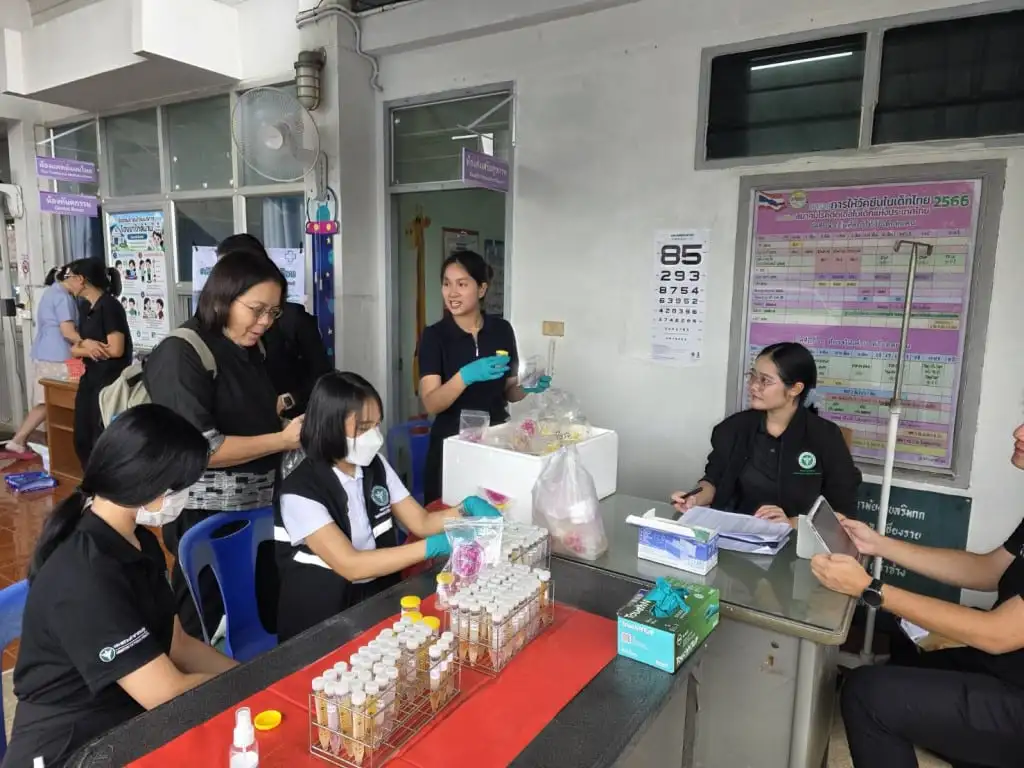
Chiang Rai Enhances Health Monitoring for Arsenic-Contaminated Waterways
Thailand's Department of Disease Control (DDC) is expanding its health surveillance program to protect residents near arsenic-contaminated waterways in Chiang Rai province, focusing on those at moderate to high risk along key rivers.
This article requires PRO
This article is outside the free access window or is a special report. PRO unlocks it and the full archive.
Related articles
- Thai Chefs and Massage Practitioners Target French Job Market
Thailand and France are exploring cooperation to expand job opportunities for Thai workers, particularly chefs and massage practitioners, in France. Discussions focus on aligning skills development and professional certification to meet international labor market demands.
- Bangkok Accelerates Flood Recovery as Over 522,000 Register for Aid
The Bangkok Metropolitan Administration is accelerating flood recovery and financial assistance, with over 522,000 residents registering for aid. While some areas remain inundated, drainage and cleanup operations are progressing.
- Pattaya Parasailing Platform Stranded on Beach 11 Days Post-Storm
A large parasailing platform, stranded on Pattaya Beach 11 days ago by a powerful storm, remains in place, impacting the view and beach chair operators. The owner estimates repairs will take around 10 days.
- Thai Gold Prices See Dip, Potentially Affecting Gift-Giving Budgets
Gold prices in Thailand experienced a temporary dip on October 6, potentially offering more affordable options for those considering gold jewelry as a gift.