General articles are free for 24 hours after publish.
Vietnam Shooters Disqualified from ASIAD 2026 Semifinals Over Uniform Regulations
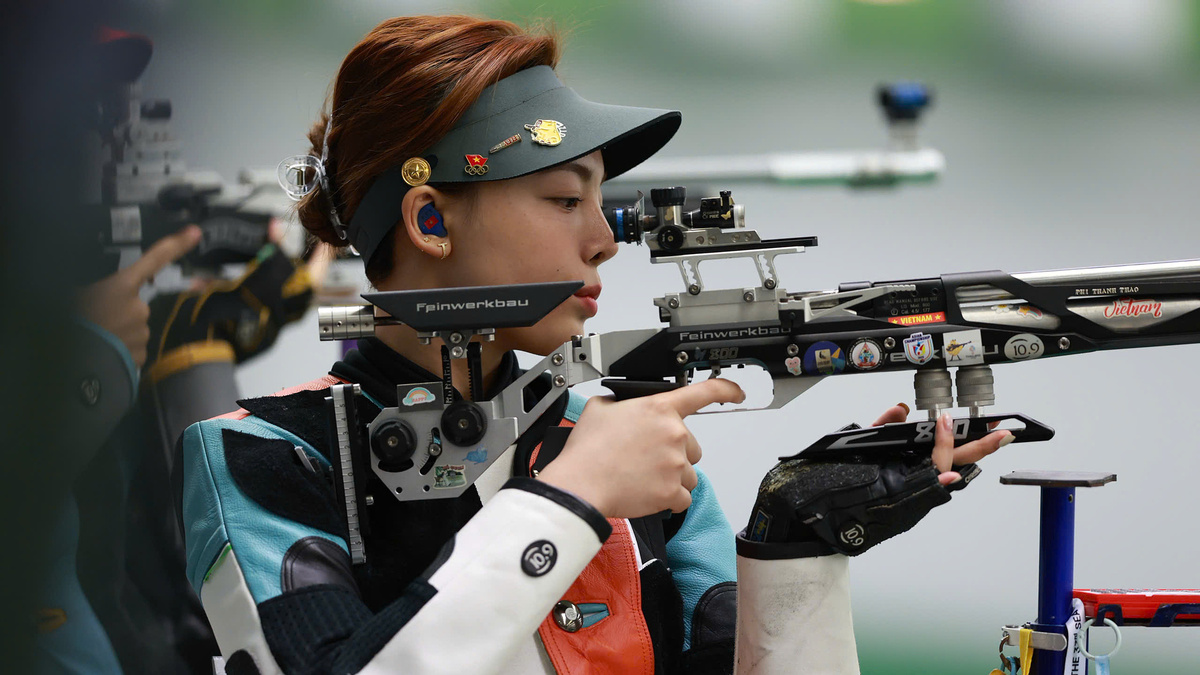
Vietnamese shooters Phí Thanh Thảo and Nguyễn Tâm Quang were disqualified from the ASIAD 2026 10m air rifle mixed team event qualifiers due to their shooting jackets being 0.1mm less rigid than the minimum required standard. This resulted in the loss of their spot in the semifinals.
Vietnam's shooters have missed out on a spot in the semifinals of the ASIAD 2026 10m air rifle mixed team event due to a violation of uniform regulations. On September 22, at the shooting range in Aichi Prefecture, Japan, Vietnamese athletes Phí Thanh Thảo and Nguyễn Tâm Quang secured fourth place with 631.7 points, a position that would have qualified them for the semifinals. However, a subsequent random inspection revealed that their shooting jackets were 0.1mm less rigid than the minimum standard set by the International Shooting Sport Federation (ISSF). The required rigidity is 3.0mm, and the shortfall led to their disqualification. A representative from the Vietnamese Sports Delegation at ASIAD 2026 stated that the rigidity of uniforms can be affected by external factors such as weather and air conditioning temperatures. The uniforms in question were purchased from China or South Korea and had reportedly been used without issue in previous international competitions. Prior to the start of the competitions on September 18, all athletes' equipment underwent official inspection and was confirmed to meet ISSF standards. Phí Thanh Thảo competed in the women's 10m air rifle individual event on September 20, and Nguyễn Tâm Quang in the men's individual event on September 21, with no issues reported at that time. However, ISSF regulations grant the organizing committee the authority to conduct a comprehensive inspection of competition equipment after the qualifying rounds to ensure all items comply with regulations before the finals. Shooting uniforms, comprising jackets, pants, gloves, and shoes, are designed to provide stability and safety. These garments can weigh between 11kg and 13kg, and their stiffness requires athletes to move slowly, with a gait described as similar to penguins or robots. ISSF specifies that the rigidity of jackets and pants in rifle shooting events must be 3mm or more. When measured with a specialized machine applying pressure to the fabric, a result below 3mm indicates the material is too rigid. The ISSF suggests that shooting uniforms exceeding the standard rigidity can act as a form of "support" for the body, allowing athletes to maintain a better posture without the usual muscular effort. The ISSF permits higher rigidity in the area of the jacket covering the shoulder blades (excluding sleeves) and the pants covering the waist and lower back (above the groin), as athletes require a certain level of support in these areas to hold their rifles in a stable shooting stance. Consequently, the maximum inspection time for these areas is 30 seconds, 15 seconds longer than for the rest of the jacket and leg areas (from the groin down). However, the athletes were not immediately penalized. The organizing committee proceeded to inspect another panel on the uniform. If only one fabric area fails the test, the athlete receives a written warning and the garment's label is removed. The athlete is permitted to continue using the uniform for the remainder of the competition day and the ongoing event. But if two or more inspection areas fail, the uniform is deemed non-compliant, and the athlete is disqualified from the event. The organizing committee also advises athletes to use uniforms with sufficient tolerance to avoid such errors. "The risk of failure in subsequent inspections is very high if the garment's rigidity is 3.1mm or 3.0mm," states Article 3.13 of the ISSF Rifle Equipment Control Guidelines, effective from January 1, 2026. Shooting at ASIAD 2026 features 49 teams competing across 28 events. After more than two days of competition, China leads with 4 gold medals. Japan is second with one gold and two bronze medals, India has four silver and one bronze, while South Korea has one silver and two bronze medals. Source: VnExpress
Original source
VnExpress