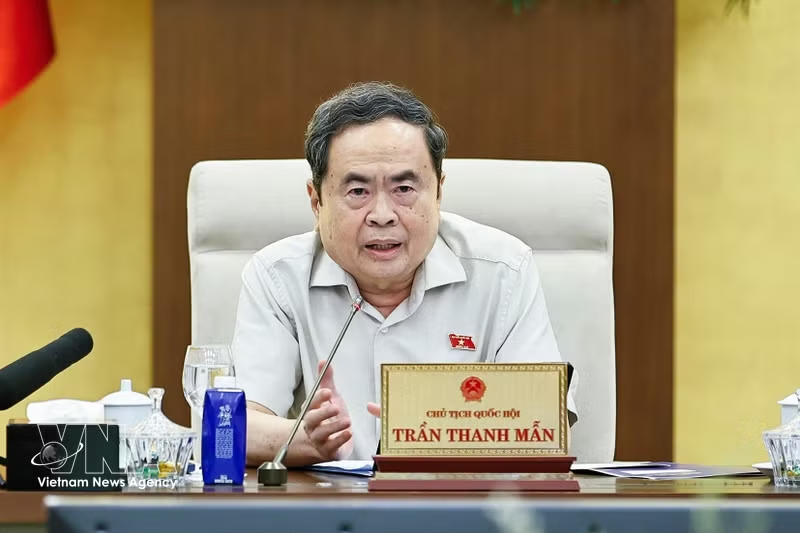
Vietnam to Slash Administrative Procedures in Agriculture, Environment Sectors
Vietnam's National Assembly Standing Committee reviewed a bill aimed at simplifying and eliminating administrative procedures in the agriculture and environment sectors. The reforms are expected to reduce processing time by 904 days and save an estimated 189.9 billion VND (7.3 million USD) in compliance costs.
The National Assembly Standing Committee of Vietnam has reviewed a bill aimed at simplifying and eliminating administrative procedures in the agriculture and environment sectors. This initiative is part of the economic reforms underway in Vietnam's one-party system, designed to improve the business environment and foster economic growth. The drafting agency proposed the elimination of 38 administrative procedures and 40 business conditions, along with the simplification of another 13 procedures. If implemented, these reforms are expected to slash the total processing time by 904 days and reduce compliance costs by an estimated 189.9 billion VND (7.3 million USD). While Vietnam's economy has experienced remarkable growth in recent years, bureaucratic procedures and complex administrative processes have been identified as one of the factors hindering both domestic businesses and foreign investment. Simplification of procedures, particularly in the agriculture sector which involves numerous small-scale farmers, could directly impact their profitability. In the environmental sector, while deregulation might invigorate environment-related businesses, balancing this with environmental protection will be a future challenge. This review signifies the Vietnamese government's intent to resolve administrative inefficiencies that act as economic bottlenecks and to create a more open and competitive market environment. This aligns with Vietnam's strategy to strengthen its domestic economic foundation amidst complex relations with China and rising geopolitical risks. Concurrently, the Standing Committee also reviewed draft laws concerning online piracy, the prevention of weapons of mass destruction proliferation, and bills related to the central bank and anti-money laundering, indicating Vietnam's multifaceted approach to governance and economic development. Source: VietnamPlus English
多角的分析
ベトナム政府による行政手続きの簡素化は、経済成長の持続と投資環境の改善に向けた構造的な取り組みの一環である。過去、煩雑な手続きは国内企業の競争力低下や外国直接投資(FDI)の障壁となってきた。例えば、2010年代初頭のベトナムのビジネス環境に関する報告書では、許認可プロセスに長期間を要することが頻繁に指摘されていた。今回の改革は、特に農業・環境分野に焦点を当てることで、これらの分野における生産性向上とイノベーション促進を狙う。これにより、サプライチェーンの効率化や新たなビジネス機会の創出が期待されるが、同時に、改革の実施状況と効果のモニタリングが、ベトナム経済の潜在力を最大限に引き出す鍵となる。
今回の行政手続き削減は、ベトナムへの投資を検討する企業にとって朗報である。特に、農業や環境関連分野への投資を計画している企業にとっては、事業開始までのリードタイム短縮や運営コスト削減に直結するため、投資判断におけるポジティブな要因となる。過去、ベトナムへの投資を阻む要因として、不透明な規制や長い許認可プロセスが挙げられてきた。今回の法案が成立・施行されれば、これらのリスクが低減し、より予測可能で効率的なビジネス環境が期待できる。ただし、実際の運用における透明性や一貫性が保たれるかどうかが、投資家の信頼を維持する上で重要となる。
農業・環境分野における行政手続きの簡素化は、地方の小規模農家や環境関連事業者の生活に直接的な影響を与える。手続きの煩雑さが軽減されれば、農家はより迅速に農産物を市場に出荷できるようになり、収益機会の拡大につながる可能性がある。また、環境関連の事業者は、許認可の遅延による機会損失を減らすことができる。しかし、手続きの簡素化が、環境保護基準の緩和や監視体制の弱体化を招くのではないかという懸念も生じうる。例えば、過去には農薬の使用に関する規制緩和が、環境汚染を引き起こした事例も報告されている。したがって、手続きの簡素化と同時に、環境基準の厳格な運用と監視体制の強化が、持続可能な社会の実現のために不可欠となる。
行政手続きの簡素化は、国民、特に農業従事者や環境関連ビジネスに関わる人々にとって、日々の生活や事業運営における負担軽減につながる。具体的には、農作物の販売許可や環境アセスメントの申請などが迅速に進むことで、収入の機会損失が減り、事業の継続性が高まる。例えば、ハノイ近郊で小規模な有機野菜農園を営む市民は、これまで複雑な許可申請に多くの時間を費やしてきたが、今回の改革により、その負担が軽減されることが期待される。一方で、環境保護に関する手続きが簡素化されることで、地域住民が懸念する環境汚染のリスクが増加しないか、という不安も生じる可能性がある。市民は、改革がもたらす経済的利益と、環境保護という公共の利益とのバランスがどのように取られるか、注視していく必要がある。
背景・歴史的文脈
ベトナムは1986年のドイモイ(刷新)政策以降、市場経済化を進め、目覚ましい経済成長を遂げてきた。その過程で、官僚主義や非効率な行政手続きは、経済発展の足かせとして長年指摘されてきた。特に、外国からの投資を呼び込む上で、ビジネス環境の改善は重要な課題であり、政府は度々、行政改革を打ち出してきた。しかし、中央政府の改革方針が地方レベルで十分に浸透せず、実効性が限定的となるケースも少なくなかった。今回の農業・環境分野における手続き削減は、こうした過去の課題を踏まえ、より具体的な分野に焦点を当てた改革と言える。これは、ベトナムが国際社会における競争力を高め、持続可能な経済成長を目指す上での、継続的な取り組みの一環である。
原文ソース
VietnamPlus English