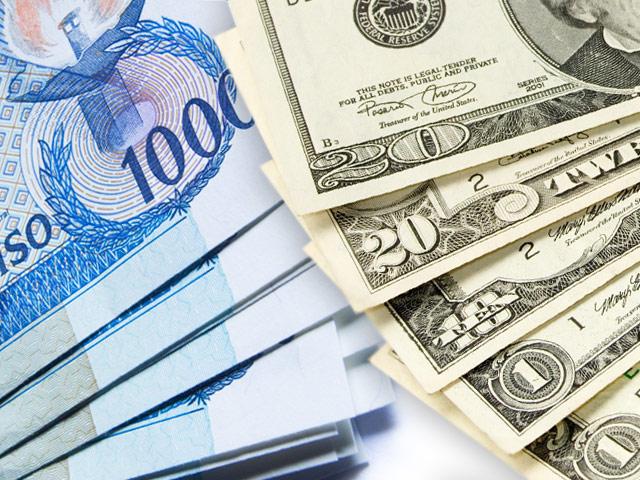
Philippine Stocks, Peso Dip Amid FDI Slowdown and Mideast Tensions
Philippine financial markets saw a downturn, with the local currency weakening to its lowest in over a month. Slowing foreign direct investment and escalating Middle East tensions appear to be impacting market sentiment.
Philippine financial markets opened the week on a negative note, as share prices declined on Monday, while the local currency depreciated to its weakest level in over a month. The Philippine Stock Exchange index (PSEi) shed 20.98 points or 0.33% to 6,265.72 at the closing bell, while the broader All Shares index declined lost 10.11 points or 0.30% to 3,383.23. “The local bourse ended lower as investors continued to consolidate positions, with the PSEi trading below the key 6,300 resistance level,” Regina Capital Development Corp. head of sales Luis Limlingan said in a mobile message. “Market participants remained cautious as they awaited fresh catalysts to determine the market’s next direction. Sustained buying interest and a breakout above resistance may be needed to support further upside momentum,” he added. Nearly all sectoral indices closed negatively—financials down 0.63%, industrial down 1.02%, holding firms and property both down 0.29%, and mining and oil down 2.27%. Services was the lone gainer, up 0.40%. More than 1.148 billion shares, valued at P16.815 billion, changed hands. Decliners led advancers, 101 to 77, while 75 issues were unchanged. The Philippine peso, meanwhile, depreciated by 5.1 centavos to close at P61.599:$1 from last Friday’s finish of P61.515:$1. This is the weakest showing since June 8 when it closed at P61.69:$1. “The US dollar/peso exchange rate was slightly higher… after the year-on-year decline in the local net foreign direct investments (FD) data,” Rizal Commercial Banking Corp. (RCBC) chief economist Michael Ricafort said in a separate mobile message. Net inflows of FDIs fell to $250 million in April, the lowest in nearly 10 years since June 2016’s $244 million, data released by the Bangko Sentral ng Pilipinas (BSP) on Friday showed. Ricafort said Monday’s depreciation was also driven by the escalating conflict in the Middle East, as US and Iranian forces exchanged missile and drone assaults across the Gulf on Sunday, prompting the closure of the Strait of Hormuz. — BM, GMA News
多角的分析
フィリピン経済にとって、海外からの直接投資(FDI)の低迷は、長期的な成長の原動力となる資本流入の減少を意味します。特に、4月のFDI純流入額が約10年ぶりの低水準となったことは、国内産業の設備投資や雇用創ちへの影響が懸念されます。これは、グローバルな不確実性や、国内の投資環境に対する懸念が背景にあると考えられます。ペソ安は輸入品価格の上昇を招き、インフレ圧力を高める可能性があります。これは、家計の実質購買力を低下させ、消費を抑制する要因となり得ます。
投資家心理は、短期的な市場の方向性を左右する重要な要素です。PSEiが主要な抵抗水準を下回って推移し、市場参加者が「新たな触媒」を待っている状況は、市場に上昇モメンタムを形成するだけの強い買い材料が不足していることを示唆しています。FDIの低迷は、外国からの資本流入への期待を低下させ、投資家がリスク回避的な姿勢を強める一因となります。中東情勢の緊迫化は、グローバルなリスクオフムードを助長し、新興国市場からの資金流出を招く可能性があります。これらの要因が複合的に作用し、投資家は慎重な姿勢を継続すると考えられます。
ペソ安とそれに伴う物価上昇は、特に低所得者層の家計を圧迫する可能性があります。輸入品への依存度が高いフィリピンでは、食料品や燃料などの価格上昇が生活必需品へのアクセスを困難にし、社会的な不満を高める恐れがあります。また、FDIの低迷は、新たな雇用機会の創出を遅らせる可能性があり、特に若年層の雇用問題に影響を与えることが懸念されます。海外就労(OFW)への依存度が高いフィリピン経済において、国内での投資と雇用機会の不足は、国民の海外流出をさらに加速させる可能性も指摘されています。
国民生活への直接的な影響としては、まずペソ安による物価上昇が挙げられます。食料品、燃料、その他の輸入品の価格が上昇すれば、家計の負担は増大します。特に、既にインフレに苦しむ家庭にとっては、生活がさらに厳しくなるでしょう。また、FDIの低迷は、国内での投資や事業拡大の鈍化を意味するため、新たな雇用の機会が生まれにくくなる可能性があります。これは、特に若者にとって、将来への不安を増大させる要因となり得ます。中東情勢の緊迫化は、直接的な影響は少ないかもしれませんが、世界経済全体への不確実性を高め、間接的にフィリピン経済や国民の心理に影響を与える可能性があります。
背景・歴史的文脈
フィリピン経済は、長年にわたり海外からの直接投資(FDI)と海外労働者(OFW)からの送金に大きく依存してきました。特にFDIは、国内産業の近代化、インフラ整備、雇用創ちへの重要な資金源です。しかし、過去数年間、フィリピンは、外国投資家が懸念する政治的リスク、官僚主義、インフラの遅れといった課題に直面してきました。今回のFDI純流入額の低迷は、こうした構造的な問題が、グローバルな経済不確実性や地域的な地政学リスクと相まって、顕在化した結果と考えられます。ペソの価値下落は、国際的な金融市場の動向や、米国の金融政策、そして中東情勢のような外部要因にも影響を受けやすいフィリピン経済の脆弱性を示しています。
原文ソース
GMA Money Philippines