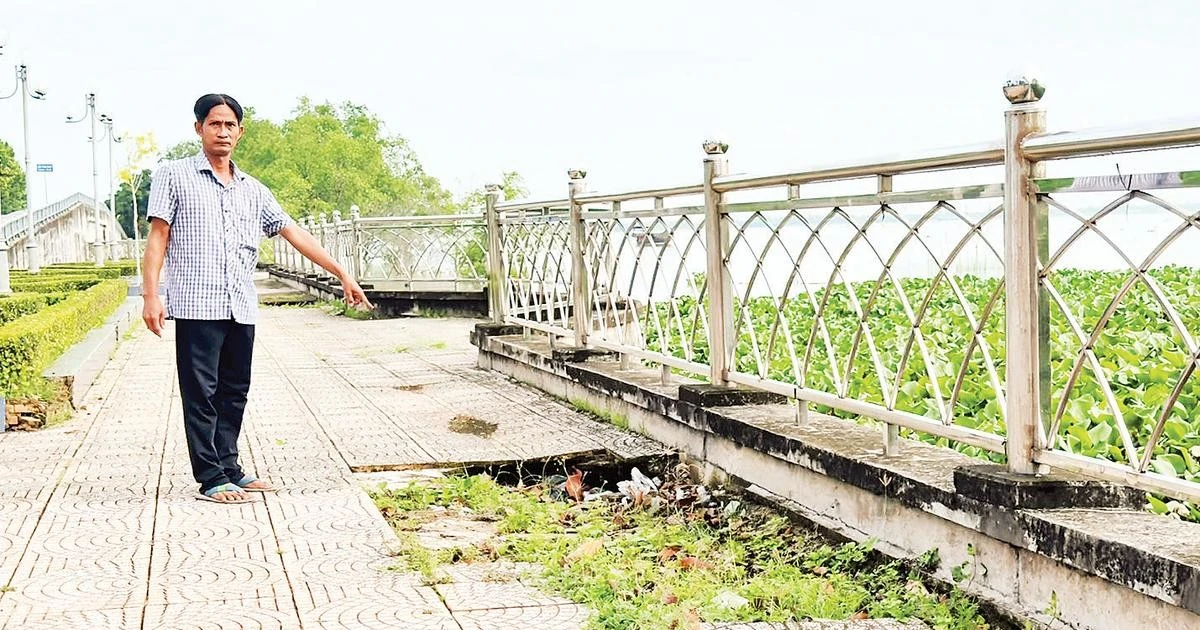
Mekong Delta River Embankment Faces Structural Issues and Encroachments
Embankments along the Co Chien River in Vietnam's Vinh Long Province are suffering from severe subsidence, damage, and illegal encroachments. Decades of operation, combined with climate change impacts and public indifference, are contributing to the deterioration, necessitating urgent remedial actions.
River embankment infrastructure along the Co Chien River in Vietnam's Vinh Long Province is facing significant structural issues, including severe subsidence, damage, and illegal encroachments. These problems, exacerbated by over a decade of operation, climate change impacts, and a lack of public awareness regarding the protection of public assets, necessitate urgent intervention from relevant authorities. In the Tan Ngai ward section, spanning over 3 kilometers, localized subsidence has affected approximately 1 kilometer of the sidewalk. Cracked and dislodged tiles reveal large voids underneath, and damaged or stolen lighting fixtures are compromising safety and security. Residents report that the subsidence, which began around 2018, has worsened, with sand washing out during heavy rains, creating further instability. Beyond structural damage, the embankment in Thanh Duc ward is suffering from a decline in urban aesthetics. Many residents have illegally occupied sidewalk areas for commercial purposes, obstructing public spaces. Overgrown vegetation in some sections further detracts from the visual appeal and reduces the availability of public recreational areas. The Provincial Department of Agriculture and Rural Development attributes the primary causes to the infrastructure's age, insufficient regular maintenance, the effects of climate change and tides, and the actions of some residents who lack awareness of public property protection. To ensure safety before the upcoming rainy season, the department has recommended that the Provincial People's Committee direct relevant agencies to conduct detailed assessments and propose funding for repairs. They also emphasize proactive implementation of the "four at-site" principle and public awareness campaigns. During a recent inspection, Mr. Tran Van Lau, a member of the Central Party Committee and Secretary of the Vinh Long Provincial Party Committee, urged the Department of Agriculture and Rural Development to collaborate with ward-level People's Committees to thoroughly inspect and assess all damaged sections. He also called for research into integrated drainage systems to preserve the embankment's aesthetic integrity. Local residents are eagerly awaiting prompt action from provincial authorities to repair the subsided areas in Tan Ngai and to clear vegetation and resolve encroachments in Thanh Duc, thereby restoring safe and open public spaces.
多角的分析
河岸インフラの沈下と破損は、インフラ維持管理の遅れと、気候変動による自然災害への脆弱性を示唆しています。これは、ベトナムのメコンデルタ地域におけるインフラ投資の優先順位付けと、長期的な持続可能性への課題を浮き彫りにしています。インフラの劣化は、物流コストの増加や、地域経済の基盤となる農業・漁業への影響を通じて、地域経済全体に波及する可能性があります。また、違法占拠は、公的空間の私的利用を招き、都市計画の実行を困難にしています。
インフラの老朽化と維持管理の不備は、ベトナムにおけるインフラプロジェクトへの投資リスクを示唆しています。特に、地方のインフラプロジェクトでは、計画段階での十分な調査、建設後の定期的なメンテナンス計画、および違法占拠への対策が投資回収の鍵となります。今回の事例は、投資家がプロジェクトのライフサイクル全体を見据え、地方政府の実行能力や住民の協力体制も評価する必要があることを示しています。
タンガイ区の住民は、歩道の沈下による移動の困難さや、インフラの劣化による安全への懸念を抱いています。タインドゥック区では、違法占拠によって公共空間が狭められ、住民の憩いの場が失われています。これらの問題は、地方自治体のインフラ管理能力と、住民の公共財産に対する意識の乖離を示しており、地域社会の生活の質に直接影響を与えています。
ヴィンロン省の住民は、長年利用してきた河岸インフラの老朽化と、それに伴う沈下や破損に不安を感じています。特にタンガイ区の住民は、歩道の沈下が日常生活の移動を困難にしていると訴えています。タインドゥック区の住民は、歩道が屋台などで占拠され、本来の公共空間としての機能が失われていることに不満を抱いています。彼らは、当局による迅速な修復と、景観の改善を強く求めています。
背景・歴史的文脈
ベトナムのメコンデルタ地域は、国土の約12%を占め、国内の食料生産の大部分を担っています。この地域では、農業生産性の向上と洪水対策のため、1990年代後半から河川改修や堤防建設が進められてきました。しかし、近年の急速な経済成長に伴う都市化や工業化、そして気候変動による海面上昇や異常気象の増加により、既存のインフラへの負荷が増大しています。特に、10年以上稼働したインフラの老朽化と、それに伴う維持管理の遅れが、今回のヴィンロン省の事例のように、構造的な問題として顕在化しています。また、一部地域での違法占拠は、インフラの設計上の想定を超えた負荷を与え、劣化を加速させる要因となっています。
原文ソース
Nhan Dan