General articles are free for 24 hours after publish.
Ujung Kulon National Park Focuses on Protecting Javan Slow Loris
Efforts are underway in Indonesia's Ujung Kulon National Park to protect the endangered Javan slow loris. Local communities recognize the importance of coexisting with wildlife and have pledged their cooperation in conservation efforts.
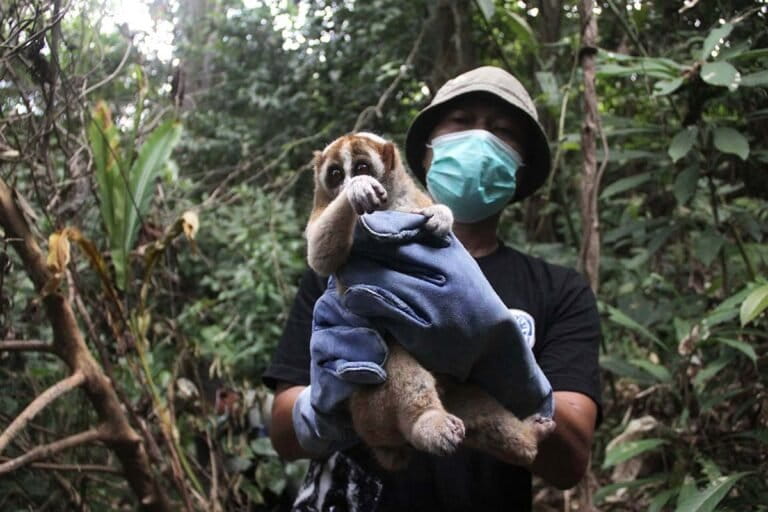
Efforts are underway in Indonesia's Ujung Kulon National Park (TNUK) to protect the critically endangered Javan slow loris (Nycticebus javanicus). Aen Suptiati (40), a resident of Rancapinang Village, Cimanggu District, Pandeglang Regency, Banten, which borders the national park, stated that seeing this nocturnal primate around her home is uncommon. She expressed curiosity upon learning that the slow loris would be returned to the forest within TNUK. While residents of Rancapinang are accustomed to seeing other wildlife such as long-tailed macaques (Macaca fascicularis) and Javan langurs (Trachypithecus auratus), for people like Aen, the presence of wild animals in their forests and fields is a familiar part of life. "There must be space given for animals to live in their habitat," she said, highlighting that coexistence with wildlife is an integral part of life for the 1,109 households in the village. The release of the slow loris involves more than just returning them to their habitat; an equally important task is ensuring that the community does not disturb the primates, which are considered cute, should they appear near their fields or settlements in the future. Encun Sunayah, the District Head of Cimanggu, revealed that before these release activities, he was largely unaware that slow lorises could still be found in the area. In Rancapinang Village, slow lorises are known by the local name 'muka,' and some residents recognize the animal when shown its image. Source: Mongabay Indonesia
Original source
Mongabay Indonesia