General articles are free for 24 hours after publish.
COA Flags Gaps in Confidential Fund Rules, Multiple SDOs Allowed
The Commission on Audit (COA) is set to review rules for confidential and intelligence funds, highlighting ambiguities in current regulations regarding the appointment of multiple disbursing officers and proof of success for informant rewards.
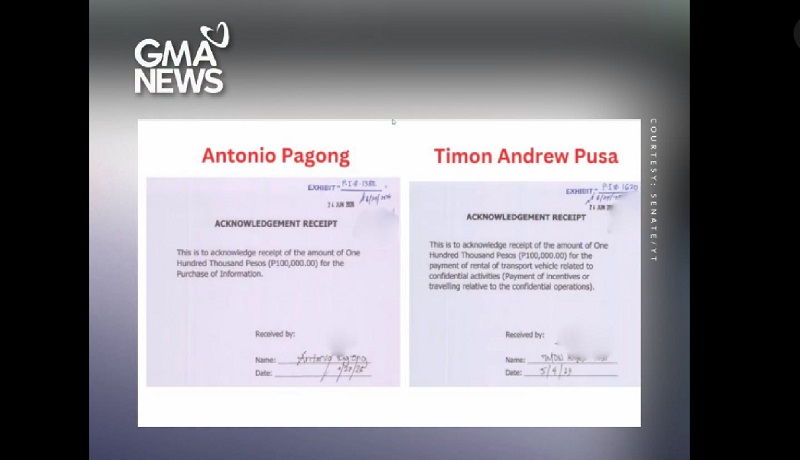
The Commission on Audit (COA) is looking to revisit the rules governing confidential and intelligence funds, citing ambiguities in current regulations concerning the appointment of multiple disbursing officers, documentation for informants, and requirements for paying rewards. During a Senate hearing on COA's proposed 2027 budget, COA Chairperson Gamaliel Cordoba stated that the existing Joint Memorandum Circular No. 2015-01 requires review and clarification. This circular, jointly issued by COA, the Department of Budget and Management, the Department of the Interior and Local Government, the Governance Commission for GOCCs, and the Department of National Defense, governs the entitlement, release, use, reporting, and audit of confidential and intelligence funds. COA officials clarified that an agency can designate more than one Special Disbursing Officer (SDO) to manage confidential or intelligence funds. An SDO is responsible for making disbursements and maintaining required records. Under current rules, cash advances for confidential funds are drawn by duly designated and bonded SDOs or by the agency head upon their approval. Cordoba noted that there is no prescribed limit on the number of SDOs an agency can designate. "It is up to the head of the agency to determine who will be assigned as SDO," he said. He explained that an agency may have different SDOs for different programs, provided they meet the requirements for accountable officers, including proper bonding and accountability. "There can be multiple SDOs; there is no limit as long as there is proper management, bonding and accountability," the official added. Under the existing circular, the SDO must maintain separate records of transactions, prepare liquidation and progress reports, and submit required documents to COA. COA's Concern Over Aliases in Transactions The discussion also touched upon the use of aliases or code names in documents supporting confidential fund transactions. Cordoba acknowledged that the current joint circular does not clearly settle this issue, and COA has identified the use of aliases and the identities appearing in acknowledgment receipts as areas requiring further review. This concern was also raised in recent Senate proceedings by a former COA auditor, who testified that the Joint Circular No. 2015-01 is silent on whether aliases may be used in documents supporting confidential fund disbursements. Cordoba added that the proposed review would examine how identities can be protected without compromising COA's ability to properly audit public funds. He stated there should be a way for auditors with appropriate clearance to verify identities where necessary while preserving the confidentiality of intelligence operations and informants. Proof Required for Rewards COA also emphasized that payments for information and reward payments are distinct. An official explained that while an agency may pay for information as part of a confidential operation, a reward carries an additional requirement: there must be evidence showing that the information or surveillance activity resulted in a successful outcome. "When we are talking about a reward, it is different; a reward carries with it the requirement of success," Cordoba noted. The official stated that the rules require documentation demonstrating the success of the information-gathering or surveillance activity. Records of an arrest or other documents indicating that the provided information led to a concrete result could serve as possible evidence. "The documentation is important," the official added. In the Philippines, confidential and intelligence funds are allocated to government agencies for activities related to national security and public order. Auditing these funds is crucial to prevent misuse and corruption of public money. However, their nature often poses challenges in ensuring strict transparency and accountability, particularly for protecting informants and maintaining secrecy in operations. COA's proposed review of regulations aims to address these challenges and ensure the proper utilization of these funds. Source: GMA News Philippines
Original source
GMA News Philippines