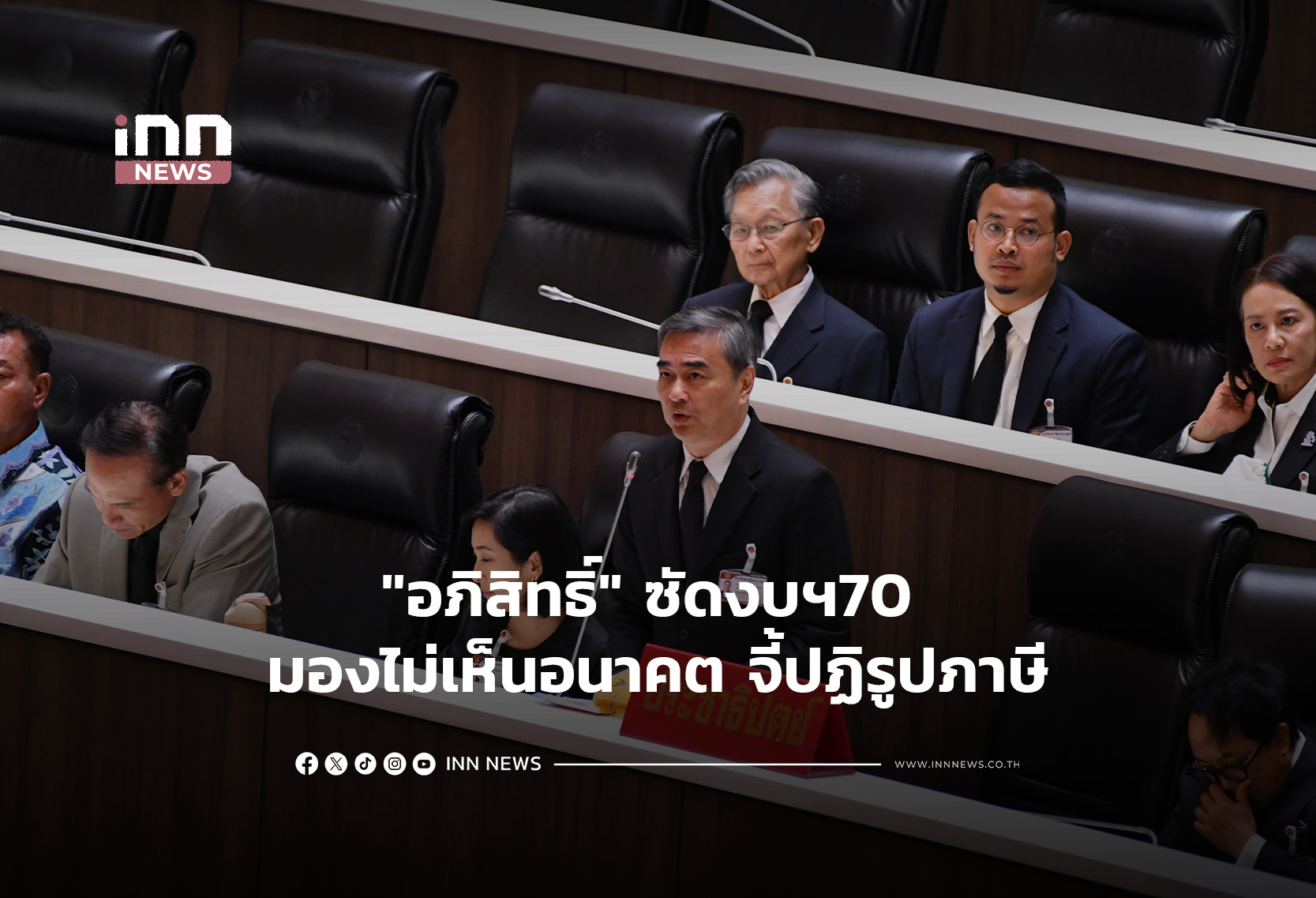
Thailand's FY2027 Budget Bill Faces Criticism: Lacks Future Vision, Tax Reform Urged
Economy
2026年6月29日
5
INN News

Thailand's FY2027 Budget Bill Faces Criticism: Lacks Future Vision, Tax Reform Urged

AI サマリー

Former Thai Prime Minister Abhisit Vejjajiva has sharply criticized the draft FY2027 budget, calling it a "day-to-day earning" budget with no clear future vision. He highlighted that most expenditures are allocated to recurring costs and debt repayment, leaving little room for long-term growth investments, and warned of public debt potentially reaching 90% of GDP, urging fundamental tax and fiscal reforms.

Former Thai Prime Minister Abhisit Vejjajiva, a list-MP for the Democrat Party, has sharply criticized the draft budget bill for the 2027 fiscal year, describing it as a budget that "lacks a future vision" and is merely for "earning a living day-to-day." He warned that the public debt could surge to 80-90% of GDP within 5-10 years if the government does not urgently reform the revenue and expenditure structure. Mr. Abhisit stated that the problem is not solely due to the current government but is a result of long-standing issues in the budget structure. However, he emphasized that the government has a crucial role in solving problems and laying the foundation for the country to move forward amidst global changes and ongoing crises. Currently, government tax revenue is only sufficient for recurring expenses and debt repayment, with investment budgets entirely reliant on borrowing. This reflects a limited revenue-generating capacity, with the tax-to-GDP ratio at a historical low of 14.6%. He urged the government to undertake significant tax system reforms to support the increasing welfare needs of the people. He also noted that the FY2027 budget fails to increase the elderly allowance to 1,000 baht, does not raise the disability allowance, and cannot implement universal child support for newborns. He asserted that without tax reform, these welfare goals would remain unattainable. Regarding the budget structure, Mr. Abhisit pointed out that personnel expenses increased by 3.8% and subsidies by 5.6%, while investment expenditure decreased by a significant 13.1%. This leaves virtually no room for concrete new investment projects. Although the government plans to borrow an additional 400 billion baht, most of it is allocated to measures promoting the import of solar panels and electric vehicles, rather than investing in enhancing the country's capabilities. Progress on Public-Private Partnership (PPP) projects also remains unclear. Furthermore, Mr. Abhisit observed that several personnel expense items, such as civil servant pensions and public healthcare costs, are set below actual expenditures. He proposed that the government define the direction for managing the public workforce and reform the welfare system for new civil servants to reduce the long-term budget burden. On the public debt status, Mr. Abhisit stated that while the budget document shows 66.4% of GDP, the debt would approach 69% if the full 400 billion baht in additional borrowing is realized. Including the contingent liabilities under Section 28 of the Fiscal Discipline Act, estimated at approximately 1 trillion baht, the actual debt burden already exceeds 70%. He warned that if state revenue does not grow by more than 4% annually on average, public debt could reach 80-90% within 5-10 years. He also criticized the increased budget allocation to the Ministry of Digital Economy and Society (DE). While cloud system investment is necessary, he argued that the government lacks a clear vision or strategy for utilizing technology and Artificial Intelligence (AI) to create added value for the country. He believes many agencies are merely using the term "AI" as a trend without concrete investment plans for economic benefits. In conclusion, Mr. Abhisit stated that although the budget document outlines the principle of budget management based on the "5T" concept (Targeted, Transparent, Tackling crises, Transforming, and Togetherness), the content of the budget does not reflect these principles. He summarized that the Democrat Party "sees no future" in this draft budget, deeming it a "day-to-day earning" budget focused on managing the situation rather than building the nation's future. Source: INN News

多角的分析

経済的影響

タイの2027会計年度予算案は、歳常費と債務返済への偏りが深刻で、長期的な経済成長を牽引する投資が不足している。税収対GDP比が歴史的低水準にあることは、歳入基盤の脆弱性を示しており、財政赤字の拡大と公的債務の増加を招く構造となっている。特に、福祉関連支出の増加と投資不足のジレンマは、持続可能な財政運営を困難にしている。AIやEVといった先端技術への投資も、具体的な戦略を伴わない「流行」に留まっている可能性があり、経済の質的向上には繋がりにくい。

投資家心理

投資家にとって、タイの財政状況の悪化は、将来的な増税や歳出削減による経済成長鈍化のリスク要因となる。公的債務の増加は、国債の信用リスクを高める可能性があり、金利上昇圧力となりうる。また、投資不足はインフラ整備の遅れや産業競争力の低下を招き、長期的な経済成長への期待を削ぐ。AIやEV関連への投資も、具体的な収益化戦略が見えない限り、投機的な動きに留まり、持続的な資本流入を期待するのは難しい。

社会的影響

アピシット氏が指摘する福祉目標の未達は、高齢者や障害者、子育て世代といった社会的弱者の生活に直接的な影響を与える。予算の歳常費への偏りは、教育、医療、インフラといった公共サービスの質的向上を妨げ、国民生活の満足度低下に繋がる可能性がある。また、AIやデジタル技術への投資が、具体的な社会課題解決や生活向上に結びつかない場合、国民の不満を高める要因となりうる。格差是正や社会保障の拡充は、財政健全化と両立させることが喫緊の課題である。

市民の声

市民、特に高齢者や障害者、子育て世帯は、給付金の増加が見送られることで、生活への直接的な影響を懸念しているだろう。また、公共サービスの質が向上しないことは、日々の生活の利便性や安心感に影響を与える。AIやEVへの投資が具体的に生活をどう改善するのかが見えにくい状況は、将来への漠然とした不安を掻き立てる可能性がある。公的債務の増加は、将来世代への負担増、あるいは将来的な増税という形で、現在の市民にも影響が及ぶ可能性がある。

背景・歴史的文脈

タイでは、過去数十年にわたり、歳入構造の硬直化と歳出の増加が財政問題の根源となってきた。特に、歳常費(人件費、社会保障費、債務利払いなど)の増加は、投資余力を圧迫してきた。歴代政権は財政赤字の削減と経済成長の両立を目指してきたが、政治的な不安定さや構造改革の遅れから、抜本的な解決には至っていない。税収対GDP比の低さは、タイの税制が所得税や法人税に偏り、間接税や資産課税の比率が低いことに起因する。アピシット元首相は、過去にも財政健全化や構造改革の必要性を訴えてきた経緯がある。

原文ソース

INN News

原文を読む