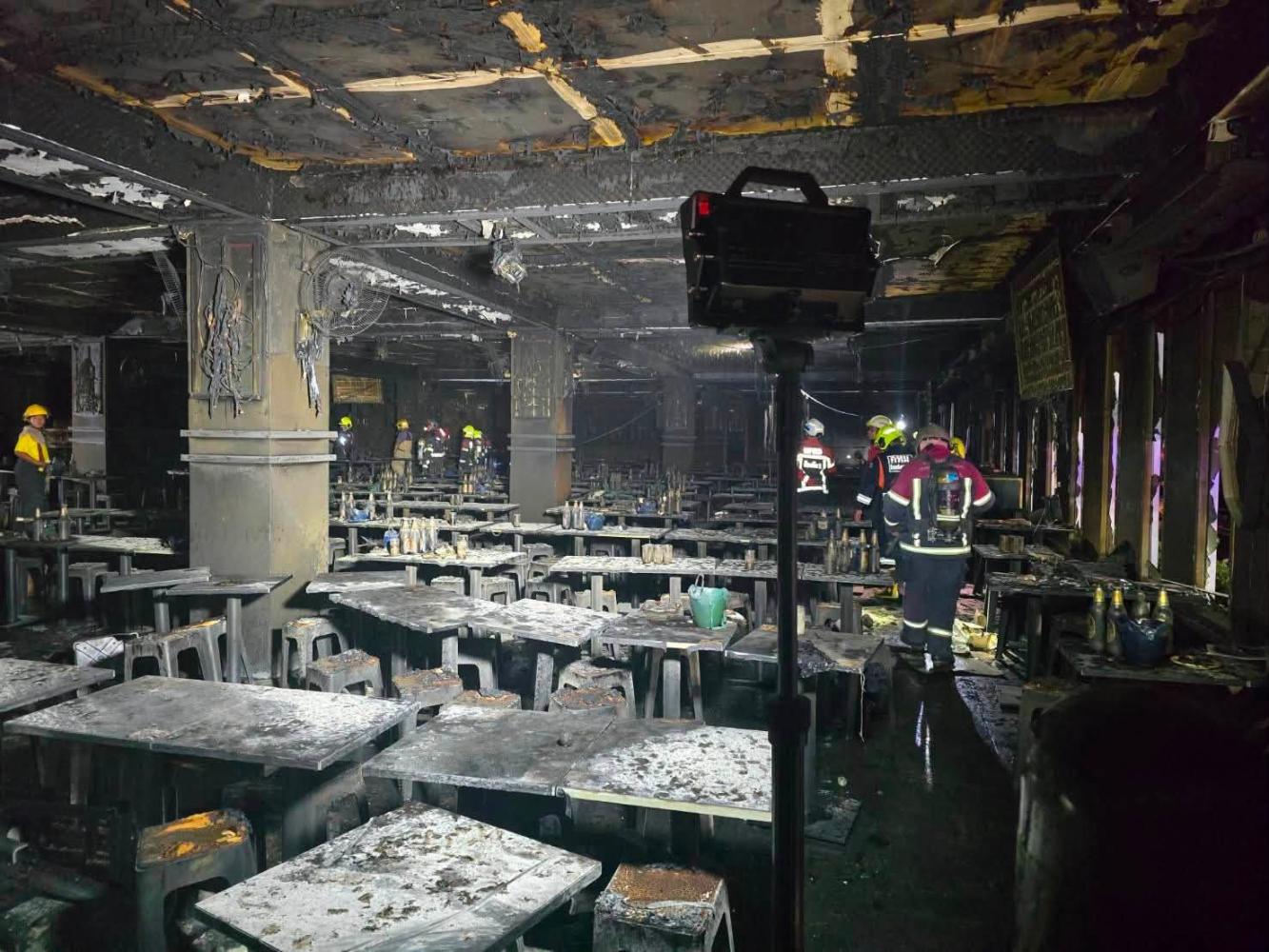
Deadly pub fire kills 33, triggers nationwide safety probe
A devastating pub fire in Thailand has claimed 33 lives and injured 71 others. The blaze erupted during a band performance, with smoke and flames erupting from the ceiling, causing panic. Investigations are focusing on potential issues with emergency exits and the role of building insulation in exacerbating the fire, prompting a nationwide inspection of entertainment venues' safety measures.
Investigators are piecing together the final moments leading up to the outbreak of the inferno that killed 33 people, write Surachai Piragsa, Chakkrapan Natanri and Wassayos Ngamkham PUBLISHED : 17 Jul 2026 at 05:51 NEWSPAPER SECTION: News The first sign of danger looked like part of the show. Shortly before midnight on July 12, patrons packed inside the Rong Beer Na Ladprao pub watched as white smoke drifted from the ceiling above the stage while a band was playing. Many assumed it was a special effect. Within seconds, black smoke and flames erupted overhead, plunging the crowded venue into darkness and panic. By the time the fire was extinguished, 27 people were dead at the scene. The death toll rose to 33 on Wednesday, with 71 injured, including the venue owner, who is still in ICU. Preliminary autopsy results found that most victims died from smoke inhalation, while others suffered severe burns. For survivors, the speed of the disaster remains difficult to comprehend. Nattaphong Lakhon, 26, had been seated near the stage for almost an hour when he noticed smoke emerging from the ceiling. "Three or four seconds later, black smoke and flames burst out," he recalled. The lights immediately went out. Security guards used torches to direct people towards an exit, but hundreds of frightened patrons surged in the same direction. Mr Nattaphong said he was knocked over, stepped on and lost a shoe as he struggled to escape. Another survivor, known as Peipei, had arrived at the venue only minutes earlier. She initially thought the smoke was dry ice used during performances. Less than 30 seconds later, people were running for their lives. After reaching an exit, she looked back and saw flames shooting from the building. Some people fleeing behind her were engulfed by fire. "I still see the images of people running for their lives." Illusion of escape As investigators piece together the final moments before the blaze spread, increasing attention is focused on whether emergency escape routes functioned as intended. Several survivors reported hearing no fire alarm and seeing no sprinkler system activate. A vendor who sold sweets near one emergency exit acknowledged that her table was positioned in front of the doorway, although she insisted people could still pass through one at a time. She also confirmed the exit door had been secured with a latch on the night of the fire, though not with a padlock. The vendor said the door handle had not functioned properly for some time and that the exit was not always left open. Investigators have not concluded whether these conditions contributed to the death toll. However, police are examining whether crowd congestion, emergency exit conditions and potential obstructions hindered evacuation. Questions have also emerged over reports that some patrons were unfamiliar with the venue's layout and did not know where emergency exits were located. Familiar warning The investigation is increasingly examining whether the tragedy reflects broader shortcomings in safety oversight. Busakorn Saensuk, chair of the Fire Protection Engineering Committee at the Engineering Institute of Thailand, said preliminary inspections raised questions from the first day about the unusually large volume of combustible gases inside the building, where they originated and why the fire spread with such intensity. Her team found that a steel framework was above the stage ceiling, coated with about 7.62 centimetres of spray foam insulation. Extensive burning was discovered within the ceiling void, causing heat and pressure to accumulate and force downward. Ms Busakorn said the insulation foam became fuel for the fire, producing combustible gases that built up inside the building. The area in front of the stage sustained the most severe damage, she said. When doors were opened during the incident, outside air rapidly entered the building, supplying oxygen to the accumulated gases and triggering an immediate and violent flash fire. Most areas of the venue had about 5cm of spray foam insulation, while the stage and bar sections had layers about 7.62cm thick. Ms Busakorn added that even if fire-retardant additives were mixed into the foam, they would only slow ignition under tested conditions. At higher temperatures, the foam could still catch fire and become a significant fuel source. The incident echoes memories of the 2009 Santika nightclub fire in Ekamai, which killed 66 people and led to sweeping promises of reform. Seventeen years later, critics are again asking whether lessons from past disasters were fully implemented. Pol Lt Gen Siam Boonsom, Commissioner of the Metropolitan Police Bureau, said investigators are examining the venue's licensing status, building approvals and compliance with fire-safety regulations, including whether emergency systems met legal requirements. Police have interviewed more than 100 witnesses and are analysing footage recovered from 16 security cameras inside the venue. Victims left behind While investigators search for answers, families are confronting the reality of lives cut short. In Buri Ram, relatives gathered to mourn Manirat Bomklang, a 38-year-old nursing assistant, whose husband recalled their final hours together through tears. Before leaving for work on the night of the fire, she embraced and kissed him goodbye -- a gesture he now believes was their last farewell. The couple had been saving money to build a future together and help support her parents. Instead, he found himself arranging her funeral. Elsewhere in the same province, Boonsong Sribus mourned her daughter Yadakarn Bamrungphakdee, a former rescue volunteer and single mother who had moved to Bangkok to support her family. The grief extended beyond Thailand's borders. In Mukdahan, the body of Lao worker Phonepaseut Poungppany was handed over to rescue workers from Laos before being transported across the Second Thai-Lao Friendship Bridge for burial in Savannakhet province. Another Lao worker, Viengphon Chandavong, later died from injuries sustained in the fire. Families have also voiced frustration over compensation. Kanthicha Singkhon, whose mother died in the blaze, said relatives had yet to receive direct contact from the venue regarding assistance. Reports that bereaved families might initially receive only 10,000 baht for funeral expenses sparked anger among many survivors and relatives. "Ten thousand baht does not even cover the cost of a coffin," Nationwide crackdown The tragedy has triggered an immediate response across Thailand. From Phuket and Chiang Mai to Khon Kaen, Nakhon Ratchasima and Hat Yai, officials have launched inspections of entertainment venues, pubs and restaurants hosting large crowds. Emergency exits, alarm systems, fire extinguishers, emergency lighting, occupancy limits and building materials are now under scrutiny. In Phuket, officials ordered operators to remov
多角的分析
この火災は、タイのエンターテイメント産業における安全基準の緩和と、それに伴う経済的損失のリスクを浮き彫りにした。特に、迅速な利益追求のために安全対策が二の次にされる傾向は、長期的な観光産業や投資環境に悪影響を与える可能性がある。今回の事件を契機とした全国的な規制強化は、一時的に一部事業者の運営コストを増加させるかもしれないが、長期的には業界全体の信頼性を高め、持続可能な成長に寄与すると考えられる。しかし、規制の厳格な適用と、小規模事業者への支援策が伴わなければ、一部事業者の廃業や雇用喪失につながるリスクもある。
今回のパブ火災は、タイのエンターテイメント施設への投資リスクを再認識させる出来事となった。過去の類似事件(2009年のサンティカ火災)から教訓が得られていない可能性が示唆されており、投資家は物件の安全性、特に避難経路や消防設備の法的遵守状況をより厳格に評価する必要がある。規制強化による営業許可の取得難化や、安全基準への対応コスト増加は、不動産やホスピタリティ関連セクターへの投資判断に影響を与えるだろう。一方で、安全基準をクリアした施設への投資は、長期的な安定収益を見込める可能性もある。
今回の火災は、タイ社会における安全意識の根深さ、そしてしばしば経済的利益が人命よりも優先される構造的な問題を露呈した。生存者の証言からは、非常口の機能不全や避難誘導の不備が、被害を拡大させた可能性が示唆されている。これは、単なる個別の事故ではなく、公共の安全を守るための制度や監視体制の不備が浮き彫りになった事例と言える。また、被害者家族への不十分な補償は、社会的な不満を高め、より公正な対応を求める声につながるだろう。全国的な規制強化は、多くの市民が安全にエンターテイメントを楽しめる環境整備への一歩となることが期待されるが、その実効性が問われる。
今回の火災で、多くのタイ市民がエンターテイメント施設での安全な過ごし方について不安を感じている。特に、若者や家族連れは、友人や家族と楽しい時間を過ごす場所が、予期せぬ危険にさらされる可能性を目の当たりにした。非常口の不備や、火災警報が作動しなかったという証言は、日頃利用している店舗の安全管理に対する信頼を揺るがす。今回の事件を機に、市民は店舗側の安全対策への関心を高め、自身の安全確保のためにも、避難経路の確認などを意識するようになるだろう。また、被害者家族への補償問題は、市民の間で「自分ごと」として捉えられ、より人間的な配慮を求める声が強まる可能性がある。
背景・歴史的文脈
タイでは、過去にも大規模なナイトクラブ火災が発生しており、特に2009年のサンティカ・ナイトクラブ火災(66人死亡)は、その後の安全対策強化の契機となった。しかし、今回の「Rong Beer Na Ladprao」パブ火災では、当時の教訓が生かされていなかった可能性が指摘されている。火災の原因として、建物内部の断熱材に使われたスプレーフォームが急速な燃焼を招いたこと、そして非常口の機能不全や避難誘導の不備が被害を拡大させたことが挙げられている。これは、タイのエンターテイメント施設における建築基準、消防規制の遵守、そしてそれらを監督する行政の機能不全という、長年にわたる構造的な問題を示唆している。
原文ソース
Bangkok Post