General articles are free for 24 hours after publish.
Vietnam Ascends as Asia's AI Hardware Trade Powerhouse
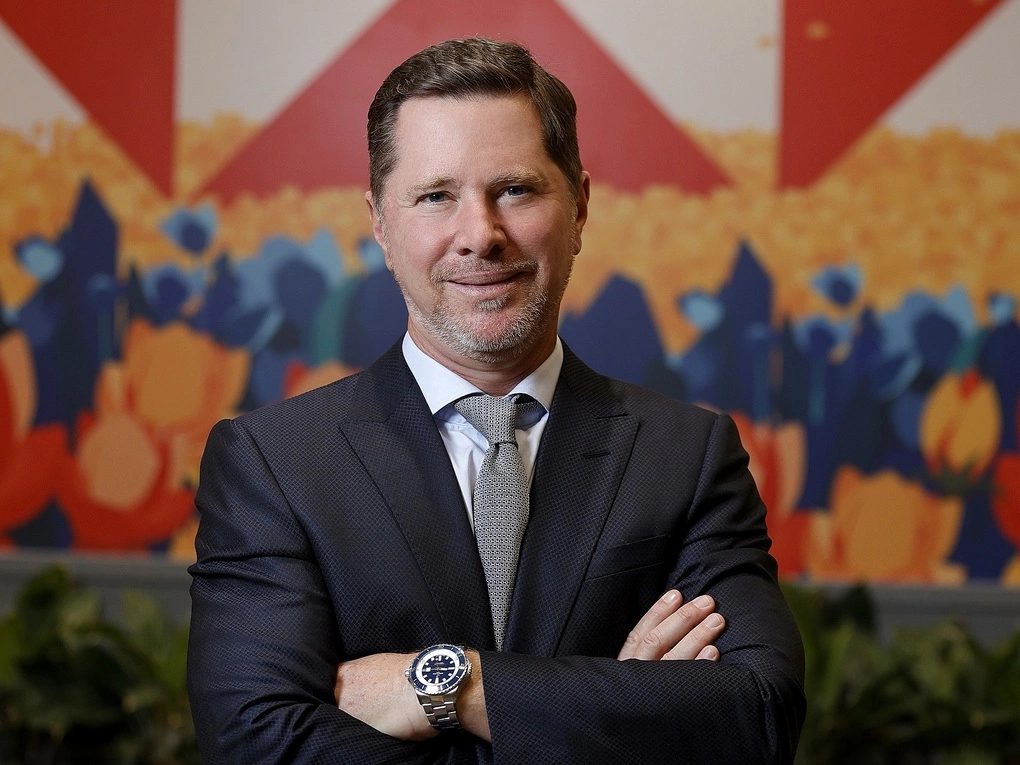
HSBC Vietnam CEO Tim Evans highlights Vietnam's rapid rise in AI hardware trade, projecting its global share to reach 12.4% by 2025. A shift in trade dynamics with Taiwan underscores Vietnam's growing importance in the supply chain.
Vietnam has rapidly emerged as a leading economy in artificial intelligence (AI) hardware trade, demonstrating faster and more significant progress than any other nation in the region, according to Tim Evans, CEO of HSBC Vietnam. HSBC Global Investment Research data indicates Vietnam's share of global AI hardware trade, encompassing semiconductors and server equipment, is projected to surge from 1.2% in 2015 to 12.4% by 2025, marking the highest growth rate for any single economy during this period. Recent trends show South Korean exports to Vietnam growing faster than to any other Southeast Asian market, a testament to deep manufacturing ties and Vietnam's expanding role in hardware assembly, particularly for AI server equipment. A notable shift is Taiwan's first-ever quarterly trade deficit with Vietnam in Q1, with imports from Vietnam soaring 173% year-on-year through May, primarily driven by electrical machinery, appliances, and electronic components. Evans characterizes this as a "major transition," where Vietnam is moving beyond its historical role as a low-cost assembly hub to become a critical node in multilateral networks. The country now imports high-value components from sources like Taiwan and South Korea, adds sophisticated domestic value, and re-exports advanced systems across Asia and globally. "These two-way trade flows continue to deepen, reinforcing Vietnam's position within international production networks," Evans observed. Vietnam's swift ascent is propelled by strategic government policies and geographical advantages. The nation has instituted a national semiconductor development strategy, designating science, technology, and digital innovation as core economic drivers. This has attracted massive capital commitments from global manufacturers in advanced packaging, testing, and electronics assembly. Furthermore, Vietnam collaborates with leading tech corporations to absorb R&D and chip design capabilities. In the first half of the year, Vietnam's manufacturing and processing sectors attracted $17.91 billion in foreign direct investment (FDI), accounting for 63% of total registered capital. Thai Nguyen province led FDI attraction nationwide with over $8 billion, primarily directed into high-tech complexes, semiconductor facilities, and electronic component plants. Hai Phong attracted $1.83 billion following administrative streamlining for semiconductor and electronics support ventures like LG Innotek. Domestic AI adoption is also accelerating. With a young, digitally native population and an agile business landscape, Vietnam is poised to become a high-value consumer market for AI-driven services. Ho Chi Minh City, for instance, has granted investment certificates for strategic high-tech projects exceeding $1.23 billion, including the $508 million Evolution DC VN HCMC data center by a Singaporean consortium and a $480 million hyperscale data center complex developed by STARMASON. However, this AI trade boom presents macroeconomic risks. Evans warns that deeper specialization exposes Vietnam to sector-wide shocks, such as cooling corporate AI capital expenditures, tighter export controls, and semiconductor price volatility. Rising chip and component prices could also fuel broader regional inflationary pressures. Despite these risks, underlying structural tailwinds remain resilient. Supply chains are diversifying across Asia, and multilateral agreements like RCEP and CPTPP reduce tariff barriers. Vietnam has also demonstrated a proven capacity to absorb large-scale capital deployments. "As Asia evolves from an export springboard into a self-sustaining hub of AI demand, Vietnam stands squarely at the center of this transformation, both economically and geographically," Evans affirmed. If Vietnam successfully converts this manufacturing momentum into an integrated AI ecosystem—fusing hardware scale with workforce skills, infrastructure, and enterprise adoption—the payoffs will extend far beyond trade balances, elevating factory floor productivity, service industries, and everyday business operations nationwide.
Original source
Vietnam Insider