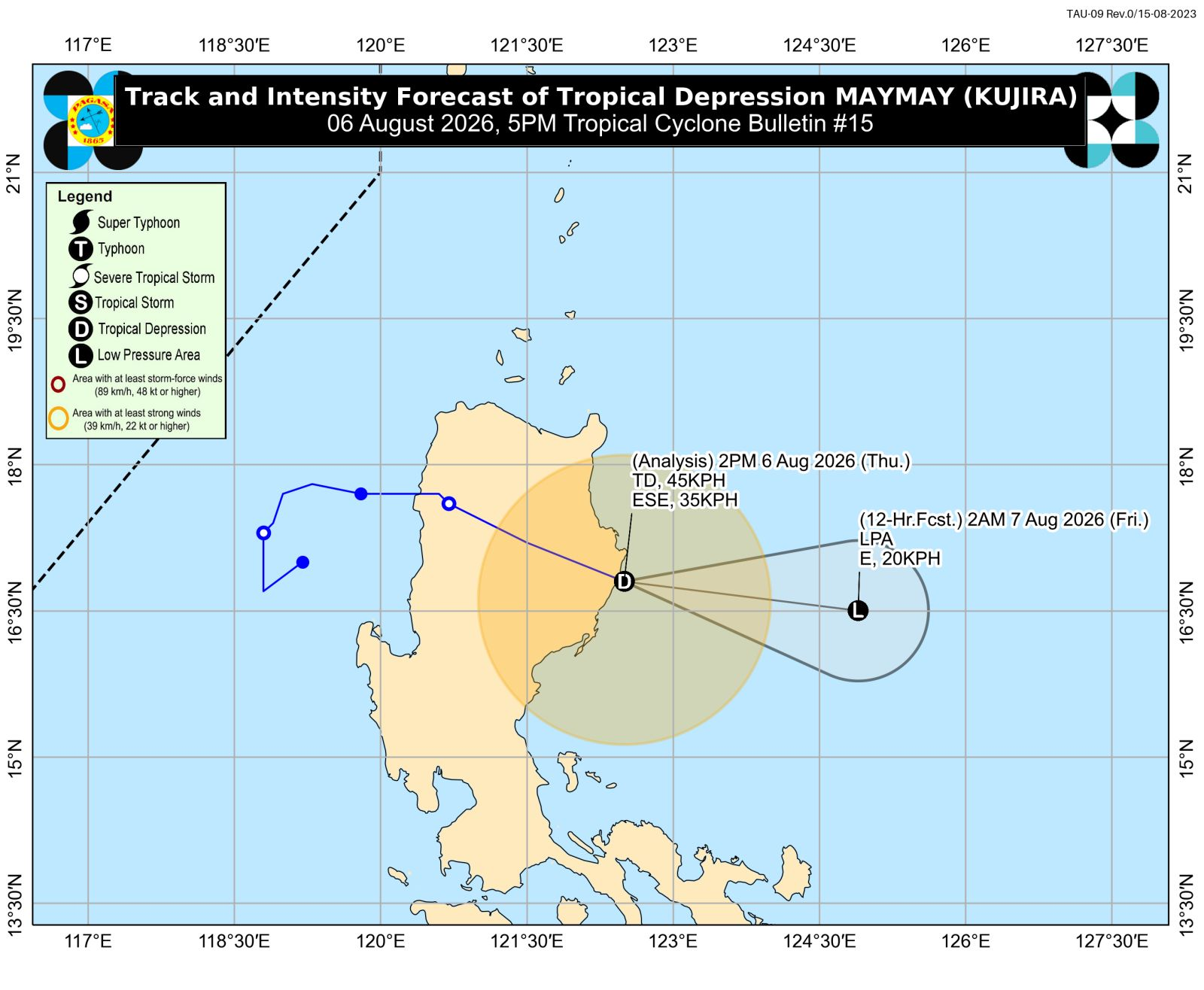
Tropical Depression Maymay Moves Away, Signal No. 1 Areas Reduced
Fewer areas in Northern Luzon remain under Tropical Cyclone Wind Signal (TCWS) No. 1 as Tropical Depression Maymay (international name: Kujira) moves over the Philippine Sea. The Philippine Atmospheric, Geophysical and Astronomical Services Administration (Pagasa) provided updates on its track and intensity.
This article requires PRO
This article is outside the free access window or is a special report. PRO unlocks it and the full archive.
Related articles
- GSIS Announces Emergency Loan Dates for Habagat, Cyclone Victims
The Government Service Insurance System (GSIS) in the Philippines has announced application dates for emergency loans for members and pensioners in areas declared under a state of calamity due to the Southwest Monsoon (Habagat) and tropical cyclones. Loans up to PHP 40,000 are available.
- 2,947 Families Displaced in Calabarzon Amidst Intensifying Southwest Monsoon Rains
Calabarzon, Philippines – Heavy rains from the enhanced southwest monsoon, locally known as habagat, have caused widespread flooding, displacing 2,947 families in the Calabarzon region. The situation continues to impact local communities.
- Tropical Cyclone Neneng Weakens to LPA, Exits Philippine Area
Tropical Cyclone Neneng has weakened into a low pressure area (LPA) and exited the Philippine Area of Responsibility (PAR), according to PAGASA. Meanwhile, Tropical Storm Saudel is expected to enter PAR over the weekend, potentially enhancing the southwest monsoon.
- Weather Improves Thursday as Neneng, Habagat Weaken
The Philippine Atmospheric, Geophysical and Astronomical Services Administration (PAGASA) forecasts improving weather on Thursday as Tropical Depression Neneng and the southwest monsoon (habagat) weaken. Some areas may still experience rain and strong winds.