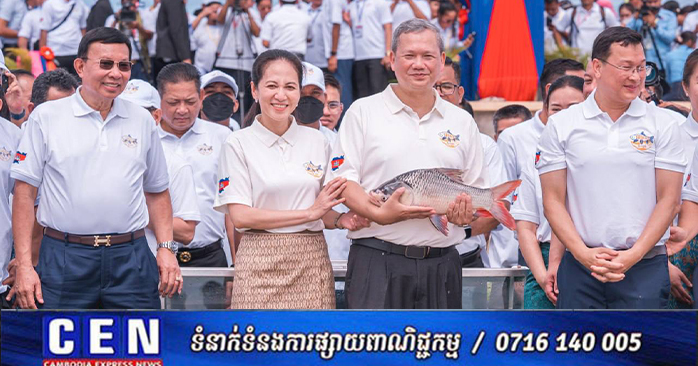
Cambodia Strengthens Fisheries Resource Protection: PM Hun Manet Pledges Sustainable Fishing
Cambodian Prime Minister Hun Manet emphasized the importance of protecting and sustainably utilizing fisheries resources at the National Fisheries Day ceremony. He positioned agriculture as the "nation's stomach" and fisheries as the "nation's protein-producing machine," urging the promotion of related policies and public cooperation.
Prime Minister Hun Manet of the Kingdom of Cambodia presided over the 21st National Fisheries Day ceremony held in Svay Rieng Province on the morning of July 1, 2026. During the ceremony, Prime Minister Hun Manet emphasized that the annual observance of National Fisheries Day on July 1 aims to disseminate and inspire all stakeholders, especially local fishermen and citizens, to participate in the protection and conservation of fisheries resources. This ensures sustainable management, preservation, and utilization for the benefit of current and future generations. He further explained that designating a fishing ban season allows fish to spawn, reproduce, and grow during the high water season, serving as a primary food source for citizens and a crucial daily income for fishermen. Moreover, the government consistently regards the agricultural sector as the "nation's stomach," while fisheries are considered the "nation's protein-producing machine." This is because fisheries are an inexhaustible source of protein that can be preserved, are a popular community food for all segments of the population, and are rich in micronutrients. The Prime Minister stated that the government has implemented a policy for the deep reform of the fisheries sector from 2015-2024, aiming to abolish fishing lots and transfer management rights and benefits to the people through fishing communities. The National Strategy for Aquaculture Development aims to promote fish and other aquatic animal farming to reduce pressure on natural fishing and ensure market supply. The Strategic Plan for Fisheries Resource Management and Conservation for 2020-2029 focuses on restoring ecosystems and protecting fish spawning and nursery areas in both the Tonle Sap Lake region and coastal areas. The Strategic Plan Framework for the Fisheries Sector 2010-2019 guides fisheries development, divided into three main pillars: fisheries, aquaculture, and post-harvest processing and trade. Concurrently, the government is actively negotiating to open market access for agricultural and fishery products to create export channels and ensure price stability for farmers and fishermen. Prime Minister Hun Manet further highlighted that the government is actively developing the fisheries ecosystem and systematically addressing key challenges in the fisheries sub-sector, such as habitat loss, climate change, and overfishing. This is being achieved through strengthening the enforcement of fisheries laws by increasing patrols and preventing illegal fishing, as well as respecting and adhering to the fishing ban season. Efforts include establishing and protecting fisheries conservation areas by restoring and safeguarding natural habitats; promoting community participation by establishing and strengthening the role of fishing communities and through education and outreach; enhancing the fisheries resource monitoring system through digitalization; and promoting research and innovation by strengthening cooperation with countries in the Mekong River basin, international organizations, and development partners. In conclusion, the Prime Minister appealed to all citizens, especially fishermen, to participate in the preservation, protection, conservation, and development of national fisheries resources. He urged the use of only legally permitted fishing gear and reminded them, "The enforcement of the law is not to cut off your livelihoods, but to conserve these resources for you and our future generations." Source: CEN Cambodia
多角的分析
カンボジア経済において、農業と水産業は依然として国民の生活基盤を支える重要なセクターである。首相が水産資源を「国家のタンパク質製造機」と表現したことは、食料安全保障と国民の栄養改善におけるその役割の大きさを物語っている。持続可能な漁業への取り組みは、短期的な収穫量だけでなく、長期的な経済的安定と資源の枯渇防止に不可欠である。養殖業の推進は、天然資源への依存度を減らし、新たな雇用創ちや収入源の多様化に繋がる可能性がある。また、農水産物の輸出市場開拓は、外貨獲得と国内経済の活性化に寄与すると考えられる。
水産業への投資は、持続可能性と規制遵守が鍵となる。政府の改革政策、特に漁業区画の廃止とコミュニティへの権限移譲は、透明性と公平性を高める可能性がある一方、小規模漁師への支援体制が不十分な場合、資本集中のリスクも孕む。養殖業への投資は、安定した生産量と品質管理の面で魅力的だが、初期投資や技術的なノウハウが必要となる。また、市場開拓の進展は、輸出志向型ビジネスにとって追い風となるだろう。投資家は、政府の政策実行能力、環境規制の厳格化、そして地域コミュニティとの連携を慎重に見極める必要がある。
水産資源の持続可能な管理は、漁業コミュニティの生計と食料安全保障に直結する。禁漁期間や許可漁具の遵守は、漁師の短期的な収入に影響を与える可能性があるため、政府による適切な補償や代替収入源の提供が重要となる。漁業コミュニティへの権限移譲は、地域住民の主体的な資源管理への参加を促す一方で、コミュニティ内の意思決定プロセスや利益配分に関する課題も生じうる。デジタル化によるモニタリング強化は、資源管理の効率化に寄与するが、情報格差や技術へのアクセスが課題となる可能性もある。国民全体としては、安価で栄養価の高いタンパク質源としての魚の安定供給が期待される。
漁師にとっては、禁漁期間中の収入減や、法律遵守のための漁具変更が生活に直接的な影響を与える。政府が「法律の執行は生活を断ち切るためではない」と強調しているように、漁師への十分な説明と支援が不可欠だ。一般市民にとっては、食卓に上る魚の安定供給と、それが栄養価の高いタンパク質源であり続けることが重要となる。養殖業の発展は、より手頃な価格で魚が手に入る可能性を示唆する。一方で、資源保護のための規制強化が、将来的に魚の価格上昇につながる可能性も懸念される。
背景・歴史的文脈
カンボジアにおいて、農業と水産業は伝統的に国民経済の根幹をなしてきた。特に、メコン川流域に位置し、広大なトンレサップ湖を有するカンボジアにとって、水産資源は重要な食料源であり、多くの国民の生計を支えている。過去には、乱獲や違法漁業、生息地の破壊などにより、水産資源の減少が懸念されてきた。これに対し、政府は1999年以降、水産資源管理に関する政策や法律を策定・実施してきた。2015年に開始された水産業の抜本的改革政策は、漁業区画の廃止や、漁業コミュニティへの管理権移譲などを通じて、より持続可能で地域主導型の資源管理を目指すものである。今回の首相の発言は、これらの長年の取り組みを踏まえ、水産資源の保護と経済的価値の最大化に向けた政府の決意を改めて示したものと言える。
原文ソース
CEN Cambodia