General articles are free for 24 hours after publish.
Philippine Public Schools Lose 20 Teaching Days Annually Due to Class Suspensions
Philippine public schools are losing approximately 20 teaching days annually due to hazard-related suspensions and excessive risk aversion, according to a report by the Congressional Commission on Education (EDCOM 2). Early grade learners are disproportionately affected by learning loss.
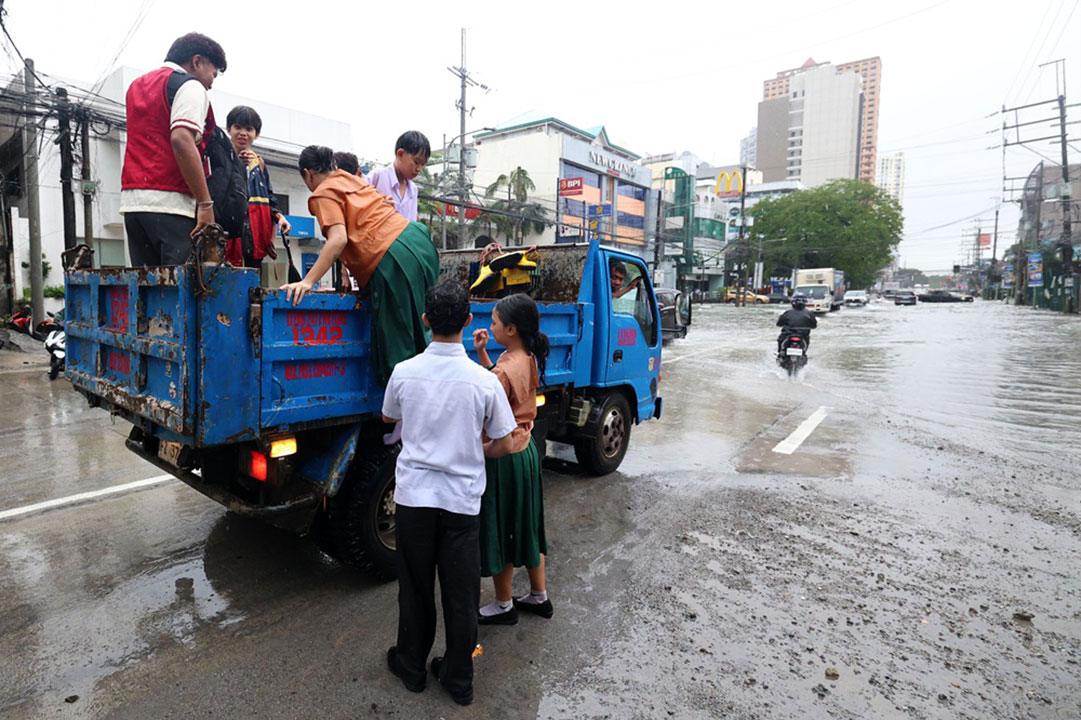
Public schools in the Philippines are losing approximately 20 teaching days annually due to hazard-related suspensions and excessive risk aversion, according to a report by the Second Congressional Commission on Education (EDCOM 2). EDCOM 2 stated in its September 2026 Policy Note that ordering suspensions in a more granular manner does not soften the cost of a warranted suspension but confines the setback to the schools that had to bear it. It added that giving school heads the authority to decide, informed by evidence and local conditions, ensures both accuracy and accountability. The commission said that weather-driven hazards, such as typhoons, monsoon rains, and shear lines, coupled with excessive risk aversion, account for the bulk of the suspensions in School Year 2025-2026. From August 1 to September 15, 2026, alone, 12 out of 28 class days, or 43% of the total class days for Term 1, were suspended in Metro Manila and other provinces. "That is roughly one in every 10 days in the official school calendar," EDCOM 2 said. Class suspensions also affect learners’ reading proficiency. Initial estimates of the commission showed a 0.10-standard-deviation decline in reading attainment, equivalent to approximately 24 teaching days of learning progress, and 1.4 days of reading progress lost for every suspended school day. "When classes are disrupted, learners in the early grades bear a disproportionate share of the learning loss, as they have not yet developed the independent learning skills that learning continuity at home requires," it said. "Surrendering close to a month each year to hazards—even when warranted by circumstances—is already a large setback for a system still working hard to ensure that every learner can read by Grade 3," it added. As the country continues to grapple with inclement weather and its impacts, EDCOM 2 is pushing for the urgent amendment of Executive Order No. 66, series of 2012, saying the suspensions must always be data-driven and not based on excessive risk aversion. Executive Order No. 66, series of 2012, provides guidelines for class and government work suspensions during typhoons, flooding, and other weather disasters linked to storm signals released by the weather bureau. Under Public Storm Signal No. 1, pre-school and kindergarten classes are automatically suspended. Meanwhile, Storm Signal No.2 mandates suspensions in pre-school, kindergarten, elementary, and high school (including Senior High School). Public Storm Signal No. 3 or Higher cancels classes across all levels (including colleges and graduate schools) and work in all government offices. "Accumulated over a school year, and across all the schools in a province that sit well clear of any given weather system, the toll from precautionary region or provincewide orders is considerable," EDCOM 2 said. "But unlike the toll from suspensions that were genuinely warranted, it is also avoidable." Amendments from the commission include broadening the framework for automatic suspensions based on science-backed data on weather and disaster conditions, providing clear guidelines for cancellations by local chief executives, and allowing schools to halt or resume classes based on on-ground conditions. "In a system confronting a learning crisis, each day in school is critical," it said. "Surrendering close to a month each year to hazards—even when warranted by circumstances—is already a large setback." "Sparing the rest of our schools from suspensions when unnecessary should not be a choice, but an imperative," it added. Over the last two years, learners lost an average of 30 to 50 days of the 180-day school calendar due to class suspensions. — Almira Louise S. Martinez Information Source: BusinessWorld Nation
Original source
BusinessWorld Nation