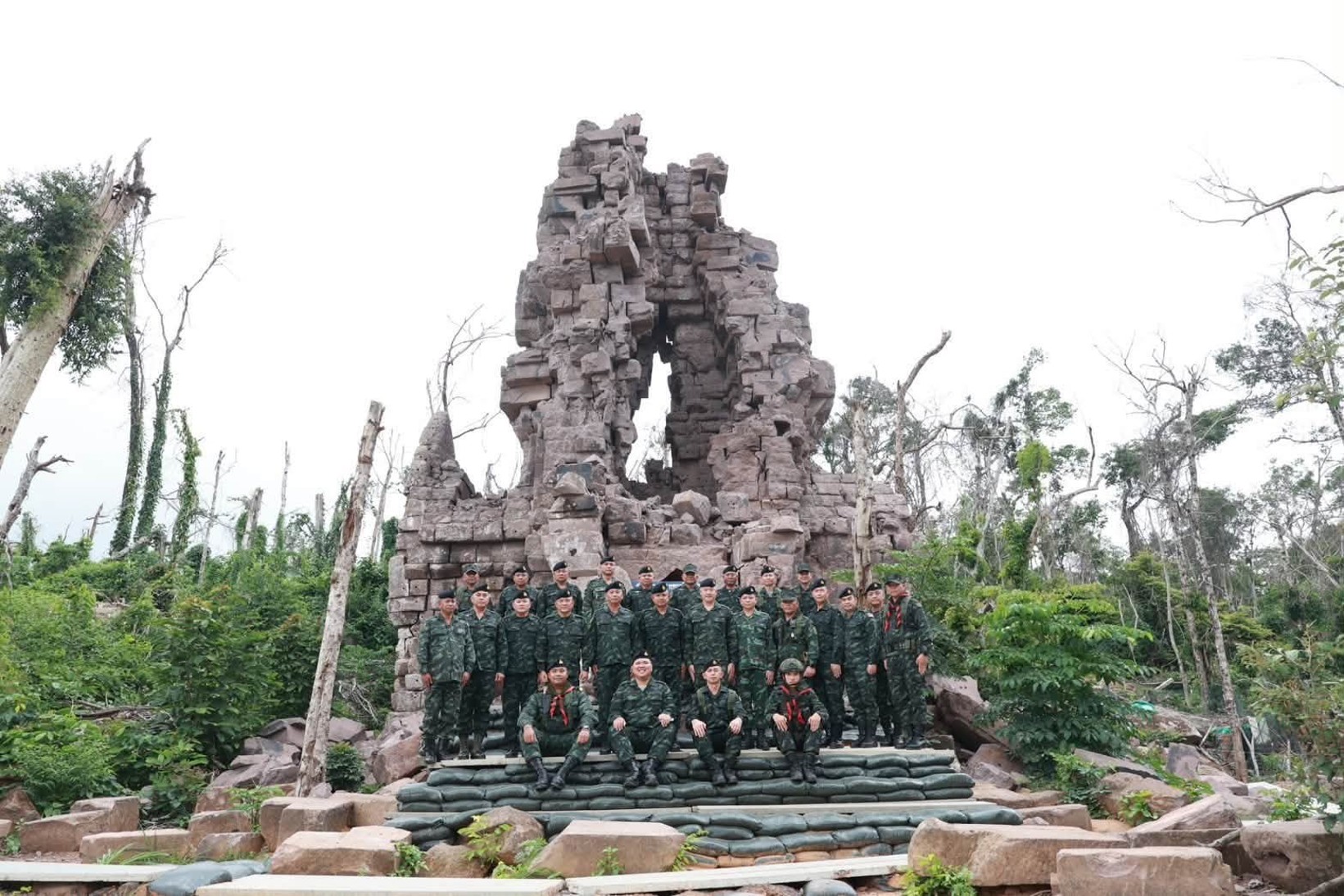
Cambodia-Thailand Border Dispute: Call for Transparent Evidence
Security
2026年7月6日
5
Phnom Penh Post
Relations
🇰🇭Cambodia🇹🇭Thailand

Cambodia-Thailand Border Dispute: Call for Transparent Evidence

AI サマリー

Following Thai military claims over Ta Krabei and Ta Mone Thom temples, a call for evidence, including official maps and legal documents, has emerged from Cambodia. Proponents argue that transparent disclosure will reduce misunderstanding and enable objective evaluation.

Recent public statements by Thai military authorities describing the Ta Krabei and Ta Mone Thom temples as in Thai sovereign territory have once again drawn international attention to the long-standing border dispute between Cambodia and Thailand. Such declarations raise an important question that deserves a clear and documented answer. On what map is Thailand basing these territorial claims? If Thai authorities maintain that these sites are unquestionably part of Thailand, they should present the documentary evidence supporting that position. Specifically, they should identify the official map, its scale, the authority that produced it, the year of publication and the legal basis under international law upon which the claim rests. Territorial sovereignty is not established simply through public statements, military visits or media reports. Under international practice, territorial claims are generally assessed through legal instruments such as treaties, officially recognised boundary maps, historical documentation, boundary commissions and, where applicable, decisions of international courts or mutually accepted bilateral agreements. Providing the relevant documentary evidence would benefit everyone involved. It would reduce misunderstanding, promote transparency, and allow scholars, legal experts, journalists and the international community to evaluate the claims objectively. This is not an unreasonable request. Whenever any government asserts sovereignty over disputed territory, it should be prepared to explain the documentary foundation of that claim. Transparency strengthens credibility, while unsupported assertions invite further questions. If Thailand believes that its position is supported by internationally recognised maps or legally binding agreements, there should be no hesitation in making those documents publicly available. Likewise, Cambodia should continue to present the documentary and legal evidence supporting its own position. Open examination of evidence is preferable to competing narratives. The international community has a legitimate interest in understanding the legal and historical basis of claims made by either side, particularly when tensions have affected regional peace and security. Independent experts cannot properly evaluate competing positions without access to the underlying documents. Therefore, I respectfully call upon Thai authorities, whenever making public assertions regarding sovereignty over Ta Krabei, Ta Mone Thom or any other disputed border area, to accompany those statements with the official maps, legal instruments and historical records upon which those claims are based. Doing so would contribute to transparency, informed public discussion, and respect for international norms. Border disputes are ultimately resolved not by rhetoric, but by evidence, law and peaceful dialogue. If the evidence is clear, it should be presented openly. If the matter remains disputed, acknowledging that reality is equally important. The pursuit of truth requires documentation, not merely declarations. Only through openness, respect for international law and careful examination of historical records can lasting confidence and peaceful relations between neighbouring countries be achieved. Tesh Chanthorn is a Cambodian citizen who longs for peace. The views and opinions expressed are his own.

多角的分析

経済的影響

カンボジアとタイ間の国境紛争は、両国の経済関係、特に国境貿易や観光に間接的な影響を与える可能性がある。紛争の長期化やエスカレーションは、投資家のリスク認識を高め、経済活動の停滞を招く恐れがある。しかし、今回の声明は主に領土問題に焦点を当てており、直接的な経済措置は示されていないため、現時点での直接的な経済的影響は限定的と考えられる。

投資家心理

領土紛争は、特に近隣諸国との関係において、投資環境の不確実性を高める要因となり得る。タイ当局による主権主張は、カンボジア国内の投資家や国際的な投資家に対し、潜在的なリスクとして映る可能性がある。証拠の提示を求めるカンボジア側の姿勢は、透明性を重視する投資家にとって肯定的に評価される可能性があるが、紛争の進展によっては、両国への投資判断に慎重さが求められるだろう。

社会的影響

タ・クラベイやタ・モネ・トム寺院といった歴史的・文化的に重要な場所が紛争の対象となることは、地域住民の感情に影響を与える可能性がある。両国の国民は、自国の歴史や文化遺産に対する誇りを持っており、領土問題が感情的な対立に発展するリスクも存在する。証拠に基づく冷静な議論を求める声は、社会的な安定を維持し、不必要な摩擦を避けるための建設的なアプローチと言える。

市民の声

カンボジア市民は、平和と安定を強く望んでおり、国境紛争の平和的かつ証拠に基づいた解決を期待している。タイ当局の主張に対し、カンボジア市民は、自国の領土保全と歴史的権利の保護を求めている。透明性のある情報公開は、国民が客観的な事実に基づいて状況を理解し、感情的な扇動に流されないために不可欠である。市民代表の立場からは、政府に対し、国民の安全と国益を守るための断固たる、しかし平和的な対応を求める声が上がるだろう。

背景・歴史的文脈

カンボジアとタイの国境線は、フランス植民地時代に引かれた線に由来するが、一部区間では曖昧さが残っている。1962年の国際司法裁判所(ICJ)によるタ・プレア・ヴィヒア寺院に関する判決は、国境問題解決の先例となったが、他の未解決の国境地域、特にタ・クラベイやタ・モネ・トム寺院周辺では、両国の主張が対立してきた。タイ軍による今回の声明は、過去にも繰り返されてきた領土主張のパターンの一つであり、カンボジア側は、国際法に基づく証拠の提示を求めることで、問題の客観的な解決を目指している。

原文ソース

Phnom Penh Post

原文を読む