Ho Chi Minh City Eyes Carbon Credit Market Leveraging Forest Resources
Economy
2026年8月3日
5
Nhan Dan

General articles are free for 24 hours after publish.

Ho Chi Minh City Eyes Carbon Credit Market Leveraging Forest Resources

Share
AI Summary

Ho Chi Minh City is looking to develop a carbon credit market by leveraging its extensive forest resources, particularly the carbon sequestration capacity of the Can Gio mangrove forest. New government policies are expected to facilitate the development of forest-based carbon credit projects.

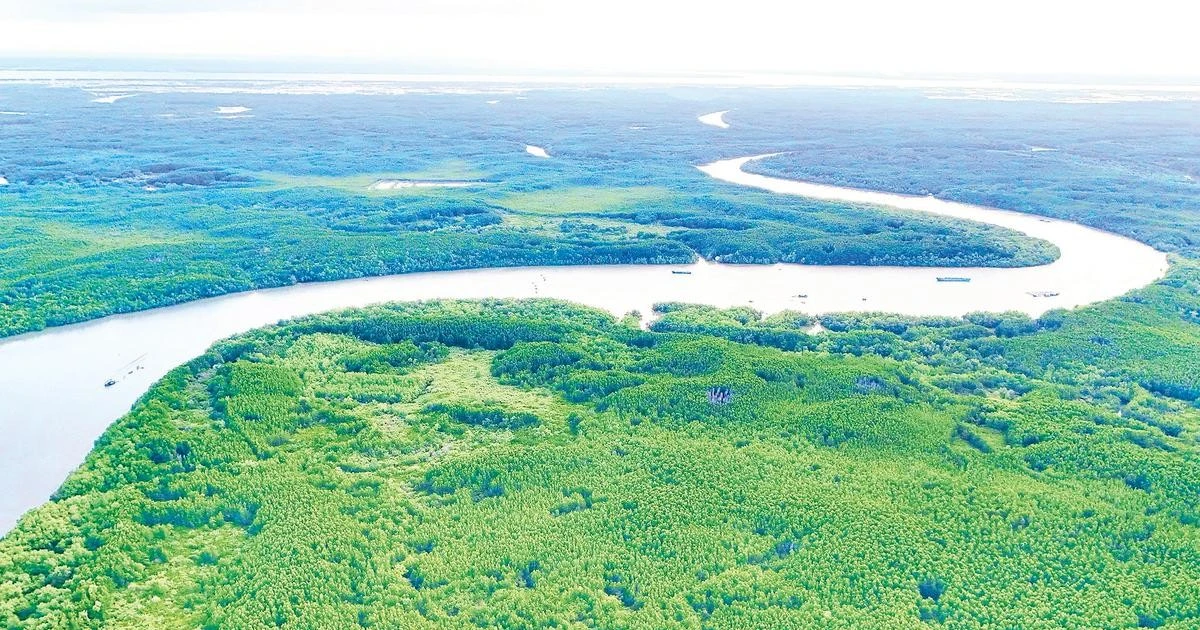
Ho Chi Minh City is looking to develop a carbon credit market by leveraging its extensive forest resources, particularly the carbon sequestration capacity of the Can Gio mangrove forest. The city possesses over 75,700 hectares of forest, including the Can Gio mangrove ecosystem, which constitutes the majority of the Can Gio Biosphere Reserve. Additionally, it has tens of hectares of primary forests, specialized forests, and protective forests. These forests hold significant value in terms of biodiversity, protection, and carbon sequestration. Experts note that the Can Gio mangrove forest can absorb and store up to three times more carbon than typical terrestrial forest ecosystems. A substantial portion of this carbon is stored long-term in the mangrove soil and natural sediment, playing a crucial role in reducing greenhouse gas emissions. This potential offers the city numerous opportunities to exploit and "awaken" the economic potential of its forest resources. With the government's Decree No. 180/2026/ND-CP (on forest carbon sequestration and storage services) and Circular No. 31/2026/TT-BNNMT from the Ministry of Agriculture and Rural Development (on forest valuation methods, forest price framework determination, and methods for determining payment for forest carbon sequestration and storage services), both effective from July 15, 2026, the city has favorable conditions to develop forest-based carbon credit projects, contributing to the formation of a carbon market in Vietnam in the near future. To transform forest potential and advantages into resources for developing carbon credit projects, experts suggest the city needs to standardize forest resource data and build a management system that meets carbon market requirements. This includes reviewing and updating forest databases according to new management models and accelerating the application of digital technology, remote sensing, Geographic Information Systems (GIS), and modern monitoring tools to track forest resource changes, facilitating the calculation and verification of absorbed carbon. The more complete, accurate, and independently verifiable the data, the more readily forest carbon projects will be accepted by the market. The city must establish baselines, determine carbon stocks, and select areas with potential for pilot projects. Forest management units need to clearly define the area, status, and carbon stocks, meeting the standards for Measurement, Reporting, and Verification (MRV). This is a new field requiring a team of well-trained staff in forestry, climate change, and carbon finance. Concurrently, the city should enhance cooperation with research institutes, universities, businesses, and international organizations to access technology and experience in building carbon projects. This proactive approach will enable the city to study pilot mechanisms for carbon credit trading and develop supportive policies for green credit capital for pioneering project implementers. In the long term, once the carbon credit market is established, revenue from these transactions should be prioritized for reinvestment in forest protection, restoration, and sustainable livelihoods for communities involved in forest conservation, thereby ensuring long-term stability for forest resource management and the development of the carbon credit market.

0

Original source

Nhan Dan

原文を読む