General articles are free for 24 hours after publish.
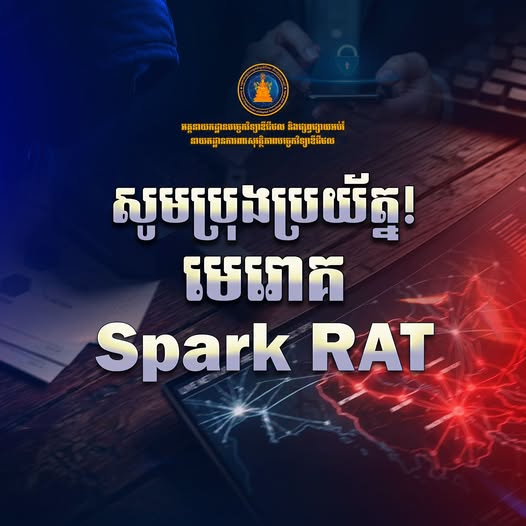
Cambodia Warns of Spark RAT Cyberattacks Targeting Government and Private Sectors
Cambodia is facing a surge in cyberattacks using 'Spark RAT', a remote access trojan targeting individuals and organizations in both public and private sectors. Authorities are issuing warnings about phishing emails and advising users to implement security measures.
A cyberattack using a remote access trojan (RAT) known as 'Spark RAT' has been detected in Cambodia, prompting a public warning from authorities. The technical team of the General Directorate of Digital Technology and Educational Dissemination has identified malicious activities where attackers utilize Spark RAT to gain remote control over victims' devices, potentially stealing sensitive data and passwords. The attacks are specifically targeting users within Cambodia, including individuals and those working in both private and public institutions. According to the technical team, attackers are employing 'Phishing Email' tactics. They send emails that appear to be official government documents, such as health, real estate, or other notification papers, with malicious attachments designed to trick recipients into downloading or opening them. Therefore, users are urged to exercise increased caution, especially when receiving emails with attachments from unknown or uncertain sources. To protect devices and data from such attacks, the technical team of the General Directorate of Digital Technology and Educational Dissemination recommends the following measures: 1. Strengthen email account security: Set strong passwords and enable Two-Factor Authentication (2FA). 2. Verify email sources: Before downloading or opening any attachments, meticulously check the sender's email address and origin. Avoid opening files from unclear sources. 3. Regularly back up data: Implement regular data backups to minimize the risk of data loss in case of a hack. 4. If a suspicious file is downloaded: Immediately disconnect from the internet and do not execute or run the file. Subsequently, delete the file from an uncertain source and seek assistance from technical experts for device security checks.
Original source
Kampuchea Thmey Local