Cambodia Tire Exports Surpass $1 Billion as New Industry Strengthens Rubber Value Chain
Economy
2026年7月29日
4
Kampuchea Thmey English
Relations
🇰🇭Cambodia🇹🇭Thailand🇨🇳China

General articles are free for 24 hours after publish.

Cambodia Tire Exports Surpass $1 Billion as New Industry Strengthens Rubber Value Chain

Share
AI Summary

Cambodia's tire exports surged 55% year-on-year to over $1.02 billion in the first half of 2026, establishing tire manufacturing as a major new export industry and strengthening the domestic rubber value chain.

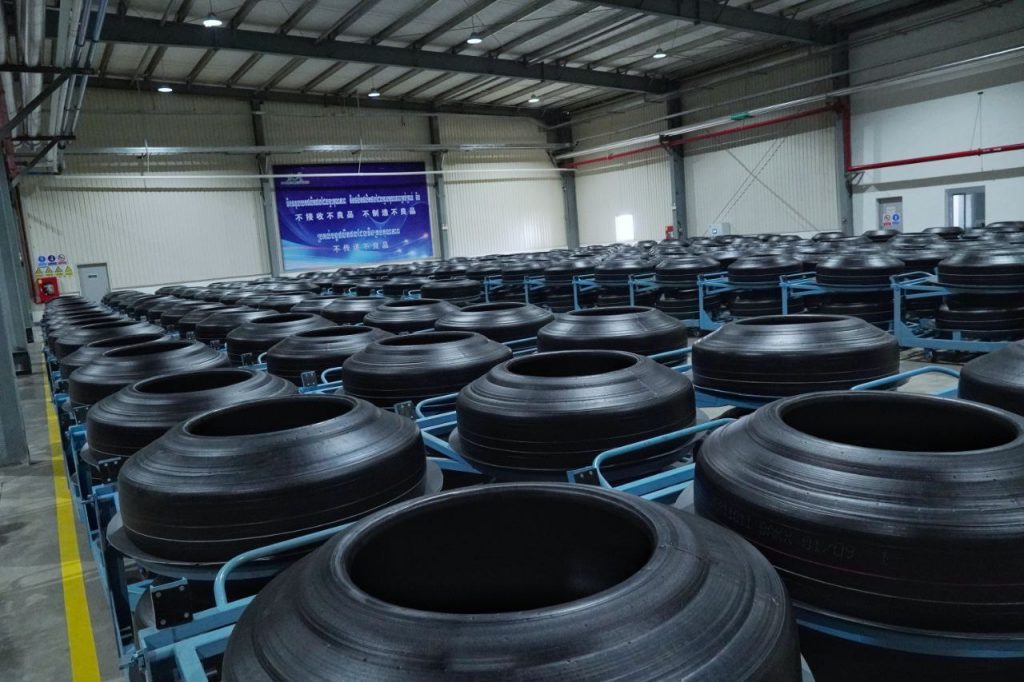
PHNOM PENH, July 29, 2026 (KPT) — Cambodia’s tire exports surged 55 percent year‑on‑year to more than $1.02 billion in the first half of 2026, official data showed Wednesday, underscoring the rapid rise of tire manufacturing as a major new export industry and creating fresh opportunities to deepen the domestic rubber value chain. The General Department of Customs and Excise said the figures reflect the growing presence of tire factories in Cambodia. The performance follows strong growth in 2025, when tire exports reached $1.38 billion, up nearly 58 percent from 2024, according to the Commerce Ministry. Men Sopheak, president of the Rubber Development Association, said the expansion has supported Cambodia’s rubber sector and helped stabilize prices despite global uncertainty. Industry leaders say tire manufacturing is allowing Cambodia to capture more value from domestically produced rubber rather than relying on raw commodity exports. Ken Oudommonysinat, CEO of Sailun, said the presence of major factories could spur further development of plantations, stabilize the market and attract new investment. Prime Minister Hun Manet has urged the ministries of agriculture, industry and commerce to strengthen links between rubber‑producing communities and tire manufacturers to increase local value addition. He said Cambodia has made progress in connecting producers with factories, reducing dependence on imported inputs. The growth of tire manufacturing adds to Cambodia’s efforts to diversify its industrial base beyond traditional sectors, attract higher‑value investment and strengthen links between domestic raw materials and industrial production.

0

Original source

Kampuchea Thmey English

原文を読む