General articles are free for 24 hours after publish.
Thailand Urges Scrutiny of Tin Ore Imports Amid Money Laundering Concerns
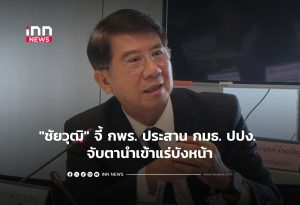
Former Thai Industry Minister Chaiwut Bannawat has raised concerns that illicit tin ore imports across the Myanmar border may be facilitating money laundering by scam networks. He urged authorities to enhance scrutiny and countermeasures.
Mr. Chaiwut Bannawat, a former Minister of Industry and a former Member of Parliament for Tak Province, has provided information to the committee on anti-money laundering and drug suppression (AMLO). He raised concerns about the illicit import, transport, and processing of tin ore along the Thai-Myanmar border, suggesting potential links to scam networks and international money laundering operations. He urged relevant agencies to collaborate in addressing these issues. Mr. Chaiwut, drawing on his decades of experience and deep understanding of the region, pointed out that while many businesses operate legitimately, there has been unusual activity from certain individuals. These individuals are reportedly purchasing tin ore at prices significantly higher than the prevailing market rate – approximately 150,000 baht per ton, compared to the normal market price of around 120,000 baht. The ore is then processed in factories in neighboring countries, including areas like Shwe Kokko, before being re-imported into Thailand or undergoing transit procedures for export. The circulation of funds estimated at over 4 billion baht in a short period is a cause for concern, not only impacting legitimate operators but also posing a risk as a potential channel for money laundering by scam groups. Additionally, the heavy ore-carrying trucks are causing significant damage to public roads. Beyond the economic and security dimensions, Mr. Chaiwut underscored the paramount importance of environmental protection and the health of local residents. He specifically noted that ore processing plants situated along the Mae River are discharging ore residues and waste into the main river. This river serves as a crucial water source for consumption and tap water for the populations of Tak and Mae Hong Son provinces. Consequently, he recommended that the Department of Primary Industries and Mines (DPM) expedite the issuance of certificates (CEO) to establish stringent control mechanisms for contaminants within communities. This should be done in conjunction with the Pollution Control Department (PCD) to ensure continuous inspections of standards. Regarding frontline officials, such as those in customs, Mr. Chaiwut expressed empathy and understanding for the limitations imposed by scarce personnel resources along the extensive border, which spans over 500 kilometers. He offered encouragement to all involved officials and proposed the necessity of enhanced cooperation. This cooperation, he suggested, would involve increasing the frequency and rigor of inspections for containers and transit goods, thereby preventing interest groups from exploiting logistical loopholes to negatively impact the Thai economy and local traders. "I have not come here to accuse anyone," Mr. Chaiwut stated. "Working in the area is genuinely difficult and has obstacles, but when we know where the loopholes are, we must help fill them. We must raise our voices to care for the people, protect natural resources, and ensure that the border trade system can grow transparently and fairly for everyone." Source: INN News
Original source
INN News