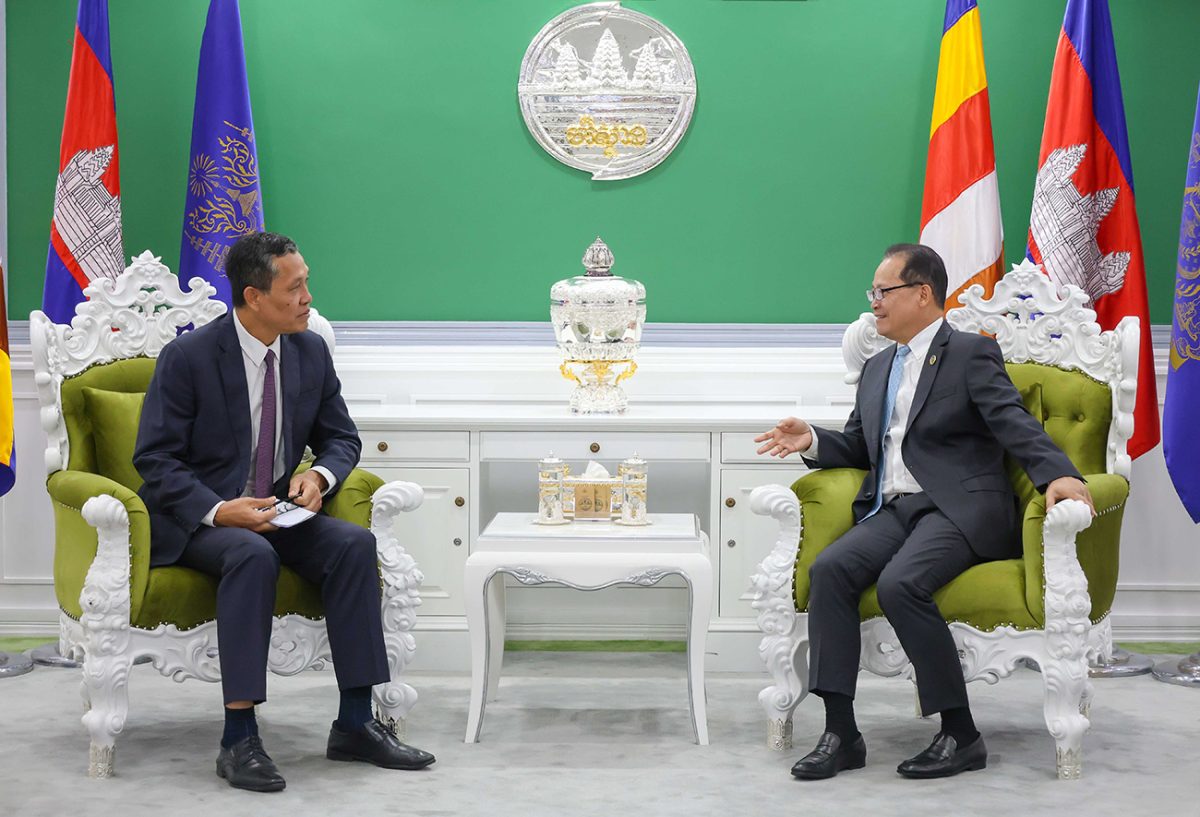
Cambodia and India Pledge to Strengthen Bilateral Cooperation on Environment and Biodiversity Conservation
Cambodia's Minister of Environment met with the Indian Ambassador to discuss bilateral cooperation in the environmental sector, particularly focusing on tiger conservation projects and improving livelihoods in communities near protected areas. India reaffirmed its commitment to technical support and expanding cooperation.
This article requires PRO
This article is outside the free access window or is a special report. PRO unlocks it and the full archive.
Related articles
- Cambodia Enhances Urban Flood Forecasting System with Expert Workshop
Cambodia held a two-day expert workshop to enhance its urban flood forecasting system, in collaboration with the World Meteorological Organization (WMO) and others. The initiative focuses on immediate weather forecasting and transforming predictions into impact-based warnings for timely dissemination.
- Cambodia and Japan Deepen Environmental Cooperation for Sustainable Development
Cambodia and Japan have agreed to further strengthen bilateral cooperation in plastic waste management, greenhouse gas reduction, and the Joint Crediting Mechanism (JCM). Both nations affirmed progress in environmental protection strategies and committed to deepening future collaboration.
- Cambodia Faces Worsening Floods as Residents Navigate Serey Sophoan
Residents were seen carrying supplies through floodwaters in Serey Sophoan, Banteay Meanchey province, on October 6, 2026. The flooding highlights the significant impact on infrastructure and daily life in the region.
- Cambodia Denies Health Impact from Mekong River Arsenic Concerns
Cambodia's Ministry of Water Resources and Meteorology has addressed social media reports about arsenic contamination from Thailand affecting the Mekong River. Scientific analyses show arsenic levels in the Cambodian Mekong remain below standard limits, posing no threat to human or aquatic life. The ministry assures ongoing monitoring.